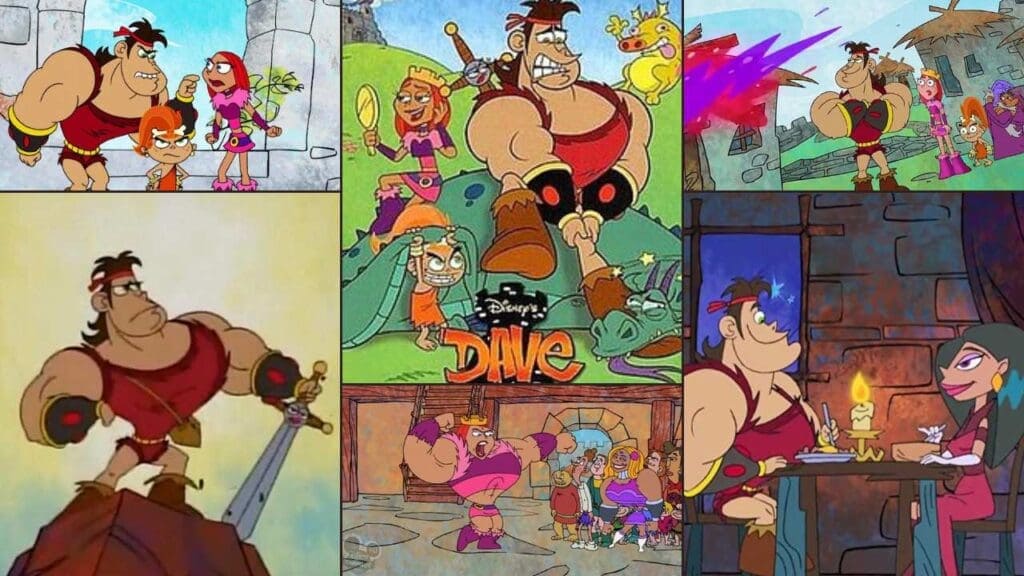
If you grew up in the mid-2000s, you probably remember Dave the Barbarian as that weird show where a giant, muscular guy screamed at his own sword and was scared of basically everything.
Here is what I have realized on rewatch. We were not watching a silly kids’ cartoon.
We were watching a masterclass in meta-humor that was about fifteen years ahead of the rest of the internet.
Let me show you why this half-forgotten Disney show might be sharper than half the stuff in your feed right now.
What Was Dave the Barbarian?
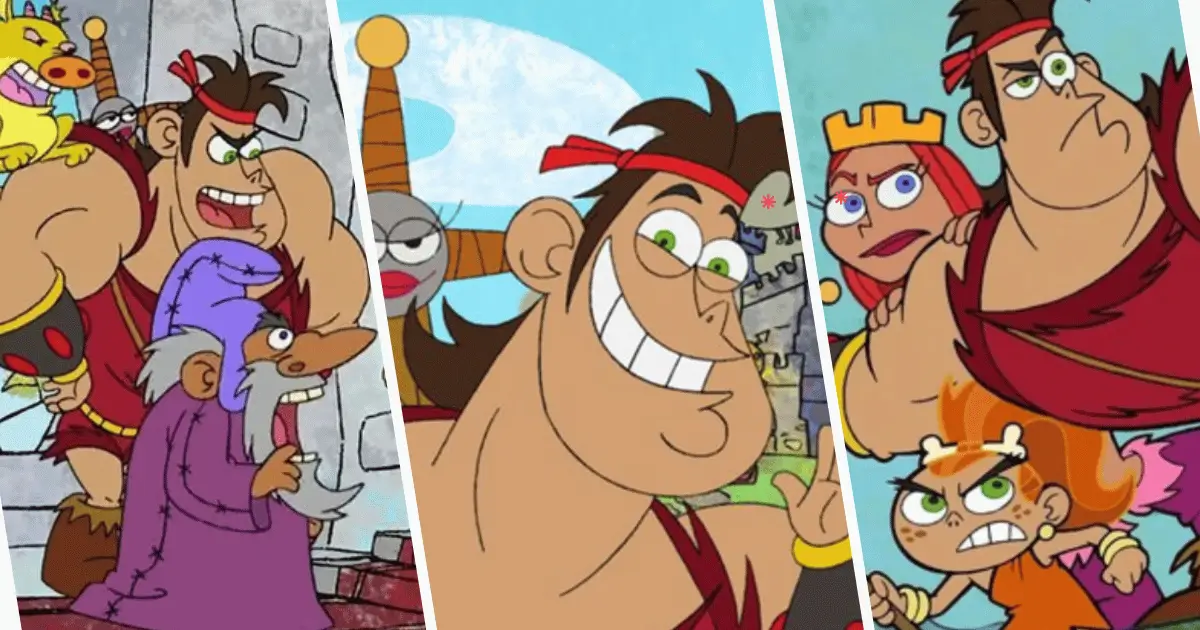
Dave the Barbarian was a Disney Channel cartoon created by Doug Langdale, the same mind behind The Weekenders.
It is set in the medieval kingdom of Udrogoth. Dave is a hulking barbarian war-prince who would much rather cook a nice meal than fight anyone.
He runs the kingdom with his two sisters while their parents are off “fighting evil” somewhere across the world.
Quick facts:
- Created by: Doug Langdale
- Network: Disney Channel, later Toon Disney
- Ran: 2004 to 2005, one season of 21 episodes
- Setting: the medieval kingdom of Udrogoth
- The twist: the hero is a barbarian who hates fighting
Fun fact: Dave the Barbarian was never released on DVD, and it still is not on Disney+. For years, the only way to watch it was hunting down uploads on YouTube. For a show this clever, that feels like a small crime.
So what makes a one-season Disney cartoon worth digging up almost twenty years later? It starts with humor built for an audience that did not exist yet.
The Theory: Internet Humor Before the Internet
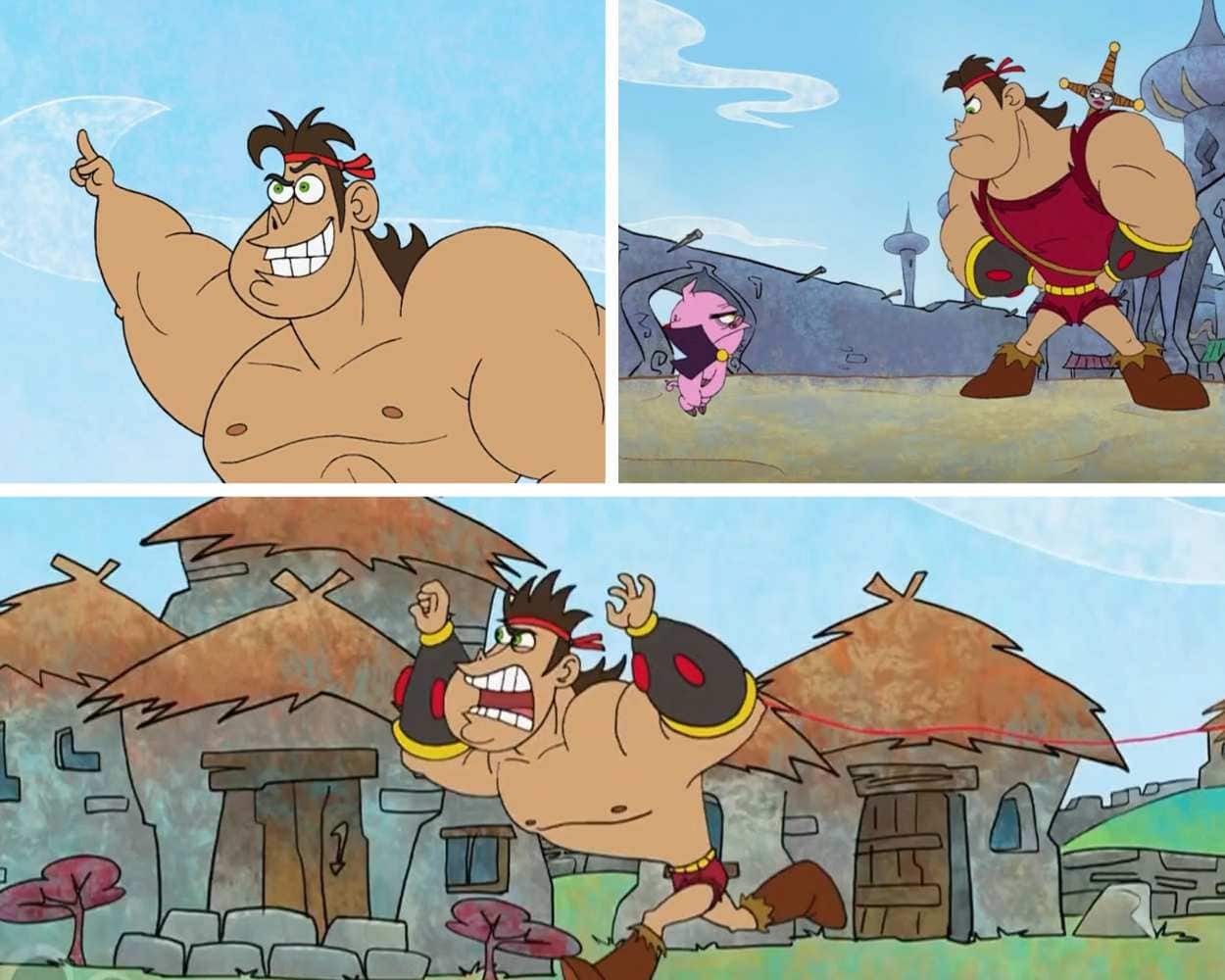
Here is my big claim, and I will stand by it. Dave the Barbarian was doing internet humor before the internet was fully meme-ified.
The rapid-fire pacing. Those constant fourth-wall breaks. A total disrespect for its own internal logic. That was not just “silly.”
That was the blueprint for the absurdist, self-aware comedy that now runs your group chats and your social feeds.
Look at the receipts:
- In one episode, the narrator flat-out skips a big fight scene. He tells you to just imagine it, because a “low budget show” like this one could not afford to animate it.
- The moral-of-the-week endings are pure parody. One episode lands on the lesson that strength matters less than remembering to read the washing instructions.
- Candy runs up millions in debt shopping online. In a medieval kingdom. In 2004. That is a joke about consumer culture the internet would not fully catch up to for years.
All of this feels normal now. On Disney Channel in 2004, it was wild.
The theory: Dave the Barbarian’s chaotic, rules-optional, self-aware humor was not just ahead of Disney. It was ahead of the internet. The show was basically making memes before memes had a name.
But to really see why it was ahead of the curve, you have to look at the one character who refused to play by the rules. The Narrator.
The Original Meta Cartoon: The Narrator Who Fought Back
In most cartoons, the narrator is furniture. A calm voice that sets the scene and then disappears.
Not here. Dave’s narrator, voiced by Jeff Bennett, is a full character. He gets confused, annoyed, and sometimes as terrified as everyone else.
The characters know he is there, too. Uncle Oswidge once gets offended by how the narrator describes him.
And in one brilliant episode, the villain Chuckles works out that the narration is the reason he keeps losing. So he hypnotizes the Storyteller and starts typing his own favorable outcomes into the plot.
Sit with how strange that is. The bad guy tries to win by taking over the narrator.
Did you know? By constantly shattering the fourth wall, the show turned you, the viewer, into a co-conspirator. You never knew if an episode would play out normally, or if the narrator would just get fed up and rewrite the ending in real time.
And yet, for all the chaos in the world-building, the real subversion was the hero himself. The legendary, and famously cowardly, Dave.
The Theory: Dave, the Anti-Barbarian Hero
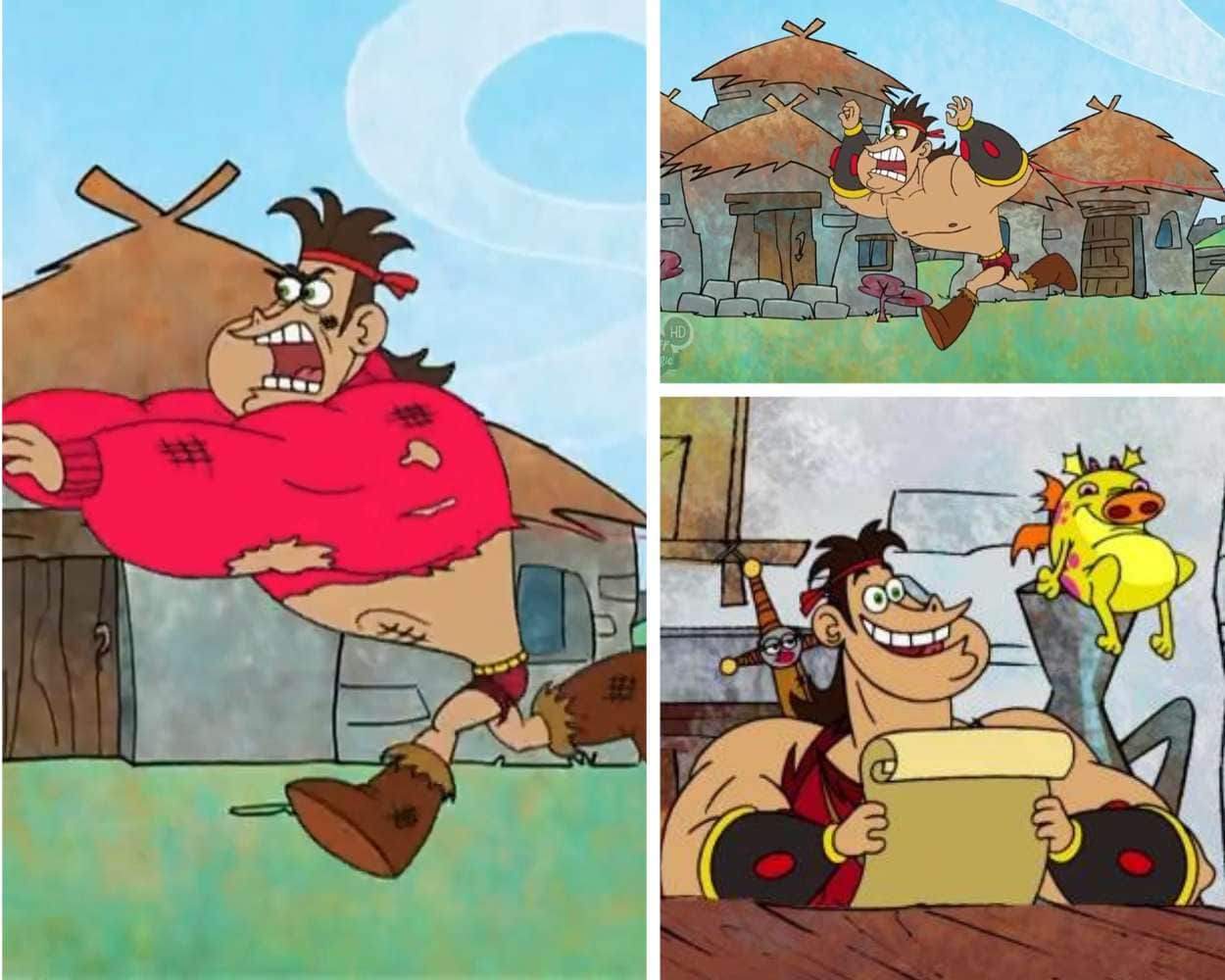
For decades, the fantasy barbarian was one thing: hyper-masculine, endlessly violent, and stoic to a fault. Think Conan. Think He-Man.
Then came Dave.
He is huge. He is ridiculously strong.
And he carries an enchanted sword named Lula who desperately wants him to be a hardcore warrior. Even so, Dave would rather bake a pastry or knit a sweater than smash a single enemy.
That is not a throwaway joke.
It is the entire point of him.
By taking the manliest archetype in fantasy and making him a gentle, terrified, cooking-obsessed pacifist, the show quietly argues something bold. Real strength is not about how much you can lift. It is about being brave enough to be yourself in a world that expects a warrior.
And the inversion runs through the whole family:
- Dave, the giant, is the softie.
- Fang, the tiny sister, is the bloodthirsty one who lives to smash things.
- Candy, the shopping-obsessed princess, is quietly the strongest fighter of them all.
For a 2004 kids’ show, that is a surprisingly sharp take on masculinity.
The theory: Most fantasy treats the barbarian as a symbol of muscle and violence. Dave flips it. The show argues that creating, nurturing, and dodging a pointless fight take more strength than any sword swing. He is the anti-barbarian, and he is the best kind of hero.
Of course, none of it would land without the cast of oddballs surrounding him.
Meet the Cast of Udrogoth
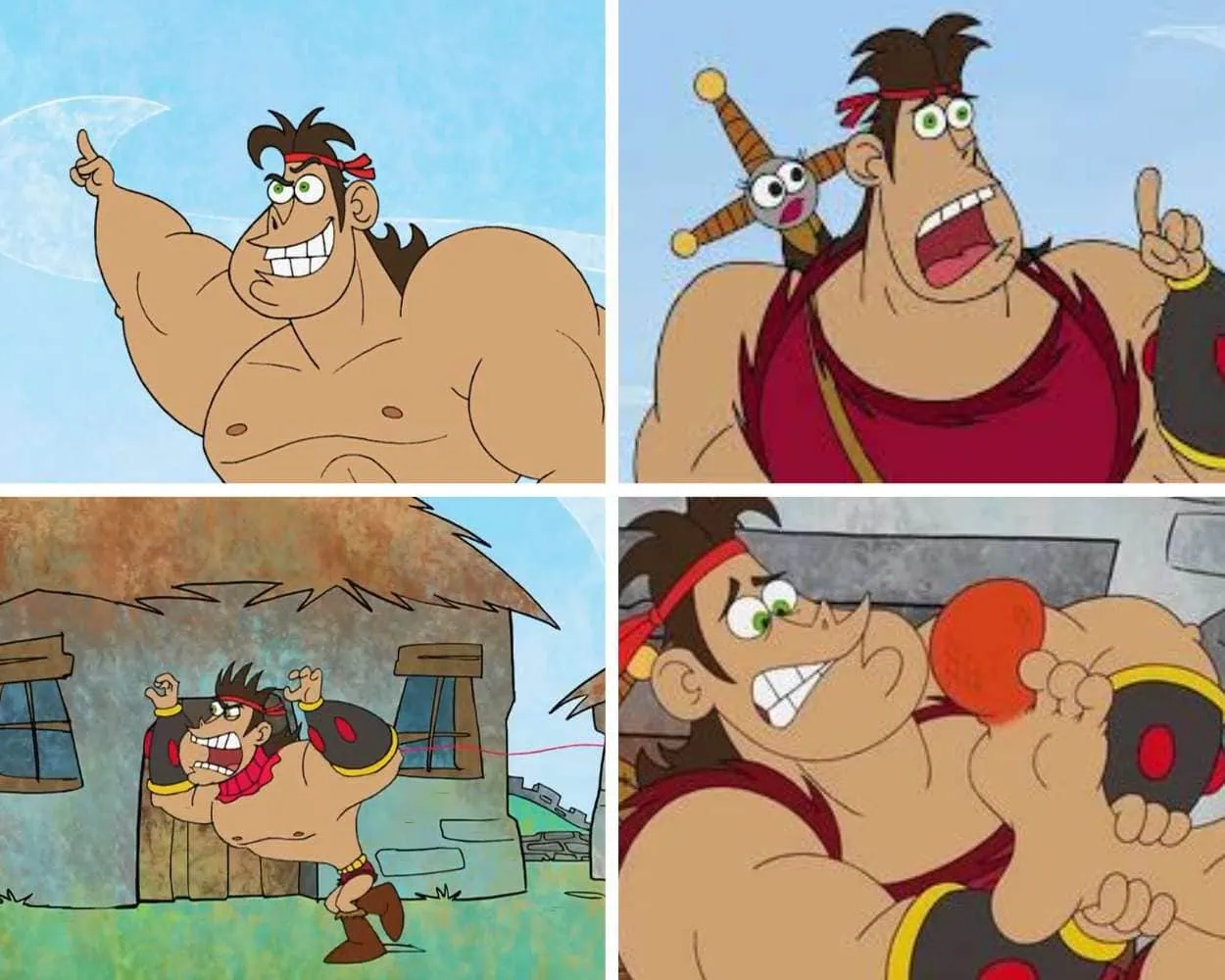
The world of Dave the Barbarian only works because everyone in it is a little broken in the funniest way. Here is the core crew:
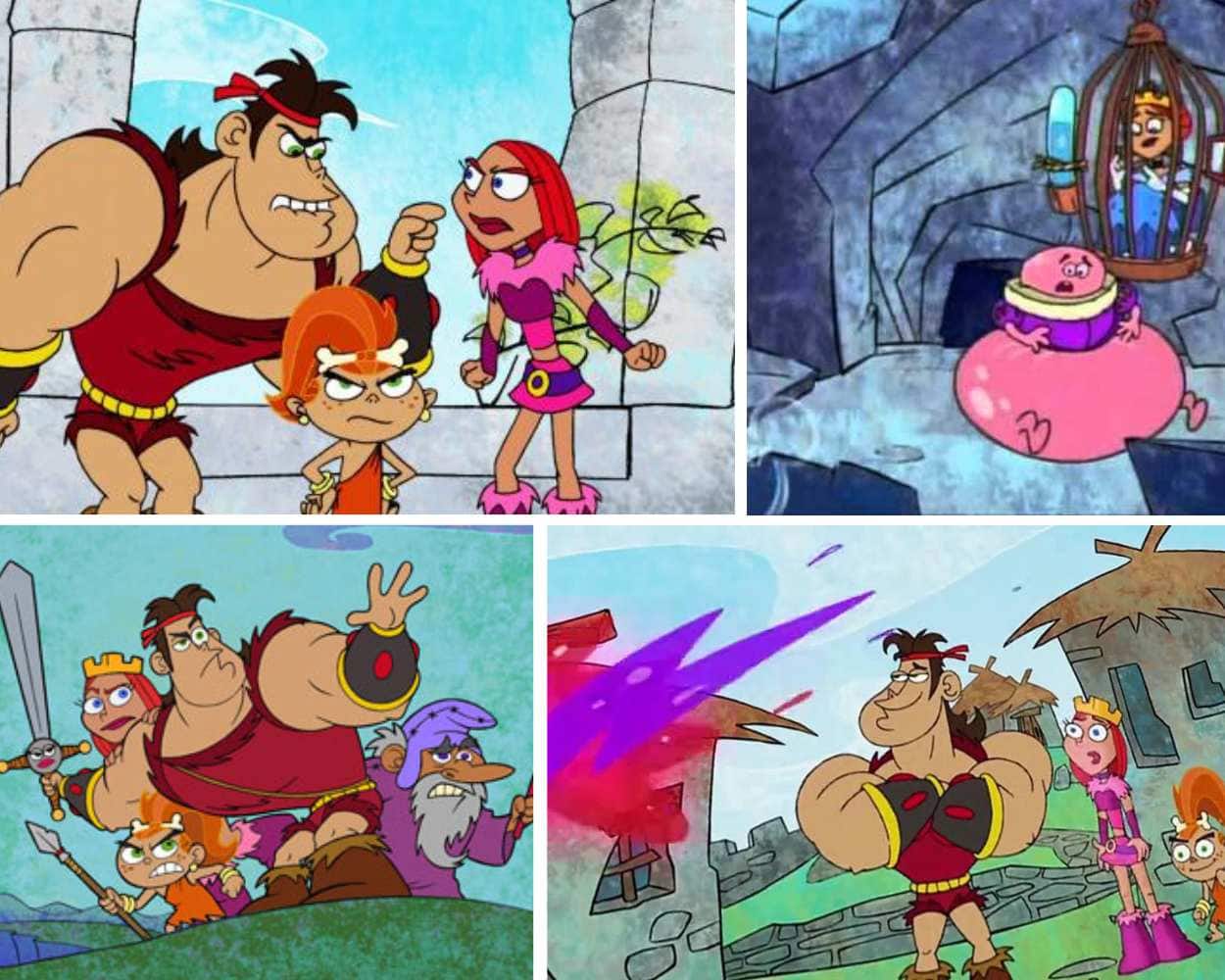
- Dave (Danny Cooksey): the gentle giant war-prince who lets out a high-pitched scream at the first sign of danger.
- Candy (Erica Luttrell): the valley-girl princess left in charge as regent, who would rather shop than rule, and who happens to be the family’s best fighter.
- Fang (Tress MacNeille): the pint-sized barbarian who loves to smash things and hates being mistaken for a monkey.
- Uncle Oswidge (Kevin Michael Richardson): the “wizard” uncle whose spells almost never go the way he plans.
- Dark Lord Chuckles the Silly Piggy (Paul Rugg): the main villain, a tiny pig with big evil dreams and a name that guarantees nobody takes him seriously.
Voice-cast trivia: Dave is played by Danny Cooksey, who usually voices loud troublemakers, so sweet, timid Dave was playing against type. His singing voice, though, is Kevin Michael Richardson, who also voices Uncle Oswidge and King Throktar. And that sarcastic sword Lula? That is Estelle Harris, better known as George’s mother on Seinfeld.
Then there is the supporting cast, which is where the show gets truly strange.
The Weird and Wonderful Supporting Cast
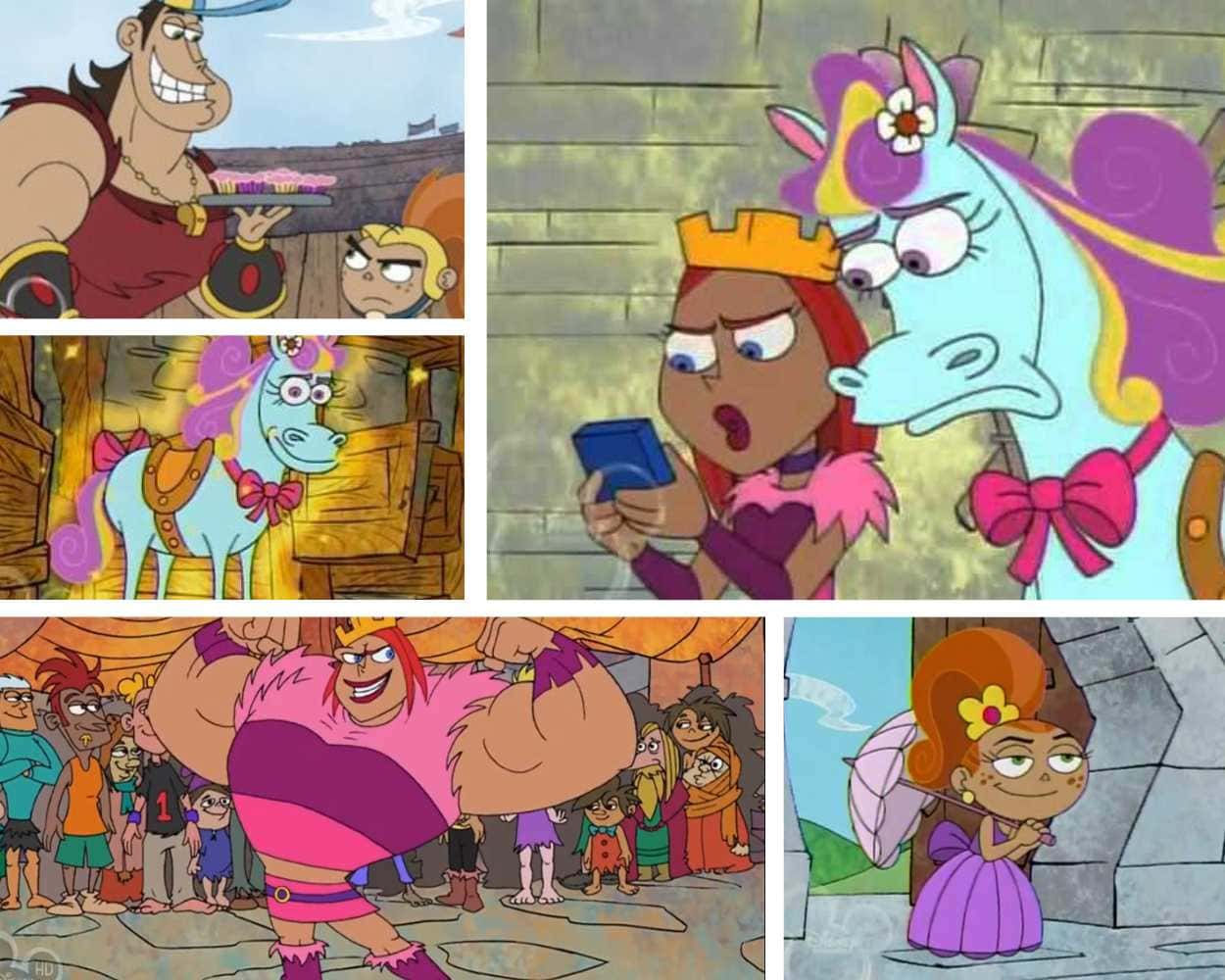
This is where Udrogoth earns its reputation for the bizarre. A few of my favorite cartoon characters from the show:
- Lula: Dave’s sarcastic enchanted sword, forever frustrated that her wielder would rather cook than conquer.
- Faffy: Dave’s pet dragon, who behaves more like a hyperactive dog and hoards shiny things.
- Dinky and Cheesette: two moles from Moleland who pop up to help out and generally adore the family.
On the villain side, the show never runs out of oddballs (and there are plenty more):
- Princess Irmaplotz: an evil sorceress with an inconvenient crush on Dave, torn between wanting to date him and wanting to destroy him.
- Ned Frischman: a geek from the future who drags advanced tech back in time because nobody appreciated him in his own era.
- Quozmir: a minor deity so absurd his whole deal revolves around freshly laundered trousers. Yes, really.
Only in Udrogoth: The villain bench includes a sorceress in love with the hero she is trying to kill, a bitter time-traveling nerd, and a god obsessed with clean pants. This is exactly the kind of nonsense that would go viral today.
For all the chaos, though, the show has a sneaky habit of slipping something real underneath the jokes.
The Sneaky Heart Underneath
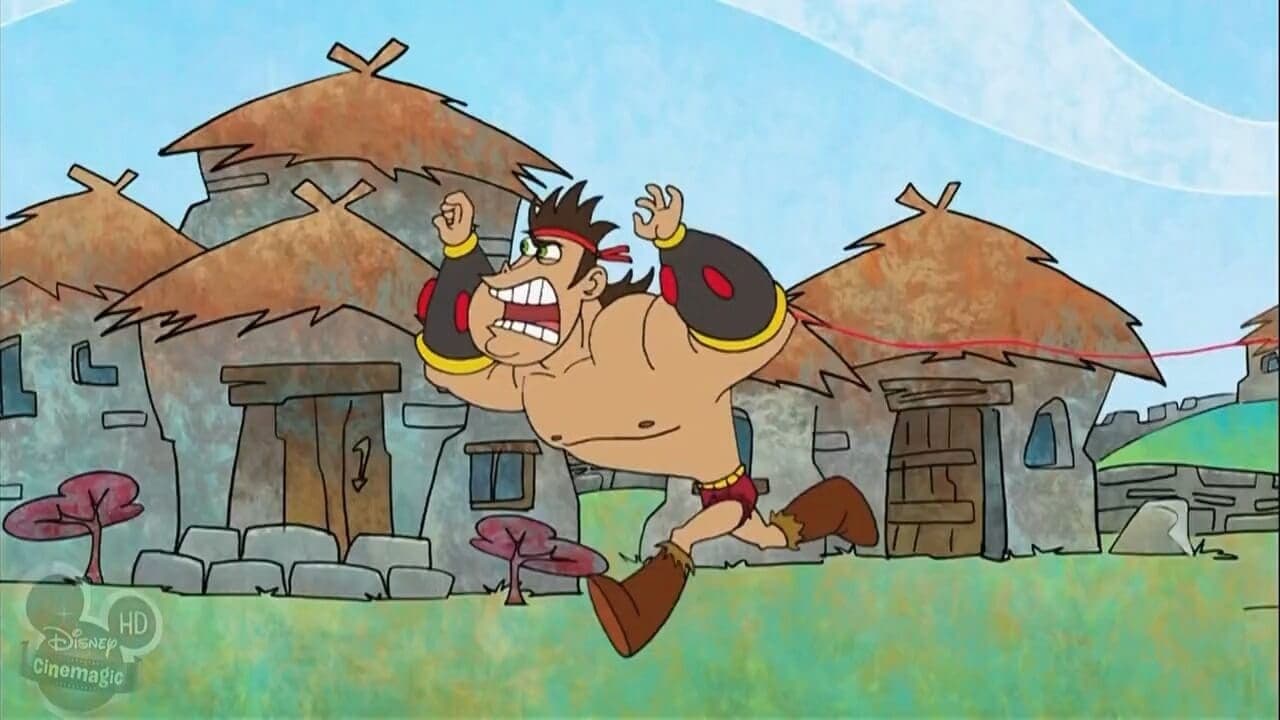
Here is what surprised me most on rewatch. Under all the chaos, Dave the Barbarian has a real heart.
The show cares about family, about facing your fears, and about being yourself when the world expects something else. Dave’s love of cooking in a kingdom that demands a warrior is that whole message in a single image.
But here is the clever part. The show refuses to get preachy about it.
Where other cartoons ended on a syrupy moral, Dave would undercut the lesson with a joke, like deciding the real takeaway was to always read the washing instructions. It sneaks the warmth in while mocking the format that usually delivers it.
That blend of real feeling and total refusal to take itself seriously is the exact tone modern animation spent the next fifteen years chasing.
The move that aged perfectly: Dave sneaks in a real lesson, then immediately makes fun of the idea of having a lesson at all. Caring and joking at the same time is everywhere in animation now. Dave got there first.
So here is the big question. After all these years, does it still hold up?
Does Dave the Barbarian Hold Up?
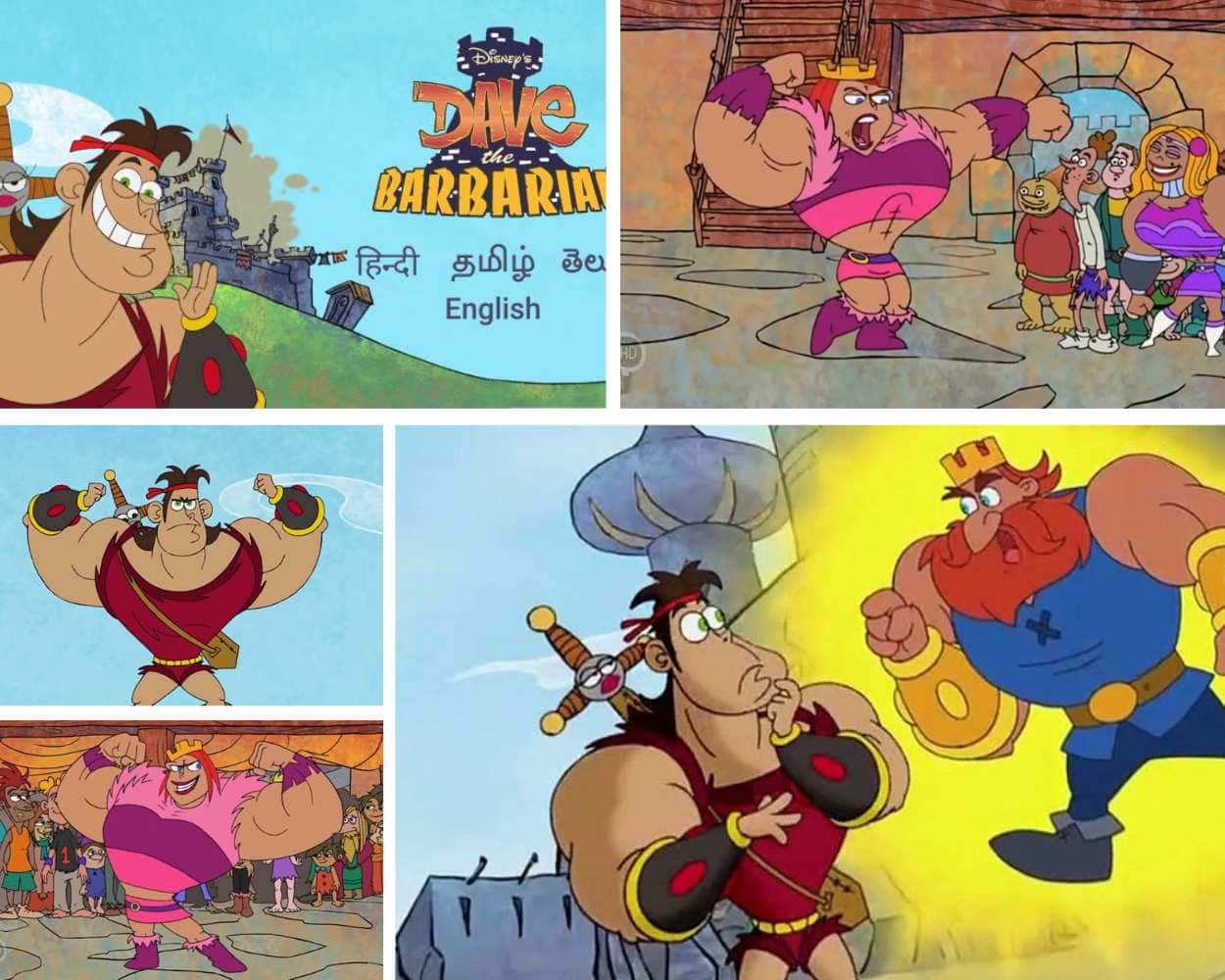
My answer? It holds up better than almost anything else from its corner of the 2000s.
The comedy DNA is easy to trace. You can feel the Animaniacs energy and the Monty Python randomness in every episode.
But watch it today and it plays like a distant ancestor of Rick and Morty and the meta, rules-optional comedy all over the internet. As far as 2000s cartoons go, few were reaching this far ahead.
The real tragedy is how buried it is.
No DVD.
Not on Disney+.
The only official merch was a line of McDonald’s toys.
For a show this far ahead of its time, that is a shame, and a pretty good argument that it deserves a proper cult following.
Worth a rewatch if: you love meta humor, absurdist comedy, or anything that treats its own rules as a mild suggestion. All 21 episodes are short and easy to binge. Go in expecting nonsense, and you will find a cartoon that was quietly playing 4D chess.
So here is my question for you. Did you love Dave the Barbarian as a kid, or did you write it off as that weird screaming-barbarian show?
Because I think it is time for a rewatch, and this time you will catch the joke.