On September 12, 1970, CBS scheduled two quiet milestones only thirty minutes apart.
At 9:00 a.m., Josie and the Pussycats introduced Valerie Brown, the first Black female regular in a Saturday morning cartoon.
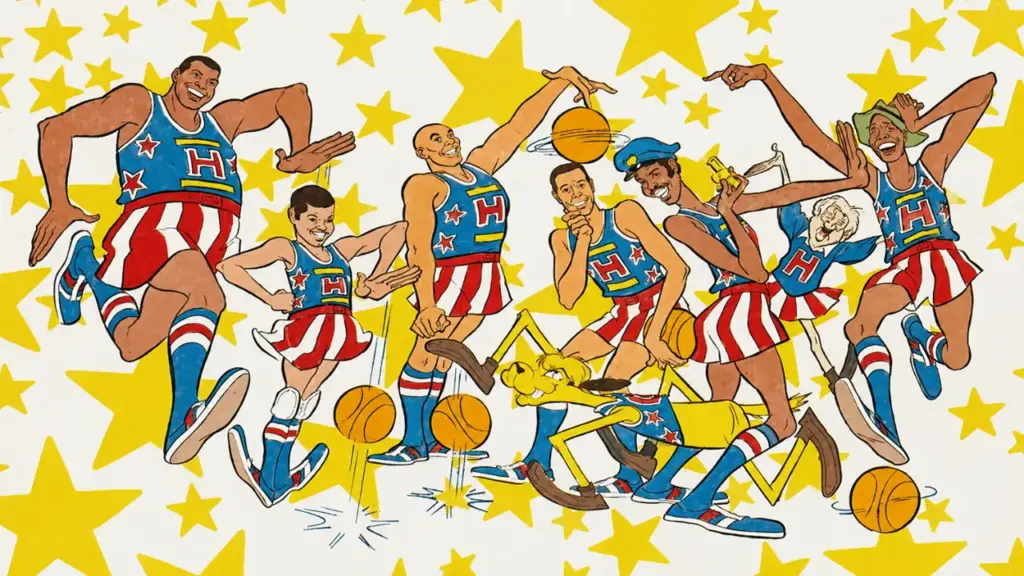
At 9:30, the Harlem Globetrotters cartoon premiered with the first predominantly Black cast in a Saturday morning animated series.
Neither show stopped to announce that history was being made. They arrived as ordinary Hanna-Barbera entertainment, complete with chase scenes, songs, comic villains, and studio laugh tracks.
That almost makes the morning more important.
Black characters were not placed at the edge of the frame or introduced for a single lesson. Valerie was part of the band, and the Globetrotters were the stars of their own adventure series.
The cartoons were light.
The breakthrough was not.
One Morning, Two Saturday Morning Firsts
Claims about television “firsts” need careful wording because several milestones arrived close together.
Filmation had introduced Pete Jones as a recurring member of The Hardy Boys cartoon in 1969. That made him the first positive Black male regular in a Saturday morning animated series, although his speaking voice was performed by a white actor.
The following year, September 1970 moved the history forward in two separate ways.
The milestones, in order
How Saturday morning began to change
- 1969: Pete Jones joins Filmation’s The Hardy Boys
- September 12, 1970 at 9:00 a.m.: Valerie Brown debuts on Josie and the Pussycats
- September 12, 1970 at 9:30 a.m.: Harlem Globetrotters premieres with a predominantly Black cast
- 1971: The Jackson 5ive becomes the next Black-led Saturday morning cartoon
- 1972: Fat Albert and the Cosby Kids begins its long run
Both 1970 shows came from Hanna-Barbera and aired on CBS. In the space of one hour, the same studio put a Black girl at the centre of a famous cartoon band and gave six Black athletes their own network adventure series.
That did not solve animation’s representation problem. It did prove that Black characters could anchor mainstream children’s television without the show being built around a lecture on race.
The Team Was Already Bigger Than Television
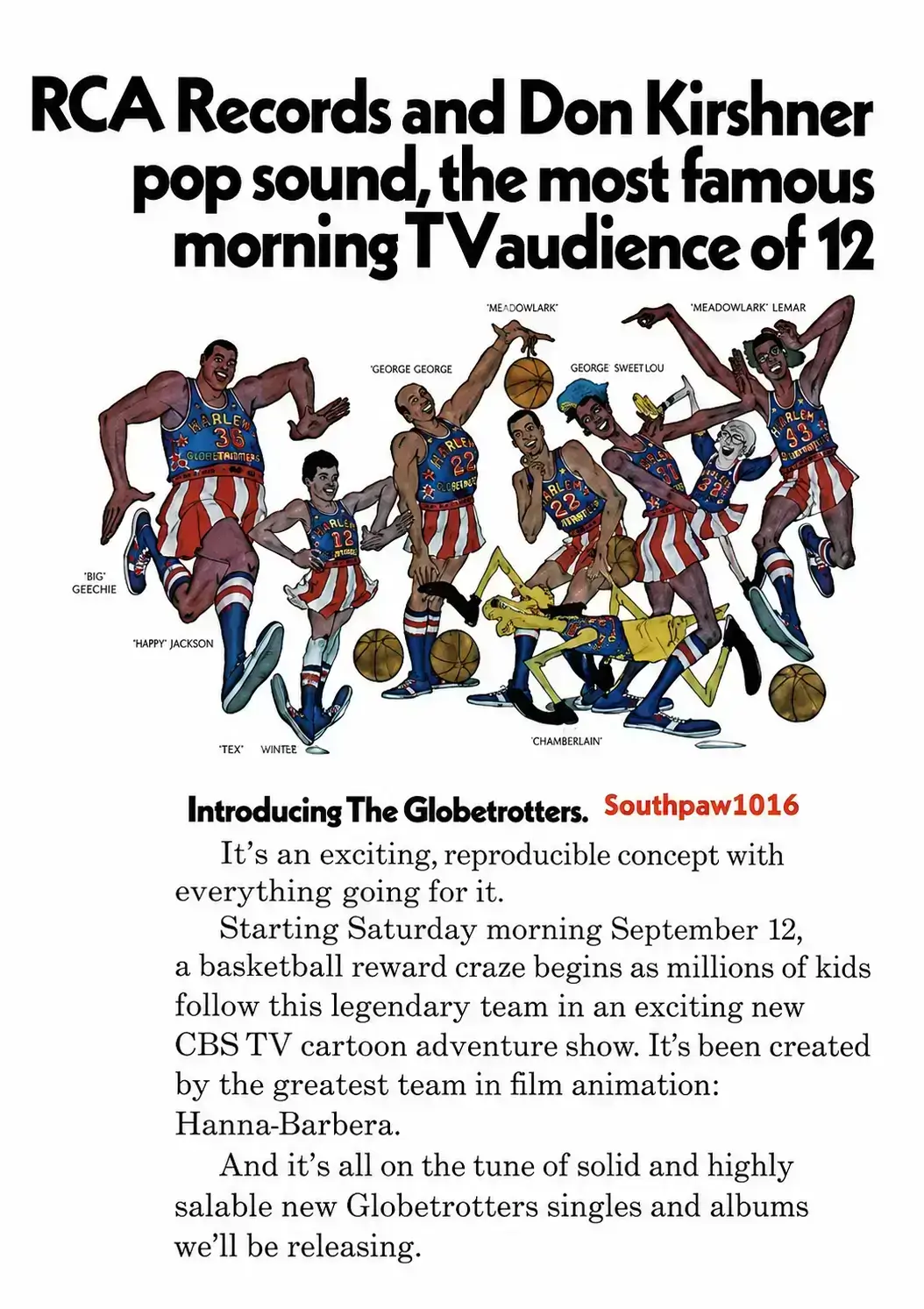
By 1970, the real Harlem Globetrotters were not simply a basketball team. They were an international entertainment act.
Their games combined athletic skill, comedy, trick shots, audience participation, and carefully rehearsed routines. Meadowlark Lemon had become the team’s most recognizable showman, while players such as Curly Neal and Geese Ausbie were familiar public figures.
A cartoon was a natural extension of what the Globetrotters were already doing. Their live games had clear personalities, recurring jokes, heroic wins, and a family audience.
CBS partnered with Hanna-Barbera to produce the series, an unusual co-venture for the network. William Hanna and Joseph Barbera served as executive producers.
The original run produced 22 episodes across two seasons. Sixteen were made for 1970-71, followed by six more in 1971.
The show file
Harlem Globetrotters, 1970
- Premiered on CBS on September 12, 1970
- 22 episodes across two production seasons
- Produced by Hanna-Barbera and CBS Productions
- Based on six real Harlem Globetrotters players
- Later rerun on NBC as part of Go Go Globetrotters
- Followed by The Super Globetrotters in 1979
The series is also widely credited as the first time a professional sports team headlined its own network television series.
How the Cartoon Worked
The formula was simple enough for any child to understand.
The Globetrotters travelled to a new town, became involved in a local problem, and usually agreed to settle the conflict through a basketball game. The villains then cheated, trapped the team, or changed the rules.
For the first half, the Globetrotters struggled.
Then the music began.
The team launched into trick shots, impossible passes, spinning balls, and physical comedy until the villains had no idea what was happening. The game became less like real basketball and more like a musical chase sequence with a scoreboard.
Every episode was predictable, but predictability was part of the appeal. Viewers knew the Globetrotters would eventually turn the game into their kind of basketball.
The format also made the characters heroes without changing what made the real team famous. They won through skill, humour, teamwork, and the ability to embarrass anyone who underestimated them.
The episode formula
- The team arrives somewhere new
- A villain creates a problem
- A basketball game is proposed as the solution
- The opponents cheat or sabotage the Globetrotters
- A musical sequence launches the comeback
- The team wins with trick shots and comic teamwork
The Real Players Became Cartoon Characters
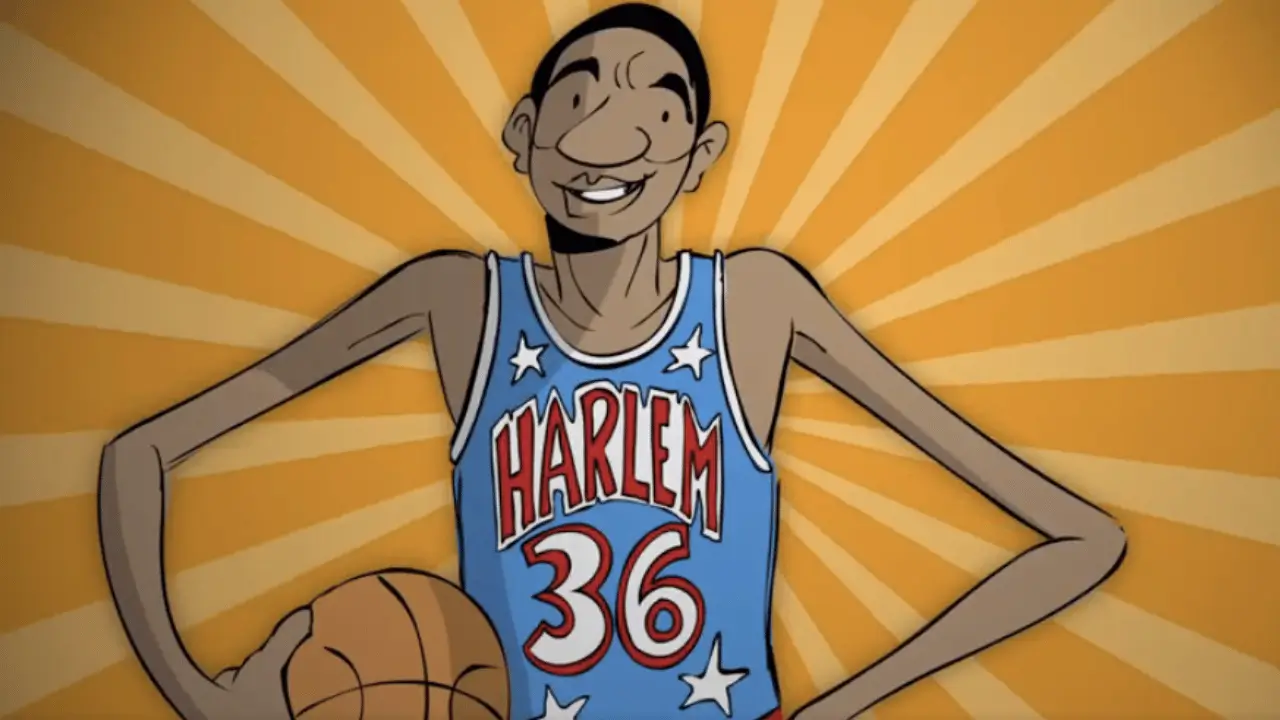
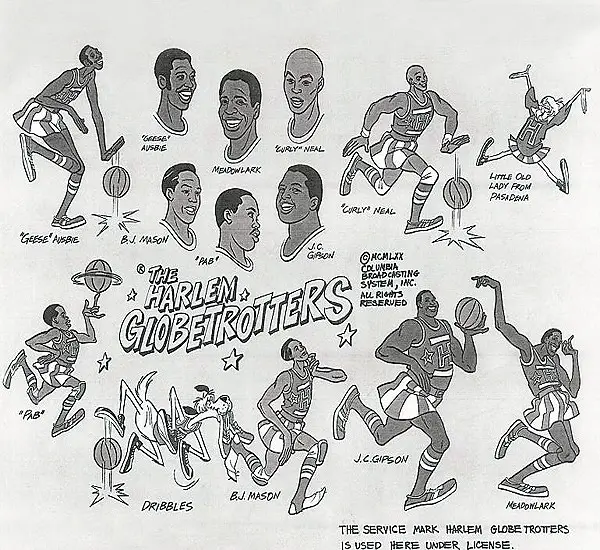
The cartoon roster was based on six real players:
- Meadowlark Lemon: The team’s leader and showman
- Freddie “Curly” Neal: The bald dribbling specialist
- Hubert “Geese” Ausbie: A confident player with a quick sense of humour
- J.C. “Gip” Gipson: The team’s large, powerful presence
- Bobby Joe Mason: The group’s more absent-minded member
- Pablo Robertson: The smallest player on the animated team
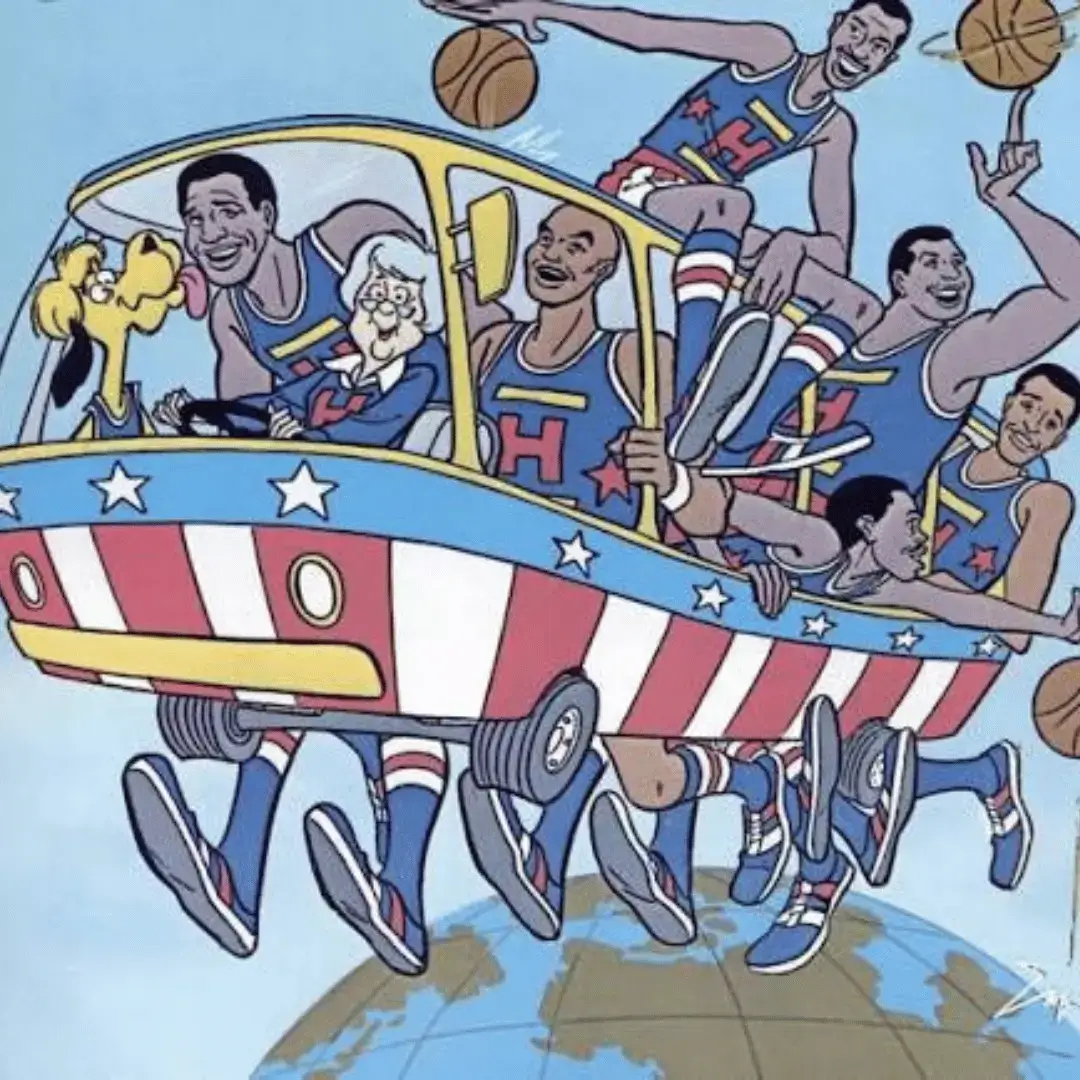
The original plan also included real Globetrotters coach Leon Hillard. During development, he was replaced with Granny, a fictional bus-driving manager voiced by Nancy Wible.
The show also added a dog mascot named Dribbles.
Those fictional additions helped the cartoon function as a travelling comedy. Granny could organize the team, drive the bus, and react to the players’ chaos without replacing one of the athletes as the central figure.
The Voice Cast Was Part of the Milestone
The representation extended beyond the character designs.
The principal Black players were largely performed by Black actors, comedians, and entertainers. That was not guaranteed in 1970, when animation regularly cast white performers in non-white roles.
The core voice cast included:
- Scatman Crothers as Meadowlark Lemon
- Stu Gilliam as Curly Neal
- Johnny Williams as Geese Ausbie
- Richard Elkins as Gip Gipson
- Eddie “Rochester” Anderson as Bobby Joe Mason
- Robert DoQui as Pablo Robertson
- Nancy Wible as Granny
Anderson was already famous for playing Rochester on The Jack Benny Program. Crothers had worked in music, film, and television for decades before becoming one of animation’s most recognizable voices.
The real Meadowlark Lemon also contributed occasional voices and was involved with the cartoon’s music project, but Scatman Crothers performed the regular animated version of him.
For a 1970 Saturday morning recording session, this was an unusually visible concentration of Black talent on both sides of the microphone.
Thirty Minutes Earlier: Valerie Brown
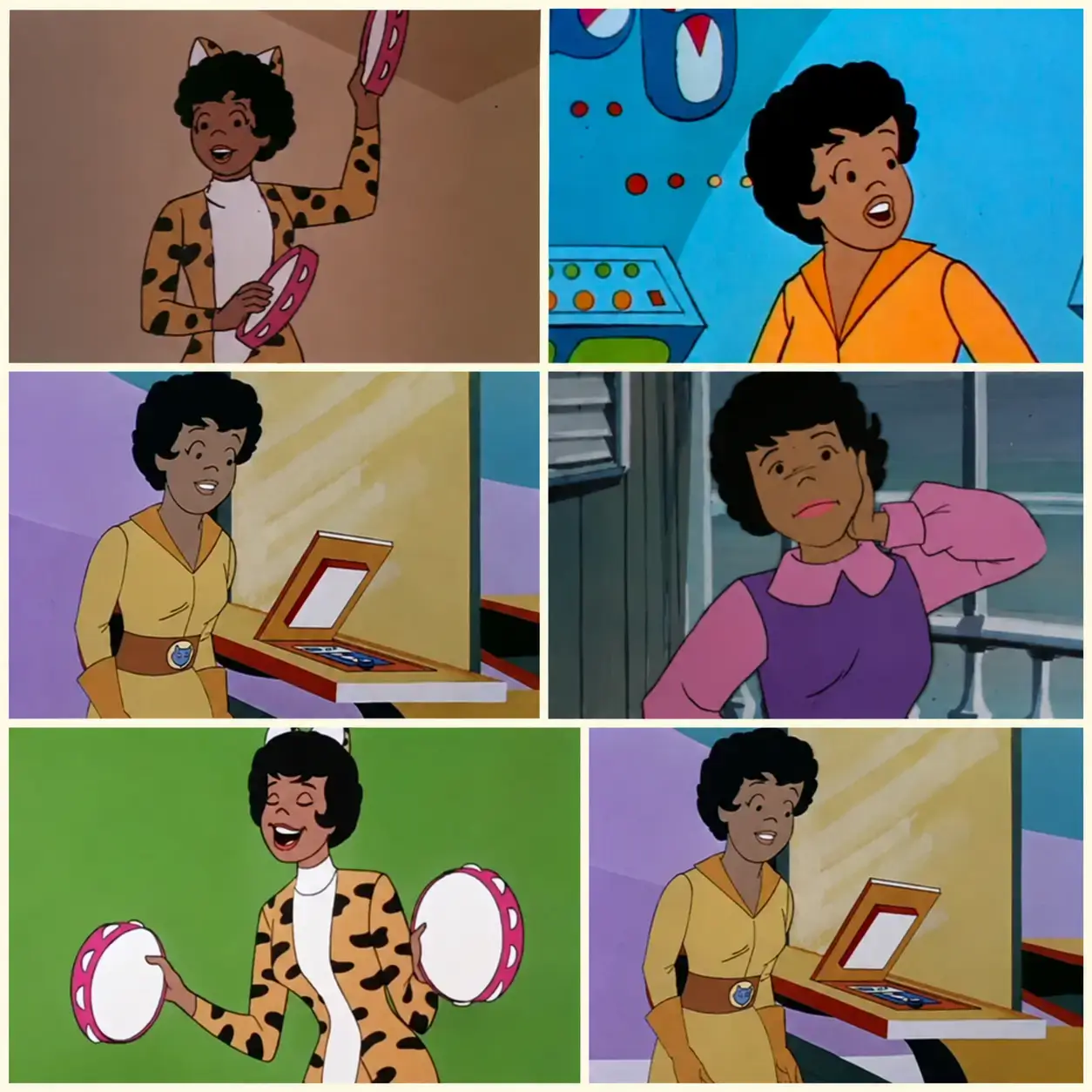
The first milestone that morning belonged to Valerie Brown.
The original Josie comic included a brunette character named Pepper. During development of the Pussycats concept, Pepper was replaced by Valerie, a new Black character who first appeared in Archie Comics in late 1969.
Music producer Danny Janssen had cast Patrice Holloway as Valerie’s singing voice. Holloway was a respected singer and songwriter whose work gave the group a stronger soul influence.
According to later production research published by Cartoon Research, Hanna-Barbera worked with Archie Comics, CBS, and the sponsors to preserve Holloway’s role by formally creating Valerie as a Black member of the group.
Barbara Pariot was hired to provide Valerie’s speaking voice.
That combination created another first. Valerie was not only the first Black female regular in a Saturday morning cartoon. Her spoken and singing performances were both supplied by Black women.
Why Valerie mattered
- She was a permanent member of the main cast
- She was presented as the smartest member of the group
- Barbara Pariot provided her speaking voice
- Patrice Holloway provided her singing voice
- Holloway sang lead on the cartoon’s theme song
Valerie’s intelligence was important. She was often the person who understood the villain’s technology, solved the mystery, or explained how the group could escape.
The Globetrotters followed thirty minutes later as an entire team of Black heroes.
The Don Kirshner Music Machine
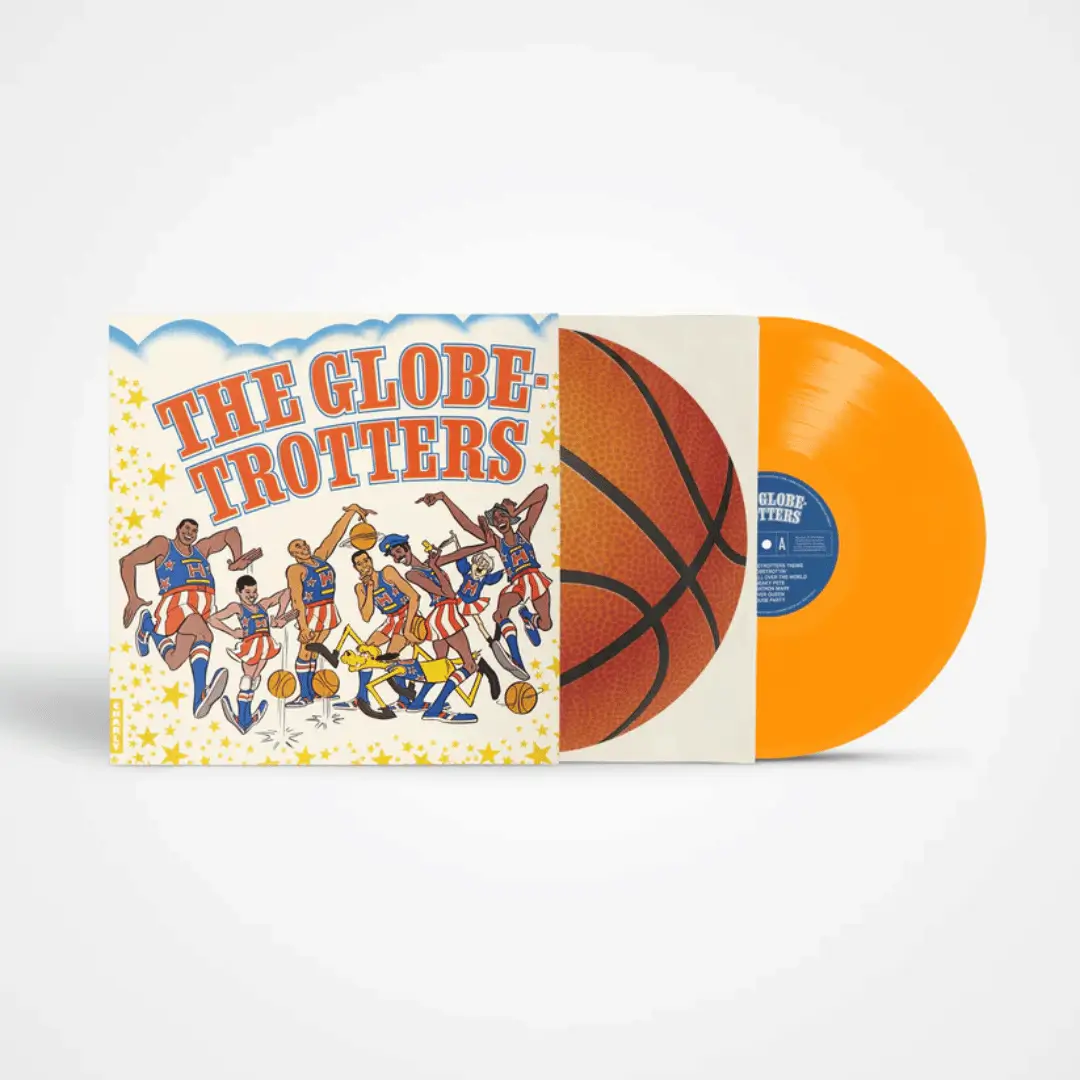
Music was built directly into the series.
Don Kirshner, who had helped turn the Archies into a chart-topping fictional band, supervised the Globetrotters music project. Jeff Barry produced the tie-in album released by Kirshner Records in 1970.
The songs played during basketball sequences, giving each comeback the rhythm of a music video years before that term became common.
Professional singers and studio musicians handled most of the recording. Meadowlark Lemon was the only real Globetrotter known to have contributed vocals, adding background parts to some tracks.
The album included songs written by established pop writers such as Jeff Barry, Neil Sedaka, Howard Greenfield, and J.R. Bailey.
It was the same basic system used for the Archies and the Pussycats. Cartoon characters appeared to perform songs that had been created by experienced studio professionals.
The difference was that the Globetrotters already existed outside television. Their animated images, real-life celebrity, and recorded music all promoted one another.
The Cartoon’s Afterlife
The 22 original episodes were only the beginning of the animated Globetrotters’ television career.
They appeared in three episodes of The New Scooby-Doo Movies between 1972 and 1973, joining Mystery Inc. for hour-long adventures.
NBC later reran the original series under the title Go Go Globetrotters.
In 1979, Hanna-Barbera brought the team back for The Super Globetrotters, a 13-episode series that gave the players individual superpowers.
The Museum of UnCut Funk identifies that sequel as the first positive Black superhero-team cartoon on Saturday morning.
Scatman Crothers returned as the voice of the team’s leader, although the 1979 roster used a different group of Globetrotters from the 1970 cartoon.
The animated timeline
- 1970: Harlem Globetrotters premieres on CBS
- 1972-73: The team appears on The New Scooby-Doo Movies
- Late 1970s: NBC reruns the original show as Go Go Globetrotters
- 1979: The Super Globetrotters turns the team into superheroes
The Door Stayed Open
The next season brought The Jackson 5ive to ABC. In 1972, Fat Albert and the Cosby Kids began what would become the longest-running Black-led Saturday morning cartoon of its era.
Other Black characters and ensembles followed, including the multicultural cast of Kid Power, Verb on Schoolhouse Rock!, and Astrea on Space Sentinels.
The landscape did not change overnight, and representation remained uneven for decades.
Still, the question had changed.
Before September 1970, executives could claim that a Black cast had never carried a Saturday morning cartoon. After the Globetrotters premiered, that argument no longer existed.
The Milestone, Measured Fairly
An honest reading of the show has to hold two ideas at once.
Harlem Globetrotters was a formula comedy designed for commercial Saturday morning television. It used laugh tracks, repeated plots, broad villains, and songs intended to sell records.
It was also a landmark.
The Museum of UnCut Funk calls it the first positive Black cast in a Saturday morning cartoon, and that word matters.
The Globetrotters were not servants, sidekicks, stereotypes, or background decoration. They were famous athletes playing heroic versions of themselves.
They travelled the world, solved problems, helped strangers, and defeated people who assumed they could be cheated.
Millions of children watched Black characters presented as talented, funny, confident, and almost impossible to beat.
The show belongs beside the other foundational Black cartoon characters of the era. A foundation does not have to be serious to matter.
This one arrived with trick shots, bubblegum music, and a studio laugh track.
Quick Answers About the Harlem Globetrotters Cartoon
What was the first Saturday morning cartoon with a predominantly Black cast? Harlem Globetrotters, which premiered on CBS on September 12, 1970. It was produced by Hanna-Barbera and CBS Productions.
Who was the first Black female regular in a Saturday morning cartoon? Valerie Brown of Josie and the Pussycats. That series premiered thirty minutes before Harlem Globetrotters on the same CBS schedule.
Who voiced the animated Harlem Globetrotters? The cast included Scatman Crothers as Meadowlark Lemon, Stu Gilliam as Curly Neal, Johnny Williams as Geese Ausbie, Richard Elkins as Gip Gipson, Eddie Anderson as Bobby Joe Mason, and Robert DoQui as Pablo Robertson.
How many episodes were produced? Hanna-Barbera produced 22 episodes across two seasons. Sixteen were made for 1970-71, followed by six additional episodes in 1971.
Did the real Harlem Globetrotters voice themselves? Mostly no. Professional actors performed the regular roles. The real Meadowlark Lemon contributed occasional voices and some background vocals connected with the music project.
Was there a sequel? Yes. The Super Globetrotters aired on NBC in 1979 and gave a later team of Globetrotters individual superpowers.
The Morning That Made History
Television history rarely arranges itself this neatly.
One network. One studio. One morning. Two milestones separated by thirty minutes.
Valerie Brown became Saturday morning’s first Black female regular. The Harlem Globetrotters followed with its first predominantly Black cast.
Neither cartoon was perfect, and neither completed the work that representation still needed.
They did something more basic.
They proved that Black characters could be the smartest person in the band, the heroes of the story, and the stars children woke up early to watch.
Which overlooked piece of animation history should this series document next?
Share your pick in the comments.
The strongest cases may decide the next assignment.