
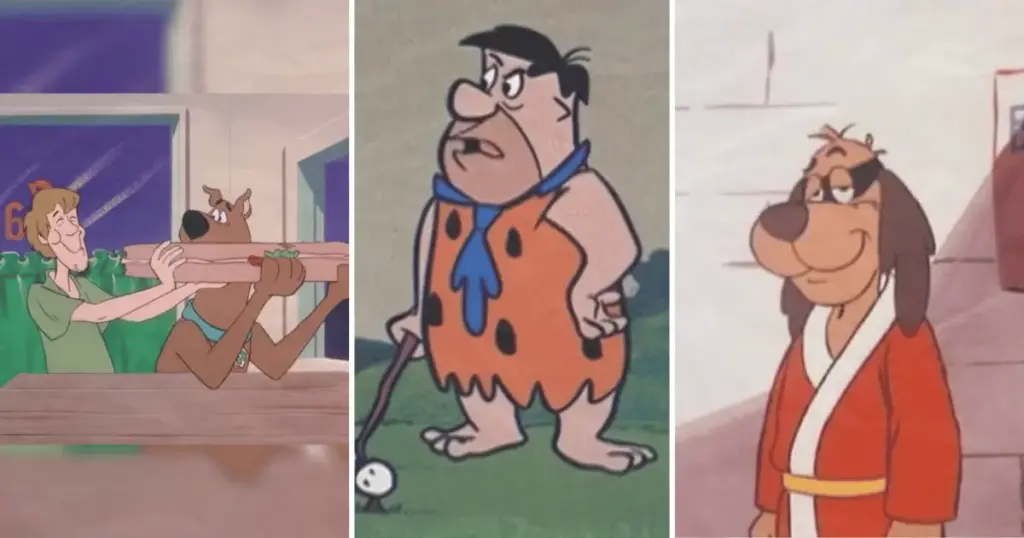
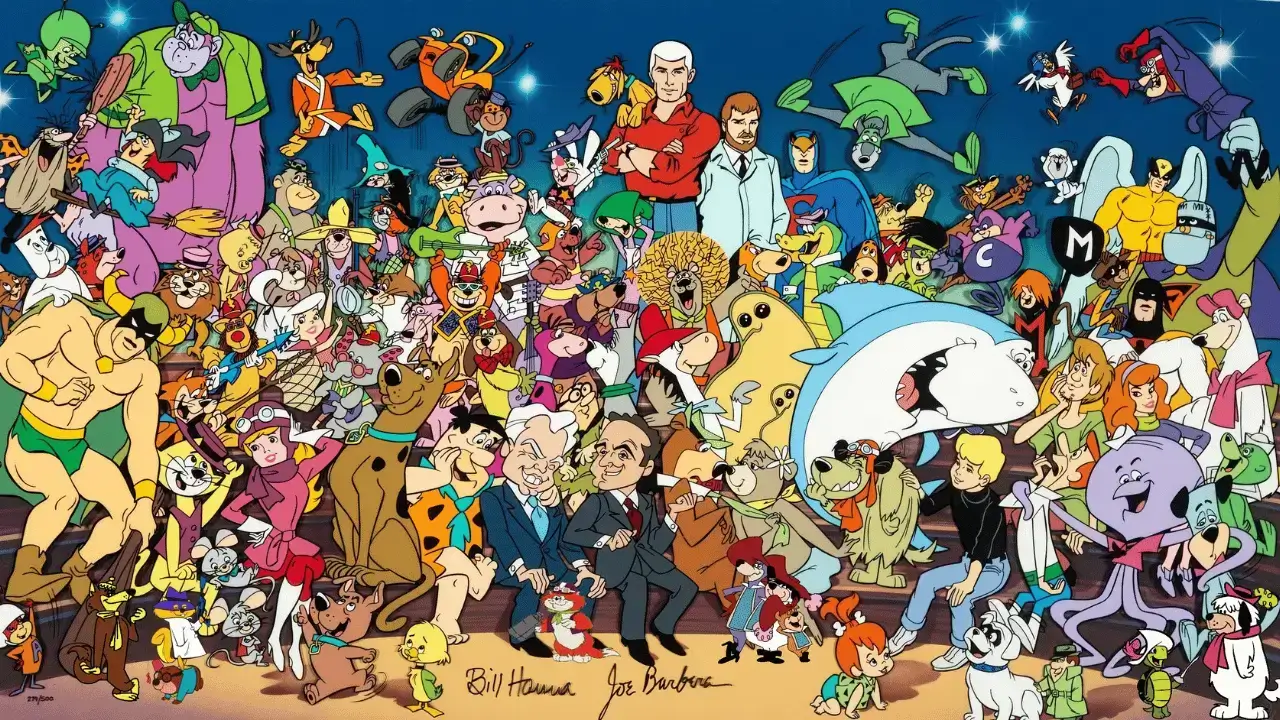
For more than thirty years, two names sat at the centre of American television animation: William Hanna and Joseph Barbera.
From the late 1950s through the 1980s, their characters seemed to be everywhere. Turn on a television after school or on Saturday morning, and there was a good chance a Hanna-Barbera cartoon was already playing.
The pair did not invent limited animation, but they turned it into a practical system for television. That system helped move animation out of expensive theatrical shorts and into millions of homes every week.
They gave audiences a Stone Age sitcom, a mystery-solving Great Dane, a family from the future, and dozens of stranger ideas in between. The story behind those shows, however, is less tidy than the nostalgia makes it seem.
Hanna-Barbera rose by finding a way to make television animation work. It later struggled when that efficient system became an assembly line, and then found one last burst of creative life under a new generation of artists.
The Three Defining Eras of Hanna-Barbera
The studio’s history can be divided into three broad periods:
| Era Name | Timeframe | Iconic Shows |
|---|---|---|
| The Golden TV Age | 1957 to 1969 | The Flintstones, The Jetsons, Jonny Quest, Scooby-Doo, Where Are You! |
| The Saturday Morning Blur | 1970 to 1989 | The Super Friends, The Smurfs, Jabberjaw, Captain Caveman |
| The Renaissance & Legacy | 1990 to 2001 | 2 Stupid Dogs, Dexter’s Laboratory, The Powerpuff Girls |
The Rise: Reinventing Animation for Television
Before they became the kings of Saturday morning, Bill Hanna and Joe Barbera spent nearly two decades at MGM directing the lavish Tom and Jerry theatrical shorts.
That chapter ended abruptly in 1957 when MGM closed its animation department. Roughly 110 employees lost their jobs, including Hanna and Barbera. Theatrical cartoons were becoming harder to justify, and television offered smaller budgets but a much larger appetite for new material.
Their answer was limited animation. Instead of redrawing every part of a character for every movement, artists reused backgrounds and body cels while changing only the head, mouth, arms, or other pieces needed for the shot.
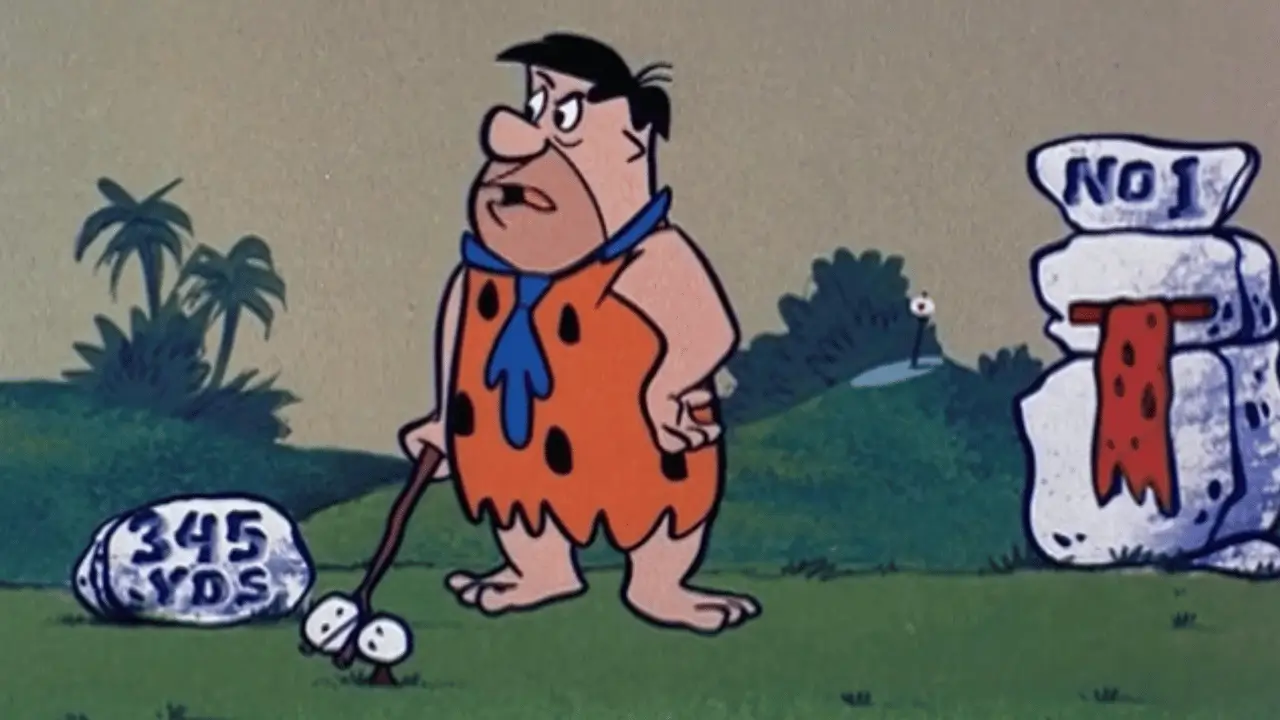
That is one reason characters such as Yogi Bear and Fred Flintstone wear collars or ties. The accessory creates a clean break between the head and torso, allowing one part to move while the rest of the drawing stays in place.
Historical Milestone: In 1960, The Flintstones became the first animated series made for a prime-time network schedule. It ran for six seasons on ABC and remained television’s longest-running prime-time cartoon until The Simpsons passed it in the 1990s.
The Flintstones proved that animation could work as a family sitcom rather than a short novelty. Hanna-Barbera spent the rest of the decade testing how far television cartoons could stretch.
Jonny Quest (1964) was one of the studio’s boldest experiments. Artist Doug Wildey replaced the rounded comedy style with sharp, comic-strip realism influenced by Milton Caniff’s Terry and the Pirates. The show offered jet packs, spies, monsters, and a young hero who often faced genuine danger. ABC scheduled it in prime time on Friday nights.
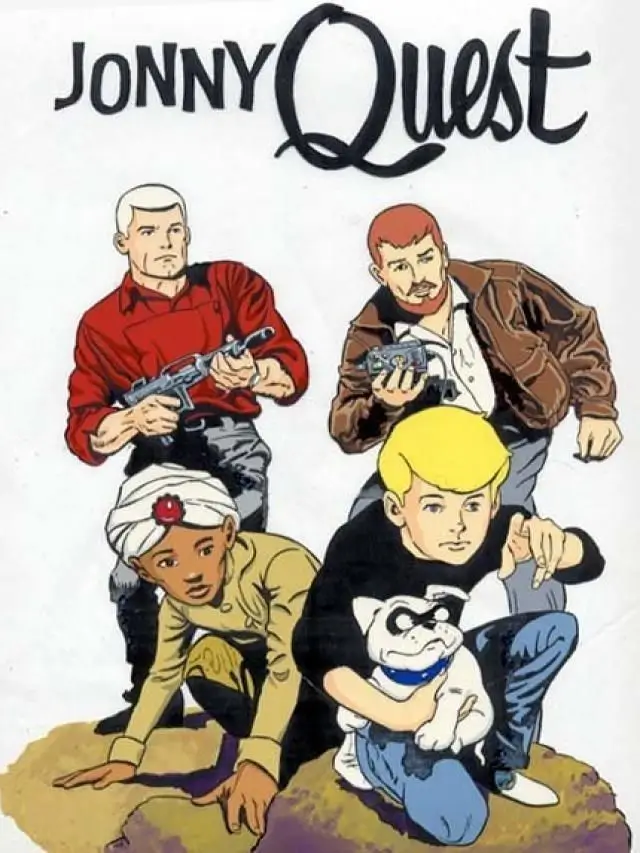
The original run lasted 26 episodes. Its detailed designs and action staging made it more expensive than the studio’s comedy shows, and ABC did not order a second season. Reruns later gave it a much longer life than that short first run suggests.
That tension runs through Hanna-Barbera’s entire early history.
Hanna-Barbera could produce ambitious work, but the low-cost television model that made the studio possible did not always reward ambition.
Jonny Quest helped open the door for a wave of Hanna-Barbera action series, including Space Ghost, The Herculoids, and Birdman and the Galaxy Trio.
Then the mood around children’s television changed. By the late 1960s, parents’ groups, educators, and network standards departments were pressing broadcasters to reduce violence in Saturday morning cartoons. Action for Children’s Television, founded in 1968, became one of the most visible voices in that debate.
Networks quickly moved away from many of the action-heavy shows.
CBS executive Fred Silverman wanted a program that could still deliver suspense without relying on superheroes, weapons, or constant combat.
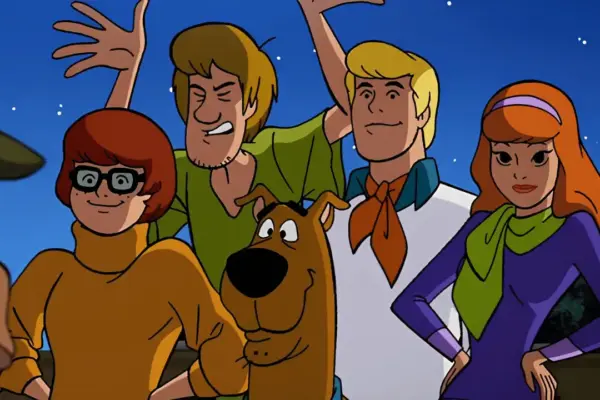
Writers Joe Ruby and Ken Spears developed the basic idea, while character designer Iwao Takamoto gave the cast its final look. After working titles that included Mysteries Five and Who’s S-S-Scared?, Scooby-Doo, Where Are You! premiered on September 13, 1969.
It became one of the most durable properties Hanna-Barbera ever created.
It also gave the studio a formula that proved almost too tempting to repeat.
The Gradual Fall: Volume, Ownership, and Repetition
Hanna-Barbera did not collapse after one bad season. The decline happened slowly, as ownership pressure, stricter network rules, and an enormous production schedule began pulling the studio in the same direction.
Ownership changed first. In 1966, Hanna, Barbera, and original investor George Sidney sold the company to Taft Broadcasting for a reported $12 million. Bill and Joe remained in charge of production, but the studio now belonged to a larger corporation that valued reliable output.
Network standards tightened next. As criticism of violence grew, broadcasters became more cautious throughout the 1970s. Threats became less intense, slapstick became gentler, and many stories were shaped around what standards departments would approve.
The strangest example arrived in 1975, when Hanna-Barbera brought Tom and Jerry to television as friends who travelled and solved problems together. The men who had built their careers on the pair attacking one another were now working under rules that discouraged the old violence.
Then came the sheer volume of work. The networks needed hours of new Saturday morning programming, and Hanna-Barbera became the studio most willing and able to supply it.
The problem was that reliable ideas soon became repeatable formulas. The Scooby-Doo setup was especially easy to rebuild with a new mascot, vehicle, or setting:
- Jabberjaw: Teenagers in an underwater band solving mysteries with a talking shark.
- Goober and the Ghost Chasers: Teenagers solving mysteries with a dog that turns invisible.
- The Funky Phantom: Teenagers solving mysteries with a colonial-era ghost.
- Speed Buggy: Teenagers solving mysteries with a talking dune buggy.
The schedules were tight, and the shortcuts became easier to notice. Colours changed between shots, movement cycles returned again and again, and the same rocks or trees could pass in the background several times during one chase.
By the late 1980s, children’s television was changing again. Weekday syndication had become a major battleground, with shows such as He-Man, The Transformers, and Disney’s DuckTales competing for viewers. Beside those newer productions, the familiar Hanna-Barbera house style was beginning to show its age.
How the Slide Happened (1970 to 1989)
The decline was gradual, but four moments show how the studio moved from dependable powerhouse to a company searching for its next identity.
1970
The Scooby-Doo Formula Takes Hold
Josie and the Pussycats arrived one year after Scooby with another travelling group of teenagers, another vehicle, and another weekly mystery. The formula was successful and easy to understand, so the networks kept asking for variations. What began as one clever solution slowly became the studio’s safest default.
1976
The Assembly Line Starts to Show
By the middle of the decade, Hanna-Barbera was producing so much television that the strain became visible. Shows such as Jabberjaw and Captain Caveman reused movement and familiar story structures, while paint mistakes and looping backgrounds became part of the studio’s reputation.
1983
The Toy-Driven Syndication Shift
The Smurfs was a genuine hit and gave Hanna-Barbera one of its biggest successes in years. At the same time, the wider business was moving toward toy-backed series built for weekday syndication. He-Man and the Masters of the Universe helped make the afternoon schedule just as important as Saturday morning.
1987
Disney Raises the Bar
When DuckTales entered syndication in 1987, its richer movement, strong music, and polished presentation made many older television cartoons look dated. Hanna-Barbera was also caught in corporate upheaval: a hostile takeover of Taft led to the company being renamed Great American Broadcasting, and the animation studio would soon be placed on the market.
The Rebirth: Passing the Torch to a New Generation
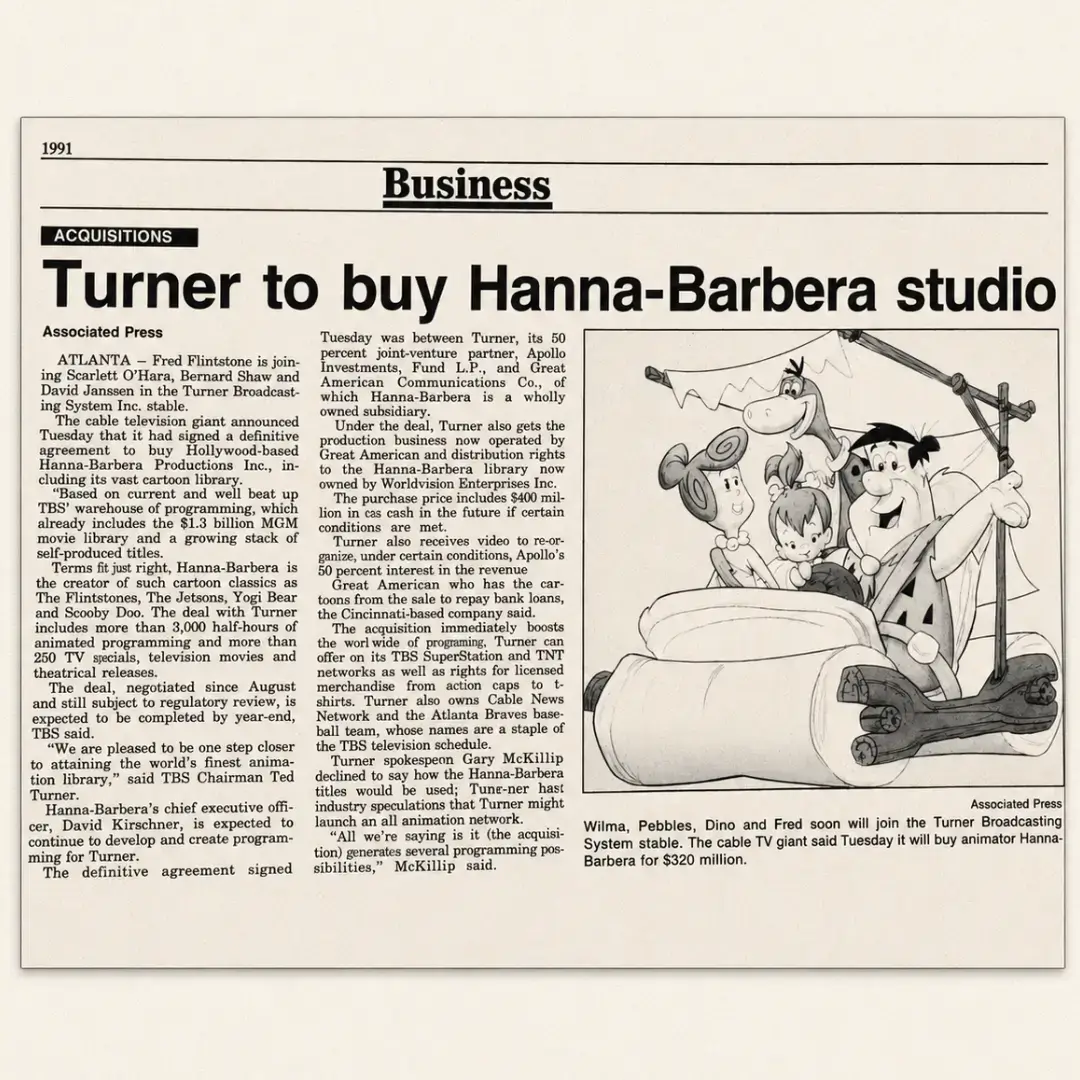
In 1991, Turner Broadcasting and Apollo Investment Fund agreed to buy Hanna-Barbera and its library for as much as $320 million. The back catalogue was the main prize, and in 1992 Turner used that enormous supply of animation to launch a 24-hour cable channel: Cartoon Network.
A channel built entirely around cartoons could not survive on reruns forever. In 1992, Fred Seibert became president of Hanna-Barbera and began pushing the studio back toward creator-led shorts and original characters.
The centrepiece was What a Cartoon!, a program of original seven-minute films developed by individual creators. Instead of designing every show through committees, Hanna-Barbera gave artists room to pitch, storyboard, and shape their own ideas. Several of those shorts later grew into full series.
2 Stupid Dogs became an important early bridge, employing young artists such as Craig McCracken and Genndy Tartakovsky. The wider creative push soon produced Dexter’s Laboratory, Johnny Bravo, Cow and Chicken, and The Powerpuff Girls.
For a brief period, the oldest major name in television animation felt new again. The studio had rediscovered the idea that made its earliest successes work: give talented people a clear format, then let personality carry the show.
The Final Chapter: How Hanna-Barbera Ended
The revival was real, but the Hanna-Barbera name was already moving toward its final corporate chapter.
Turner merged with Time Warner in 1996, placing Hanna-Barbera inside the same company as Warner Bros. Animation. Production continued, but the newer Cartoon Network shows gradually developed their own studio identity while the classic Hanna-Barbera characters moved under the Warner Bros. umbrella.
In 2001, Hanna-Barbera stopped operating as a separate production studio and was absorbed into Warner Bros. Animation. The name remained attached to its characters and library. William Hanna died on March 22 of that same year.
Joe Barbera lived for another five years and continued working with the characters he had helped create. He directed and storyboarded the Tom and Jerry short The Karate Guard, released in 2005, with Iwao Takamoto also contributing to the storyboard. Barbera died on December 18, 2006.
What is striking is how little of the studio’s influence disappeared with the company itself. The Flintstones proved that an animated sitcom could survive in prime time. Space Ghost Coast to Coast helped establish the strange comic voice that later fed Adult Swim. Scooby-Doo continued through new series and films. The studio closed, but its ideas kept being rebuilt.
The Animation Vault: 3 Facts You Did Not Know About Hanna-Barbera
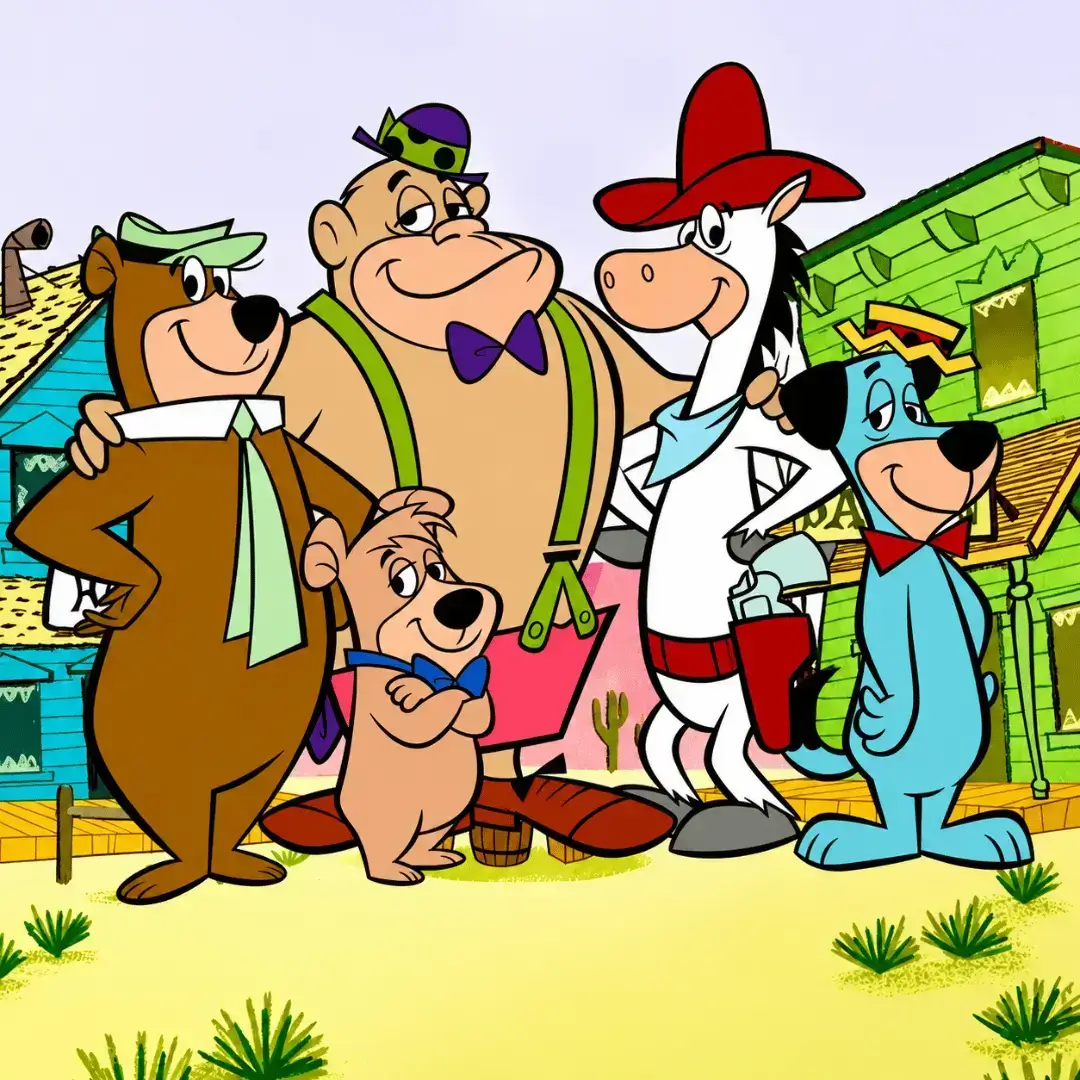
Fun Fact: Notice how many classic Hanna-Barbera characters wear neck accessories? It started as an engineering hack.
The familiar characters are only half the story. Hanna-Barbera’s rise also depended on practical production decisions, unusual award history, and a library that later found uses nobody could have predicted.
1. The “Collar and Tie” Trick That Saved Drawings
Look closely at the classic cast and neckwear appears everywhere. Yogi Bear has a collar and tie, Fred Flintstone wears a loose blue tie, Huckleberry Hound has a bow tie, and Top Cat wears a vest with a tie.
The accessories were not only decorative. They also made the characters easier to animate on television budgets.
At MGM, a theatrical Tom and Jerry short could require tens of thousands of drawings. A television episode had to be produced with only a fraction of that number.
A collar or tie created a clear seam between the head and body. Animators could hold the torso on one cel while replacing the head or mouth drawings needed for dialogue. It was a small design choice that saved a remarkable amount of labour.
2. Seven Oscars, but the Awards Went to the Producer
Before founding their own studio, Hanna and Barbera spent nearly two decades directing the Tom and Jerry theatrical shorts. Thirteen were nominated for Academy Awards and seven won, tying Disney’s Silly Symphonies for the most victories by a theatrical cartoon series.
The statuettes, however, were not presented to Hanna and Barbera.
Under the Academy rules and studio structure of the period, the award was credited to producer Fred Quimby. Hanna and Barbera were the directors who shaped the shorts, but Quimby’s name appeared on the winning entries and the Oscars went to him.
Their own company received a major trophy in 1960, when The Huckleberry Hound Show won an Emmy for children’s programming. It was the first animated television series to receive an Emmy.
3. How Old Hanna-Barbera Footage Helped Shape Adult Swim
Hanna-Barbera’s library included many action and science-fiction series that had enjoyed short original runs. Space Ghost lasted one season in 1966, while Alex Toth’s underwater series Sealab 2020 produced 13 episodes in 1972.
In the 1990s, producers at Cartoon Network discovered that the old animation could become raw material for something completely different.
Space Ghost Coast to Coast reused the superhero characters and limited footage inside a surreal talk-show parody. Years later, Sealab 2021 rebuilt the underwater adventure as an adult workplace comedy.
That low-budget, remix-heavy approach helped establish the comic culture that led to Adult Swim, which officially launched in September 2001. Shows that once seemed trapped in the archive became part of a new movement in adult television animation.
Brain Snacks
The Rapid-Fire Trivia Board
A few more details from the studio’s long history.
The Multi-Voice Master
Voice actor Daws Butler performed six racers in Wacky Races, including Peter Perfect, Red Max, Rock Slag, Rufus Ruffcut, Sergeant Blast, and Big Gruesome.
Too Good To Afford
Jonny Quest lasted only 26 original episodes. Its detailed artwork made it unusually expensive for television animation, and cost is widely cited as a major reason ABC did not order another season.
The Last-Minute Lady
Penelope Pitstop was not part of the earliest Wacky Races lineup. Designers Iwao Takamoto and Jerry Eisenberg added her after Joseph Barbera asked for a woman among the racers.
One Dog, Two Voices
Don Messick voiced both Scooby-Doo and Astro from The Jetsons. The two performances share Messick’s playful habit of adding an “R” sound to the beginning of words.
Who’s S-S-Scared?
Scooby-Doo went through several concepts and titles before reaching television, including Mysteries Five and Who’s S-S-Scared?.
A Global Audience
At the studio’s 1960s peak, Hanna-Barbera programs reportedly reached more than 300 million viewers worldwide and were translated into over 28 languages.
What’s Your Ultimate Hanna-Barbera Show?
Whether you first met Hanna-Barbera through a polished 1960s classic, a strange 1970s mystery show, or a rerun years later, Bill Hanna and Joe Barbera helped define what television animation looked and sounded like for generations.
So which show still belongs at the top of your list?
Is it the Stone Age sitcom, the mystery van, the family in space, or one of the forgotten titles buried deeper in the catalogue?
Share your pick in the comments below.
To see how the studio’s 1990s revival began, read our full breakdown of Why 2 Stupid Dogs Was the Cult Classic That Helped Revive Hanna-Barbera.

People always talk about the limited animation, but what made early Hanna-Barbera work was the brilliant voice talent. Daws Butler and Don Messick carrying those early shows with distinct personalities and snappy dialogue really set the blueprint for TV animation.