
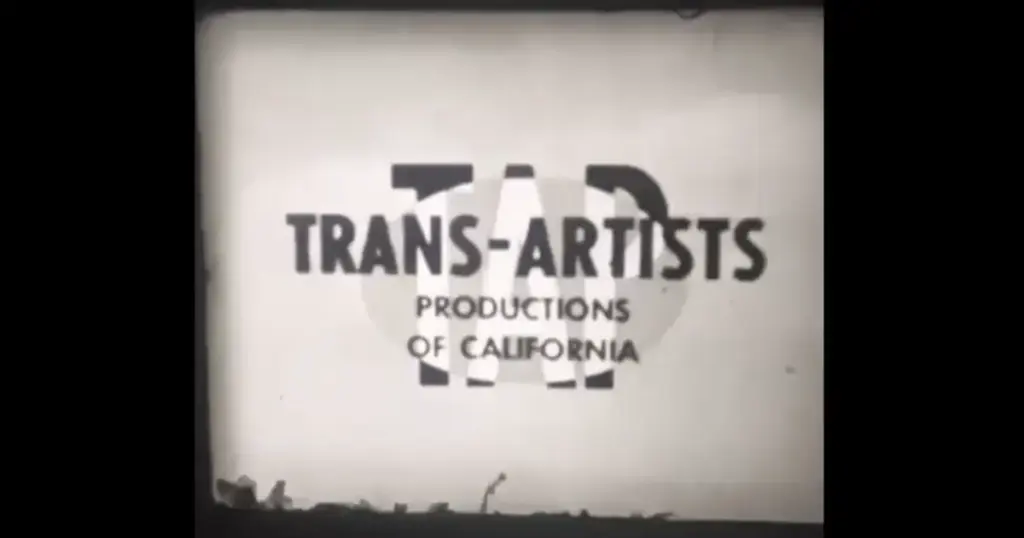
Trans-Artists Productions, Inc. was a real company, and the paper trail survives.
The studio made 166 cartoons across two series, kept a sales office at 74 Fifth Avenue in New York, and ran a production shop in Hollywood. Its president was Sam Singer, the producer animation historian Jerry Beck later dubbed “the Ed Wood of animation.”
Company File
- Corporate name: Trans Artists Productions, Inc. (screen credits hyphenate it as Trans-Artists)
- New York office: 74 Fifth Ave., New York, NY – telephone PLaza 1-4352
- Production studio: Hollywood, California, per the end titles and trade press
- Principal: Samuel “Sam” Singer, listed as the company’s executive in trade directories
- Documented activity: November 1958 through the 1965 trade directories
- Known output: Bucky and Pepito (36 episodes) and Courageous Cat and Minute Mouse (130 episodes)

What Was Trans-Artists Productions, Inc.?
Trans-Artists Productions was a small independent producer of television cartoons during the first syndication boom.
Local stations in the late 1950s needed cheap kids’ programming by the hour, and dozens of tiny film companies rushed in to sell it. Trans-Artists sat at the budget end of that gold rush, turning out five-minute cartoons at a pace of one or two per week.
The company never made a network show. Instead, it sold its films market by market through distribution partners, which is exactly how the era’s smallest studios stayed alive.
Who Owned Trans-Artists Productions?
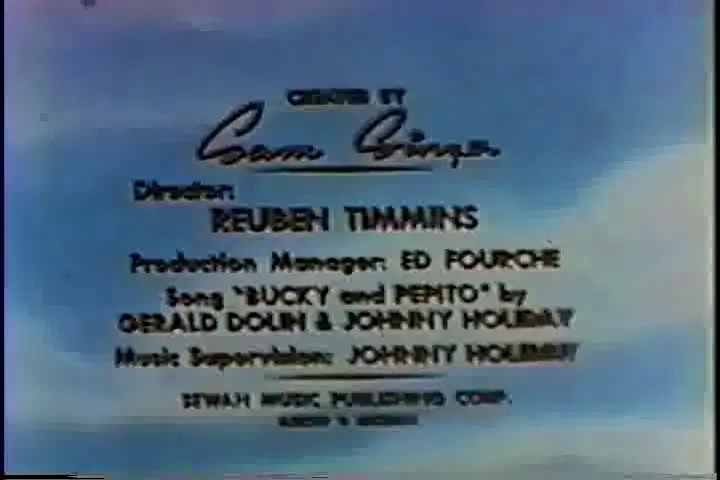
Every document that names the company also names Sam Singer.
Singer was a Chicago-raised animator, born August 27, 1912, who had passed through Disney, other 1930s Hollywood studios, and Terrytoons before striking out on his own. His resume runs from a 1948 Chicago puppet show through Paddy the Pelican (1950), Adventures of Pow Wow (1957), and then the two Trans-Artists series.
Trade directories list Singer as the company’s executive at the New York office. Whether he had silent money partners, as he did with the Minskoff real estate family at his earlier Tempe-Toons outfit, is not documented.
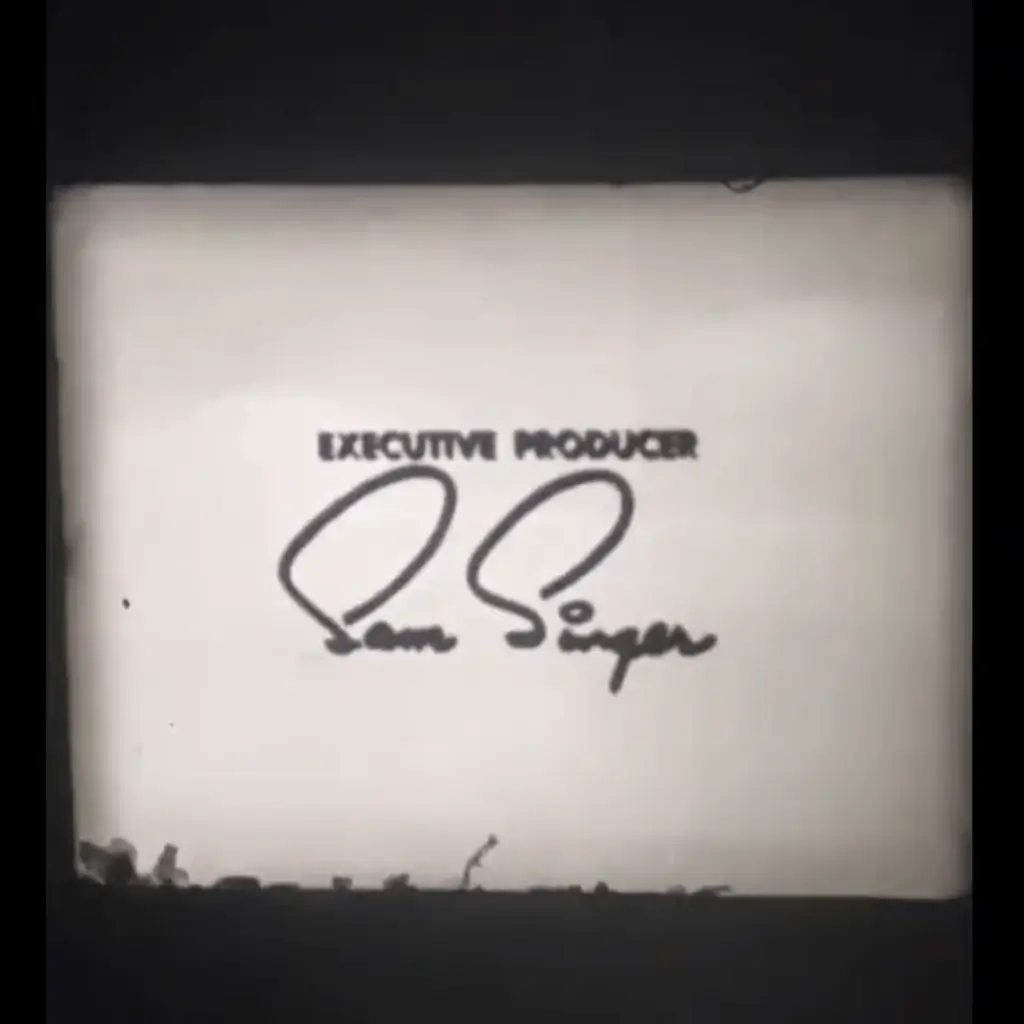
Singer’s reputation is the reason anyone still asks about this company. Jerry Beck called him “the Ed Wood of animation,” and both Trans-Artists series turn up on worst-cartoons-ever lists to this day. I cover that side of the story in my article on Bucky and Pepito, the cartoon too cheap to copyright.
A Company With Two Addresses
The paperwork places Trans-Artists Productions on both coasts at once, and both addresses check out.
- New York: The International Television Almanac lists the company at 74 Fifth Ave., New York, with the phone number PLaza 1-4352. That old exchange dials as 751-4352.
- Hollywood: The end titles on surviving prints read “Trans-Artists Prod. Inc., Hollywood, Calif.” A June 1960 trade report likewise refers to the company’s Hollywood studio.
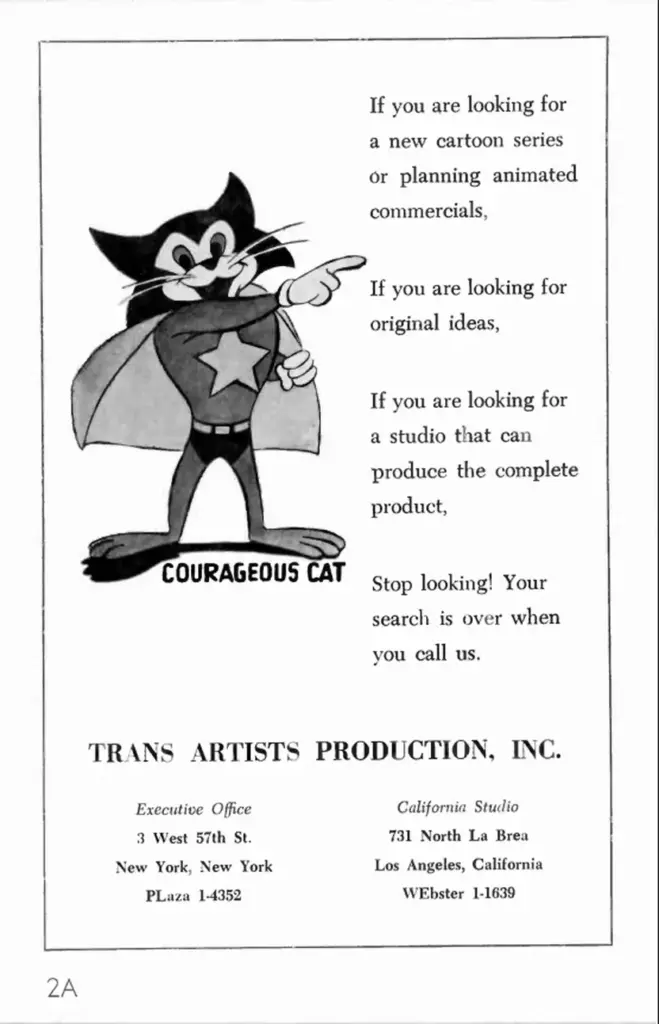
There is no contradiction here. Small TV film companies of the era routinely kept a Manhattan sales office, because that is where stations and distributors shopped, while the actual animation happened in a cheaper building out west.
Fifth Avenue was the storefront. Hollywood was the factory.
The Documented Record, Year by Year
Here is every dated appearance of the company and its films that survives in print, in order.
| Date | What the record shows | Where it survives |
|---|---|---|
| Nov 26, 1958 | Variety announces 52 color Bucky and Pepito cartoons in production for distributor Governor TV, seven already finished, first sale to WHDH-TV Boston | Tralfaz trade digest |
| Dec 3, 1958 | Variety ad offers early station buyers 200 hand-painted Bucky and Pepito stills | Same Tralfaz digest |
| Dec 5, 1958 | The Bucky and Pepito theme song is registered for copyright (music by Gerald Dolin, lyrics by Johnny Holiday) | U.S. Copyright Office printed catalogs |
| Apr 15, 1959 | Samsing Creations registers the Bucky and Pepito copyright; nobody ever files the renewal | Same Tralfaz digest; printed Copyright Office catalogs |
| Late 1959 | Radio-TV Daily reports the series in 25 markets, with new sales to NTA-TV New York, WGN-TV Chicago, and KCOP Los Angeles | Same Tralfaz digest |
| Dec 30, 1959 | The Los Angeles Times lists Bucky and Pepito inside KCOP’s Webster Webfoot Show | Same Tralfaz digest |
| 1960-1965 | The International Television Almanac carries the company’s listing at 74 Fifth Ave., with Samuel Singer named, across five located editions | World Radio History scans |
| Apr 1960 | Variety reports Tele Features acquiring distribution of Courageous Cat and the older Pow Wow library | Tralfaz 1960 digest |
| June 16, 1960 | Motion Picture Daily reports the Tele Features contract for 260 Courageous Cat films, financed at over a million dollars, in production at the company’s Hollywood studio | Same Tralfaz 1960 digest |
| 1961 | The Catalog of Copyright Entries registers Courageous Cat episodes to Trans Artists Productions, Inc. and Bob Kane jointly, under numbers like LP19383 and LP19396 | Internet Archive scan |
| Nov 30, 1962 | The final new Courageous Cat episode reaches stations, closing out the studio’s production run | Wikipedia episode list |
| 1965 | The company’s last located trade directory listing appears; its operating record ends here | World Radio History scans |
| Dec 29, 1988 | Telefeatures files renewal registrations on Courageous Cat episodes credited to Trans Artists Productions, Inc. (RE0000413818 through RE0000413821) | Copyright Public Records System |
| Aug 1, 2011 | A document naming Trans Artists Productions, Inc. and Trans National Film Corporation as parties to a Courageous Cat transfer is recorded (V3601D363) | Same federal database |
One telling detail hides in that first item. Variety mangled the studio’s name in its own announcement, which says plenty about how far below the radar this operation flew from day one.
Which Cartoons Did Trans-Artists Productions Make?
The company’s documented filmography is exactly two series, totaling 166 films.
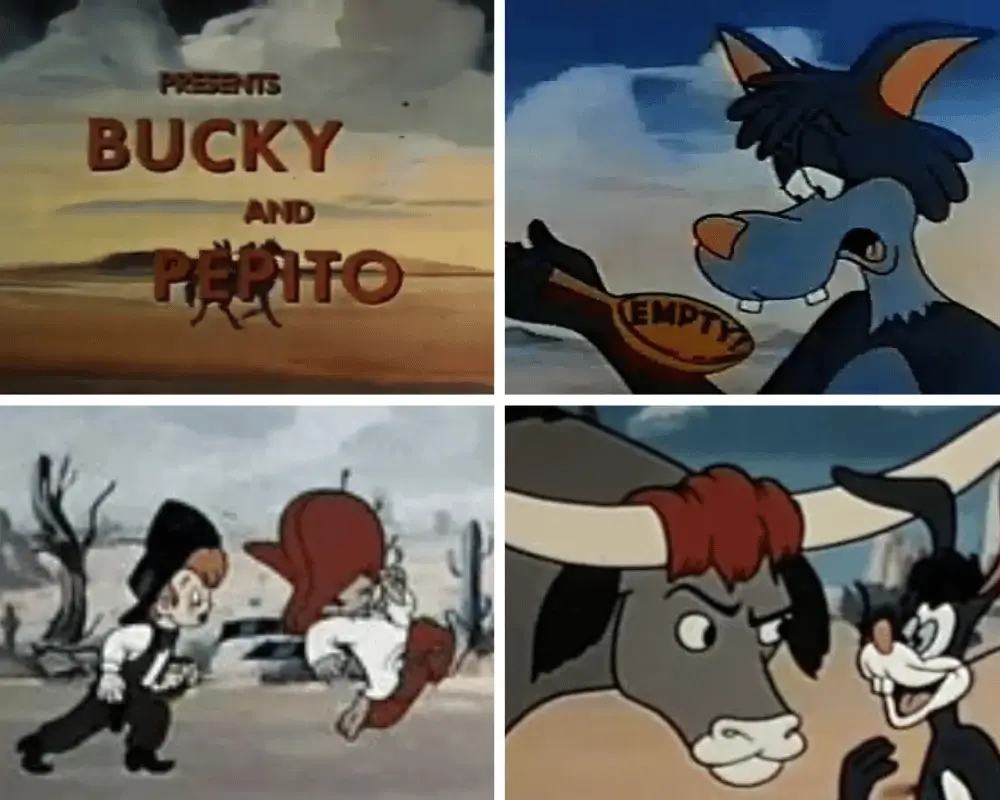
Bucky and Pepito (1959-1960). A syndicated Western about a boy in a cowboy hat and his inventor friend. Governor Television Attractions handled the early sales and had the series playing in 25 markets by late 1959. Nobody ever renewed the 1959 copyright, so the surviving episodes now sit in the public domain.
Courageous Cat and Minute Mouse (1960-1962). The Batman parody credited to Batman creator Bob Kane, made as 130 five-minute films for syndication. Trans-Artists produced the series at its Hollywood studio while Tele Features, Inc. financed and distributed it. I tell that whole strange story in my article on Courageous Cat, the Batman parody Batman’s creator made.
The numbers need one note of care. Both series were announced bigger than they were delivered: Variety’s 1958 item promised 52 Bucky cartoons and 36 got made, while the 1960 contract called for 260 Courageous Cat films and 130 got made. The announced figures were ambitions; the filmographies document what actually shipped.
One Producer, Five Company Names
Fans sometimes credit every Sam Singer cartoon to Trans-Artists Productions, and that overstates it.
Singer worked the way many 1950s TV film producers did: a fresh corporate name for nearly every property, which spread risk and gave each deal its own paperwork. Trans-Artists was one nameplate among several.
| Company | Role in the record | Series |
|---|---|---|
| Tempe-Toons | Singer’s partnership with Leo and Walter Minskoff; sold through Screen Gems to CBS | Adventures of Pow Wow (1957) |
| Samsing Creations | Held the original 1959 copyright registration | Bucky and Pepito |
| Trans-Artists Productions, Inc. | Production company on the screen credits, in trade directories, and on the 1961 copyright registrations | Bucky and Pepito; Courageous Cat and Minute Mouse |
| Tele Features, Inc. | Separate firm under president Al Odeal that financed and distributed Courageous Cat, and later handled Pow Wow | Courageous Cat and Minute Mouse (distribution) |
| Vulcan Animations | Vehicle for Singer’s 1964 Sinbad Jr. deal with American International, reported by Variety that July, before Hanna-Barbera took over the animation in 1965 | Sinbad Jr. and His Magic Belt (early episodes) |
So a claim like “Trans-Artists made Sinbad Jr.” fails the paperwork test, while “Sam Singer’s operation made all of these” holds up fine. The man stayed the same; the letterhead kept changing.
Was Trans-Artists Productions a Real Company?
Yes.
The evidence is boring in the best possible way:
- A street address and working phone number printed in national trade directories for years
- A named executive who appears consistently across every listing
- Dated trade coverage of its production contracts and station sales from 1958 through 1964
- Federal copyright registrations filed in the company’s name in 1961, with renewal and transfer records following in 1988 and 2011
- Its corporate name on the end titles of films you can still watch today
Shell companies and hoaxes do not leave fingerprints in government copyright ledgers. Forgotten companies do.
How Long Was the Company in Business?
The documented window runs from November 1958 to 1965, roughly seven years.
Variety first noticed the operation in late November 1958, filmographies date the active production years as 1958 to 1962, and the corporate shell kept its New York directory listing through the 1965 edition.
After that, the trade listings simply stop, though the company’s name resurfaces decades later on copyright paperwork tied to Courageous Cat. No dissolution notice, no sale announcement, no obituary for the company has ever surfaced, which is a very common ending for small TV film firms of the period.
How Much Money Did Trans-Artists Productions Make?
No profit figure exists in the public record. The company was private, so it never filed public financials, and no ledger has surfaced in any archive.
What the record does preserve is the shape of the economics:
- Joe Barbera’s memoir recalls Screen Gems paying Singer’s earlier operation about $2,700 per five-minute cartoon, in an era when a theatrical Tom and Jerry cost $40,000 to $65,000.
- Bucky and Pepito was playing in 25 markets by late 1959, sold station by station.
- The Courageous Cat deal was the big swing: a contract for co-production with Tele Features, filmed at the company’s Hollywood studio.
“Over a million dollars”
That is what Tele Features president Al Odeal told Motion Picture Daily on June 16, 1960 his firm would finance for the Courageous Cat series at Trans-Artists’ Hollywood studio. It is the largest dollar figure ever attached to the company in print.
Every documented number points the same direction: this was a volume business run tight to the bone, financed deal by deal. While Hanna-Barbera turned the same limited-animation economics into an empire, Singer’s shop stayed a job-to-job operation. I trace that contrast in my article on the rise and fall of Hanna-Barbera.
What Happened to the Cartoons Afterward?
The company’s two series took opposite paths through copyright law, and the split is the most instructive part of the whole story.
Bucky and Pepito went free. The 1959 registration needed a renewal filing 28 years later, and nobody sent it. So every surviving episode belongs to the public, which is the only reason you can still watch them.
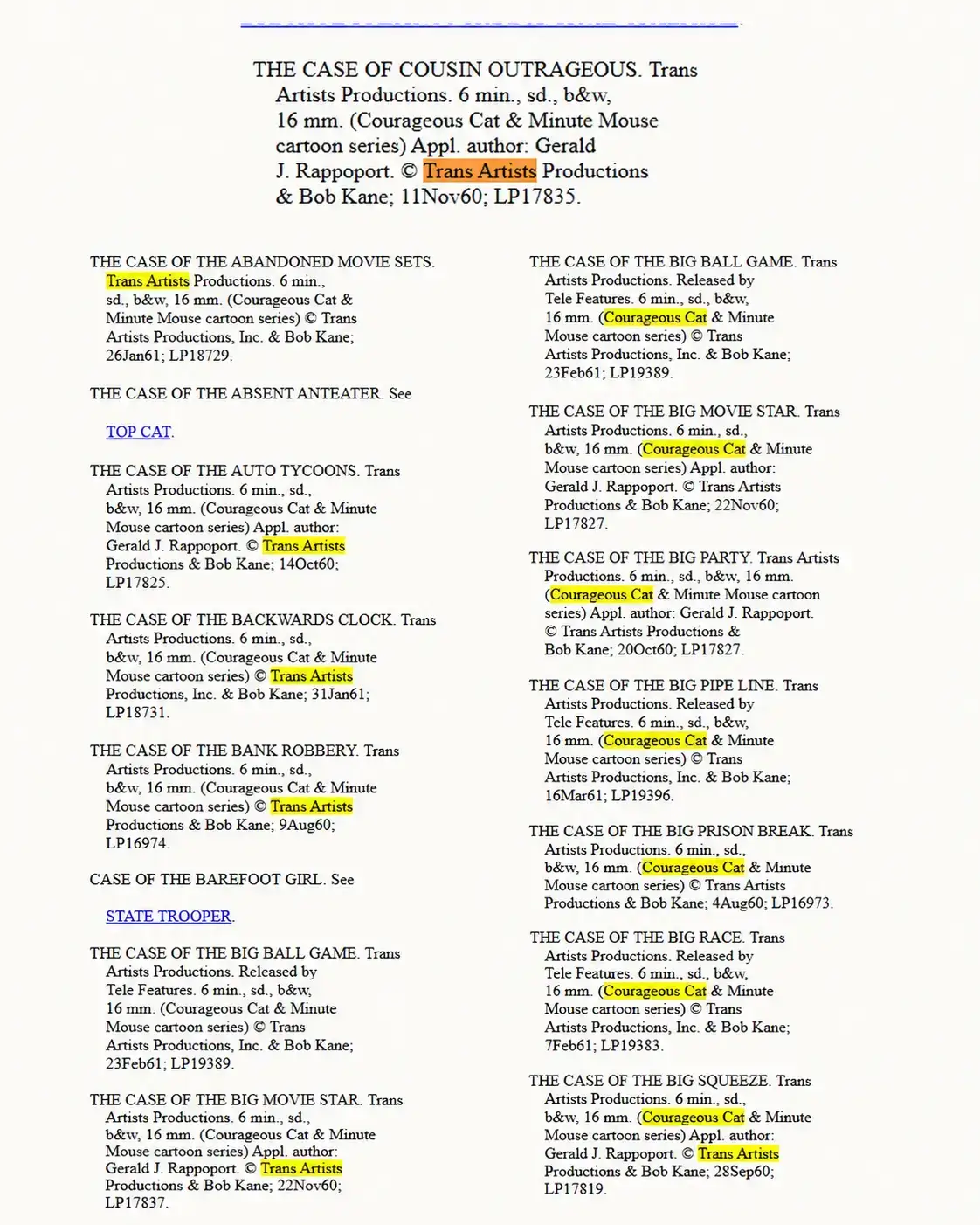
Courageous Cat got the paperwork. The 1961 registrations named Trans Artists Productions, Inc. and Bob Kane jointly. Then, on December 29, 1988, Telefeatures filed renewal registrations on Courageous Cat episodes as proprietor of the works made for hire, under numbers RE0000413818 through RE0000413821, each one crediting the original films to Trans Artists Productions, Inc.
That renewal form is the exact step nobody took for Bucky, and it is the entire reason the two series sit on opposite sides of the public domain line today.
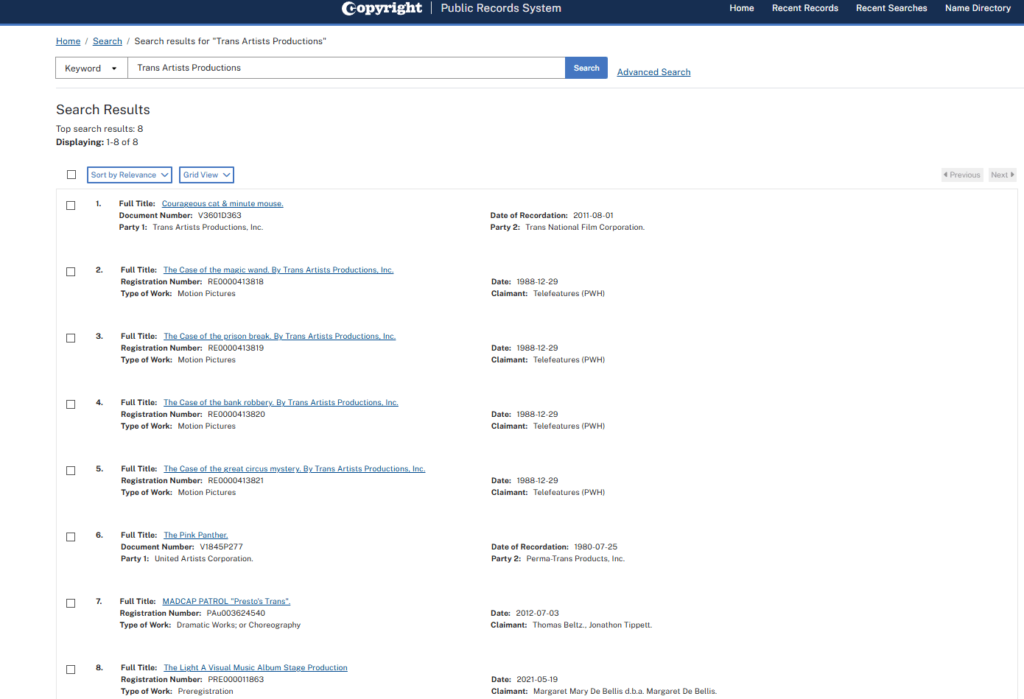
The name kept surfacing after that. A document recorded with the Copyright Office on August 1, 2011 lists Trans Artists Productions, Inc. and Trans National Film Corporation as parties to a Courageous Cat transfer.
One cartoon cat generates a surprising pile of federal records, because the name and the logo register separately and each category of goods needs its own filing.
The trademark file tells the rest of the ownership story, and it runs right up to the present:
- 1991-1992: COURAGEOUS CAT marks are filed and registered at the USPTO by Alma E. Odeal personally, evidently the Tele Features president the trades called Al Odeal, with first use claimed back to 1961.
- 2010: Odeal’s estate assigns the entire interest to Telefeatures LLC of Stamford, Connecticut.
- 2012: Telefeatures licenses film rights to Evergreen Media Group, in a deal Deadline reported.
- 2019: Telefeatures signs the entire interest over to a new individual owner, Stephen Rodgers, on November 12, though the sale goes unrecorded at the USPTO for years.
- 2023: With the federal file still showing the old ownership, the two syndication registrations lapse for a missed maintenance filing and are cancelled that February.
- 2023-2024: Rodgers’ side files the just-in-time renewals that save the two videotape registrations, submits fresh syndication applications, and finally records the 2019 sale.
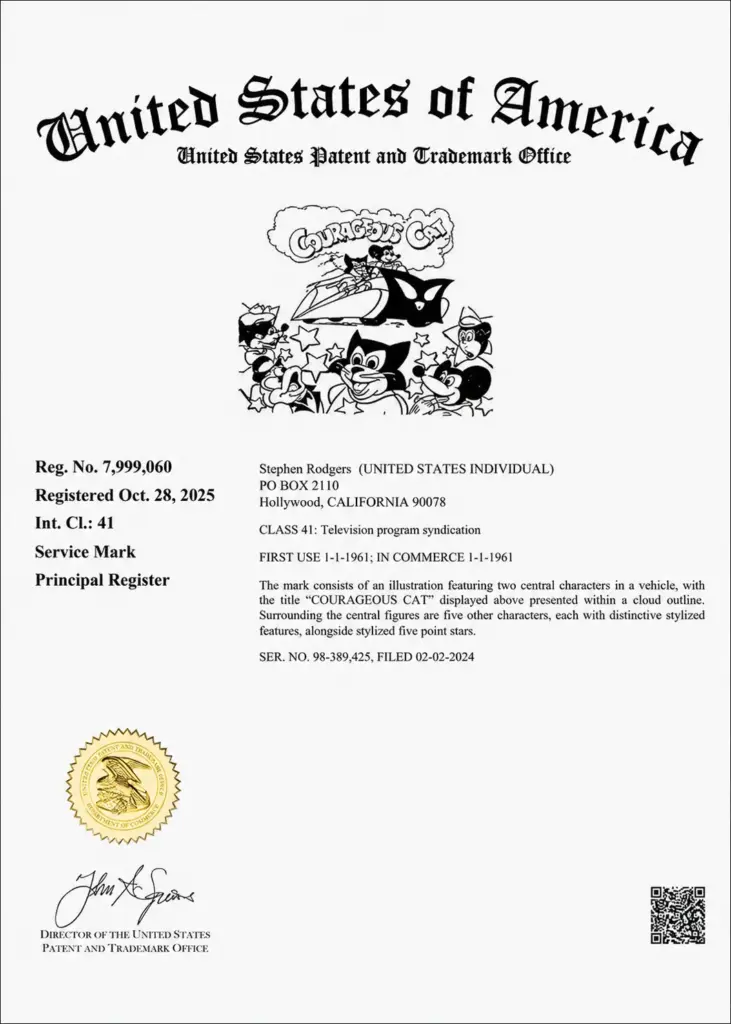
- 2025: A new COURAGEOUS CAT registration issues that October as Reg. No. 7,999,060, once again claiming first use on January 1, 1961, to an owner with a Hollywood address.
So the property born at Trans-Artists’ Hollywood studio in 1960 is, sixty-five years later, federally registered to a Hollywood address again. Deadline also noted the series is one of only two Bob Kane creations not owned by DC and Warner Bros., which quietly makes this tiny company’s output a genuine rarity.
Why Is There No Trans-Artists Productions Wiki?
Three forces erased this company from the reference books.
- Nobody owns the flagship. Bucky and Pepito fell into the public domain, so no rights holder ever had a reason to maintain the company’s history.
- The credits are scattered. With the output split across Trans-Artists, Samsing, Tele Features, and the rest, no single corporate name accumulated enough credits to look important to an indexer.
- The company died before fandom archiving began. By the time cartoon databases existed, the studio had been silent for decades, and the wikis indexed its shows without ever writing up the shell behind them.
The record was always there in the almanacs, the trade papers, and the copyright ledgers. Nobody had assembled it in one place until now.
Trans-Artists Productions
Every claim above traces to a checkable source, and here is where to look:
- Trade papers: Animation historian Yowp compiled the dated Variety, Motion Picture Daily, and Radio-TV Daily items at the Tralfaz blog, in a Bucky and Pepito trade digest, a 1960 cartoon-business roundup, and a Sam Singer career history.
- Trade directories: The International Television Almanac editions carrying the company’s listing are scanned in full at World Radio History.
- Copyright records: The 1961 Catalog of Copyright Entries volume with the Trans Artists registrations sits on the Internet Archive, searchable by company name.
- The federal database: The Copyright Office’s Public Records System holds the 1988 renewals and the 2011 recordation; look the company up in the Name Directory under Trans Artists Productions, Inc.
- Trademark records: The ownership chain, including Alma Odeal as original registrant, is viewable through Justia’s trademark database; for current status, check the USPTO’s live TSDR system, since mirror sites can lag years behind.
- Screen credits: Wikisource preserves a full transcript of a public domain episode, end card included, on its Bucky and Pepito page.
Frequently Asked Questions
Who owned Trans-Artists Productions?
Producer Sam Singer ran the company and is the only person the record attaches to it. Trade directories list him as the executive at its New York office.
What cartoons did Trans-Artists Productions make?
Two series: Bucky and Pepito (36 episodes, 1959-1960) and Courageous Cat and Minute Mouse (130 episodes, 1960-1962). That is 166 films in total.
When was Trans-Artists Productions active?
The documented window is November 1958 to 1965. Production ran from 1958 to 1962, and the corporate listing continued in trade directories through the 1965 edition.
Where was Trans-Artists Productions located?
The company kept a sales office at 74 Fifth Ave. in New York and a production studio in Hollywood, California. Both addresses appear in period documents.
Did Trans-Artists Productions make Sinbad Jr.?
No. Singer’s 1964 Sinbad Jr. deal ran through a different company, Vulcan Animations, and Hanna-Barbera took over the animation in 1965.
Is Bucky and Pepito in the public domain?
Yes. The 1959 copyright was never renewed, so the surviving episodes are free to watch and share.
Who owns Courageous Cat today?
USPTO records show the COURAGEOUS CAT marks registered today to individual owner Stephen Rodgers, who bought the property from Telefeatures LLC in a 2019 sale recorded in 2024. The chain runs back through the estate of Tele Features president Alma Odeal, and the episode copyrights were renewed by Telefeatures back in 1988.
The little company at 74 Fifth Avenue made some of the most notorious cartoons ever aired, and it deserved a page of its own. Now it has one.
If this corner of animation history is your thing, read my article on Bucky and Pepito, the cartoon too cheap to copyright next, or go deeper into the studio’s other series with my piece on Courageous Cat, the Batman parody Batman’s creator made.
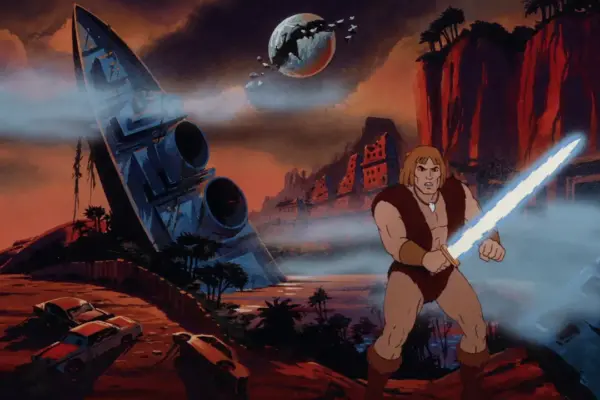
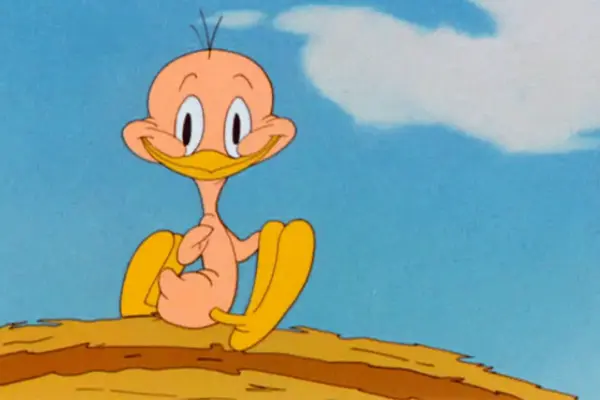
Singer worked through Disney, 1930s Hollywood studios, and Terrytoons before producing infamous ultra-budget shows like Paddy the Pelican (1950), Adventures of Pow Wow (1957), and the Trans-Artists catalog, earning Jerry Beck’s title, the Ed Wood of animation.
The detail about 74 Fifth Ave in NYC vs. the Hollywood studio is a great historical insight. In the late 1950s, Manhattan was where local station buyers and syndication distributors shopped for content, while the actual animation cells were painted in budget Hollywood lofts.