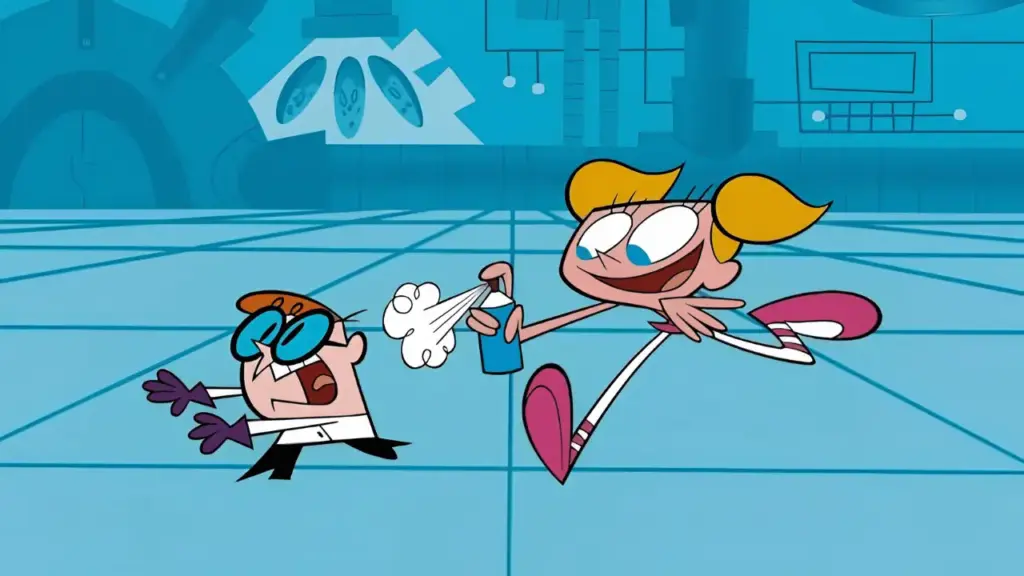
People have been asking “why does Dexter have an accent?” for years, and most answers stop at guesswork.
Some call it French. Others hear German or Russian. The truth is that the voice was never meant to belong neatly to one country.
The real story is more interesting than the fan theories. It combines Dexter’s idea of a serious scientist, a college joke, Christine Cavanaugh’s performance, and Genndy Tartakovsky’s immigrant experience.
Why Does Dexter Have an Accent? The Short Answer
The simplest answer comes from Tartakovsky himself. Dexter sees himself as a great scientist, and in his mind, great scientists have accents.
That explains the creative decision behind the voice. The show never confirms whether Dexter consciously puts the accent on or simply speaks that way.
The uncertainty is part of the joke.
At A Glance
The Accent Breakdown
- Character logic: Dexter believes important scientists should have accents.
- Production inspiration: A college roommate’s exaggerated French voice helped spark the sound.
- The performance: Christine Cavanaugh made it deliberately difficult to place.
- Closest description: Tartakovsky later called it broadly Eastern European.
Each part of that explanation comes from the people who created or performed the character. To understand how the pieces fit together, we have to start with Tartakovsky’s own childhood.
The Kid From Moscow in Rogers Park
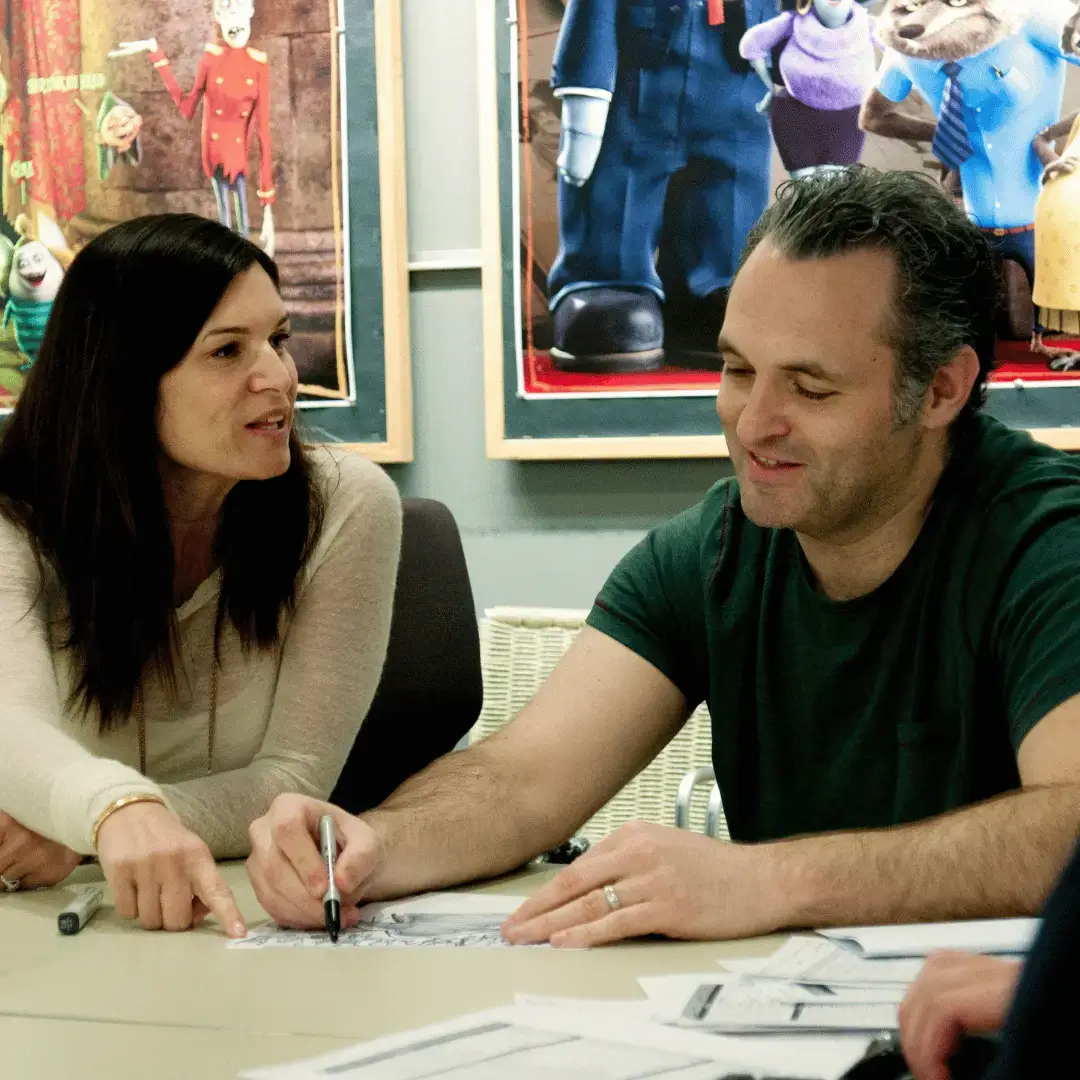
Genndy Tartakovsky was born in Moscow in 1970. His Jewish family left the Soviet Union when he was seven, eventually settling in Chicago after stops in Europe and Ohio.
He entered third grade at Eugene Field Elementary School and had to adjust quickly to a new language and culture. Cartoons and comic books helped him learn English, but fitting in was not easy.
Tartakovsky later described that part of his childhood as a constant effort to fit in. That does not make Dexter’s voice a direct copy of his own, but it adds another layer to the character. Dexter is an outsider who never apologizes for sounding different.
A Genius Decides How a Genius Sounds
Inside the series, the accent suits Dexter’s ego perfectly. He is a small child with a secret laboratory, a white coat, and complete confidence that he belongs among history’s greatest minds.
Tartakovsky explained the idea in one sentence: Dexter “considers himself a very serious scientist, and all well-known scientists have accents.”
That was the reason the creators gave him the voice.
Whether Dexter deliberately puts the voice on is less certain. Tartakovsky has left that question open.
The contrast is what makes the joke work. Mom, Dad, and Dee Dee sound like an ordinary suburban American family. Dexter sounds as though he arrived from a secret European laboratory, and nobody mentions it.
Even Mandark, his rival boy genius, speaks with a recognizable American voice. Both children are brilliant, but only Dexter believes brilliance should sound international.
The Answering Machine Prank That Helped Shape the Voice
The accent also grew from a college joke.
At CalArts, Tartakovsky shared a room with Rob Renzetti, who later created My Life as a Teenage Robot. Tartakovsky later recalled that a college roommate would leave messages using an exaggerated French accent.
The voice stayed with him and became one ingredient in Dexter’s sound. It was never meant as accurate French, Russian, or German speech, which is why listeners can hear several different accents in it.
Tartakovsky and Renzetti later worked together at Hanna-Barbera on 2 Stupid Dogs, alongside artists including Craig McCracken. That small group would soon become central to Cartoon Network’s first wave of original shows.
The Voice Actor Who Made It Iconic
An accent on a page is only an idea. Christine Cavanaugh turned it into a character.
She voiced Dexter through the original run, the television movie Ego Trip, and some early revival episodes. Her performance made him sound young, brilliant, angry, and permanently offended.
Cavanaugh described the voice as “an affectation, some kind of accent, we’re not quite sure.” That uncertainty was the point.
The Voice Behind the Lab Coat: Christine Cavanaugh
Before and during her time as Dexter, Cavanaugh voiced several of the most recognizable animated characters of the 1990s:
- Babe in the Oscar-nominated film Babe (1995)
- Chuckie Finster in Rugrats
- Gosalyn Mallard in Darkwing Duck
- Dexter, from the original shorts into the revival
Cavanaugh retired from voice acting in the early 2000s, and Candi Milo took over for the remaining revival episodes. Cavanaugh died in December 2014 at the age of 51.
So What Accent Is It, Exactly?
Fans have argued for decades over whether Dexter sounds French, Russian, or German. The debate lasts because the accent contains hints of all three without properly belonging to any of them.
Tartakovsky gave the closest thing to an official answer in a 2003 interview with The Times of Northwest Indiana. “It’s not really a German accent. It’s just Eastern European.”
That does not make it an authentic regional accent. Dexter sounds like a child’s idea of a European scientist, filtered through old movies and comedy.
The French interpretation became especially popular because of the season one episode The Big Cheese. Dexter tries to learn French overnight using a sleep-learning record, but the recording gets stuck. By morning, he can say only one phrase: omelette du fromage.
The phrase is grammatically wrong. A cheese omelette is omelette au fromage, but the mistake only made the scene more memorable.
My Take: The Accent Became a Kind of Armor
This is where the documented history ends and interpretation begins.
Tartakovsky arrived in America as a child who wanted to fit in. Dexter is a child who has no interest in fitting in at all. He builds his own world, sets his own rules, and speaks exactly the way he believes a genius should speak.
That is why I read the accent as a kind of armor.
The voice makes Dexter sound older and more important than he really is. I do not think Tartakovsky ever said he consciously turned his childhood experience into Dexter’s accent. That reading is mine.
Still, Dexter takes something that often marks a person as an outsider and treats it as proof that he belongs among the greats.
Bonus Lore: The Lab’s Banned Episode
The accent question often leads fans to another strange piece of show history.
During the second season, the crew made Rude Removal, which splits Dexter and Dee Dee into polite and foul-mouthed versions. Cartoon Network did not air it as part of the regular series.
The Banned Tape Legacy
The short circulated through festival screenings and fan rumours for years. After Tartakovsky discussed owning a copy during a Reddit AMA, Adult Swim officially released the censored segment online on January 22, 2013. It was later removed, but by then one of Cartoon Network’s most famous unaired episodes had finally reached the public.
Quick Answers About Dexter’s Accent
Why does Dexter have an accent?
Creator Genndy Tartakovsky wanted Dexter to sound like a serious scientist, and he believed famous scientists should have accents. A college roommate’s exaggerated French voice also helped inspire the sound.
What accent does Dexter have?
It is an intentionally mixed and exaggerated accent. Tartakovsky described it broadly as Eastern European, while viewers often hear French, German, or Russian elements.
Why does nobody in his family have an accent?
The contrast is part of the joke. Dexter sounds completely different from his suburban American family, but the series never gives an in-universe explanation or confirms whether he is pretending.
Who voiced Dexter?
Christine Cavanaugh created the original voice. After she retired, Candi Milo took over the role for the remaining revival episodes.
Does the show ever explain his voice?
No. The series never provides a canonical explanation. (Fun syndication fact: its 78 half-hour episodes equal six blocks of 13, the same quarter-based math behind why old cartoons have 65 episodes.)
The Last Word
Why does Dexter have an accent? Because his creators thought a self-important boy genius should sound like the European scientists of old movies.
The voice then took shape through a college joke, Christine Cavanaugh’s performance, and Tartakovsky’s perspective as an immigrant creator.
It does not belong to France, Germany, or Russia. It belongs to Dexter.
When you watched the show, what did you hear: French, Russian, German, or pure mad scientist?
Drop your take below, and the best answers may help steer the next deep dive.