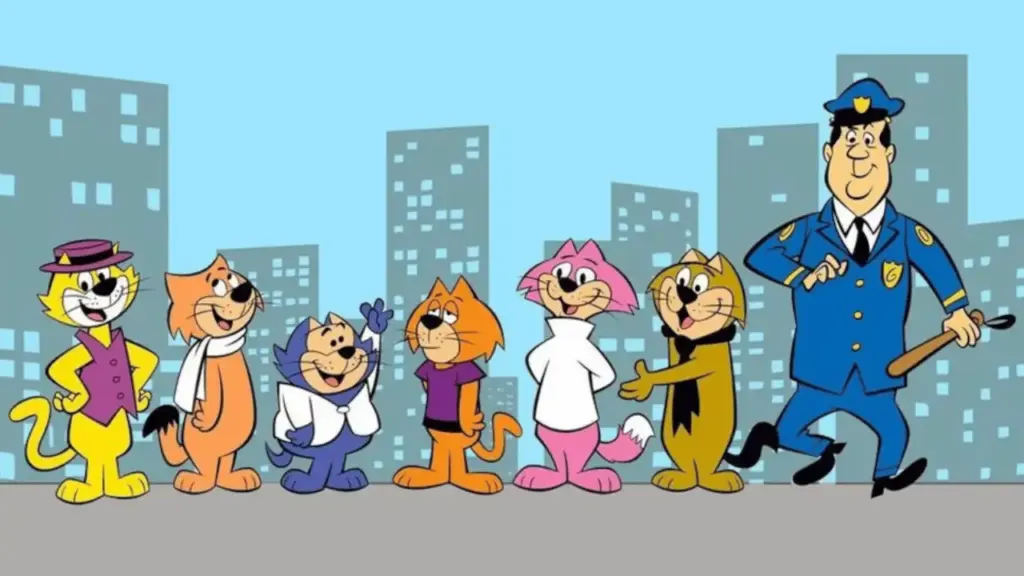
In the United States, Top Cat is remembered as a clever but short-lived Hanna-Barbera sitcom from 1961.
In Mexico, Don Gato became something much bigger.
The same 30 episodes were repeated for decades, quoted across generations, and eventually revived in two Mexican-produced animated movies. The first film became one of the country’s biggest homegrown box-office successes of 2011.
So why is Top Cat so popular in Mexico?
The easy answer is nostalgia.
The better answer begins with the Mexican dub.
Local writers and voice actors did more than translate the dialogue. They rebuilt the gang as characters who sounded recognizably Mexican. The cats became regional, working-class, affectionate, and familiar in ways the original English version never attempted.
Then television reruns kept those voices alive long enough for Don Gato to pass from one generation to the next.
The short answer
Why Don Gato became a Mexican icon
- The Latin American dub gave each character a distinctive local identity
- The cats’ working-class schemes matched familiar Mexican comedy archetypes
- Only 30 episodes made the series easy to repeat and memorize
- Major television exposure in the 1970s and 1980s kept it visible
- The 2011 movie proved that the audience had never disappeared
Top Cat Lasted One Season in America
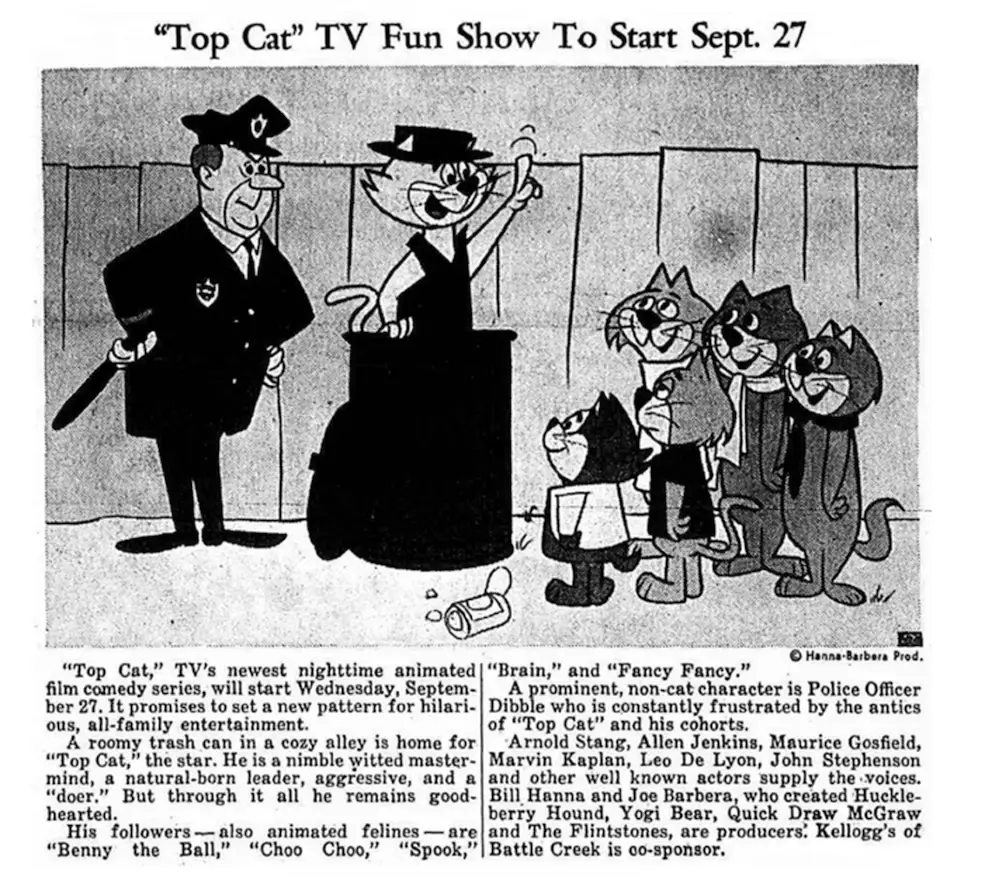
Top Cat premiered on ABC in prime time on September 27, 1961.
Hanna-Barbera was still trying to prove that television animation could work for an evening audience. The Flintstones had succeeded the year before, while The Jetsons would follow in 1962.
The new show borrowed heavily from The Phil Silvers Show, also known as Sergeant Bilko.
Top Cat operated like Bilko. He was a charming schemer who organized his followers, avoided honest work, and constantly tried to outsmart the nearest authority figure.
The connection was especially clear through Benny the Ball. Maurice Gosfield, who voiced Benny, had played Private Doberman on The Phil Silvers Show. The two characters shared the same gentle, confused personality.
Despite that strong comic foundation, Top Cat ended after 30 episodes. Its final original broadcast aired in April 1962.
The series never became a long-running American franchise on the level of The Flintstones, Scooby-Doo, or The Jetsons.
It survived through reruns, but its cultural life in the United States gradually became quieter.
The Mexican Dub Did More Than Translate the Show
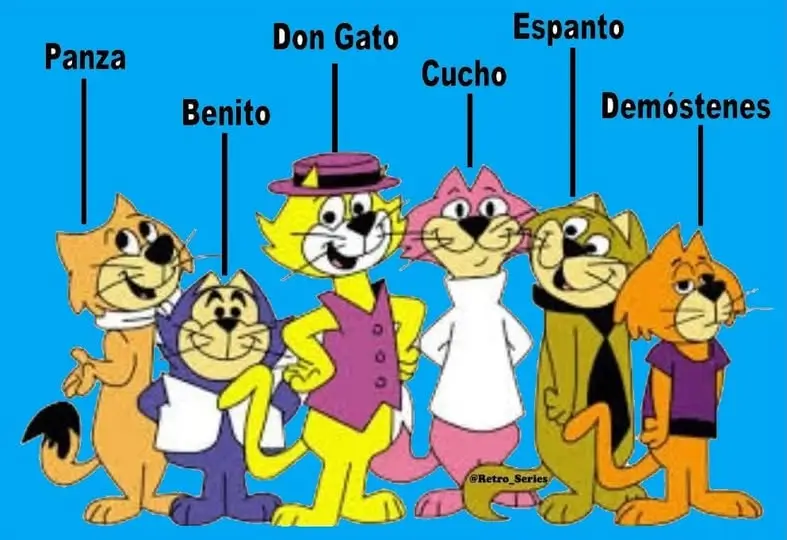
When the series was dubbed into Spanish as Don Gato y su pandilla, the pictures stayed the same.
The characters did not.
A 2018 study published by Con A de Animación argues that the Mexican adaptation succeeded because its writers and actors transformed the cats into locally recognizable personalities. The researchers describe the dub as a form of cultural adaptation rather than a literal translation.
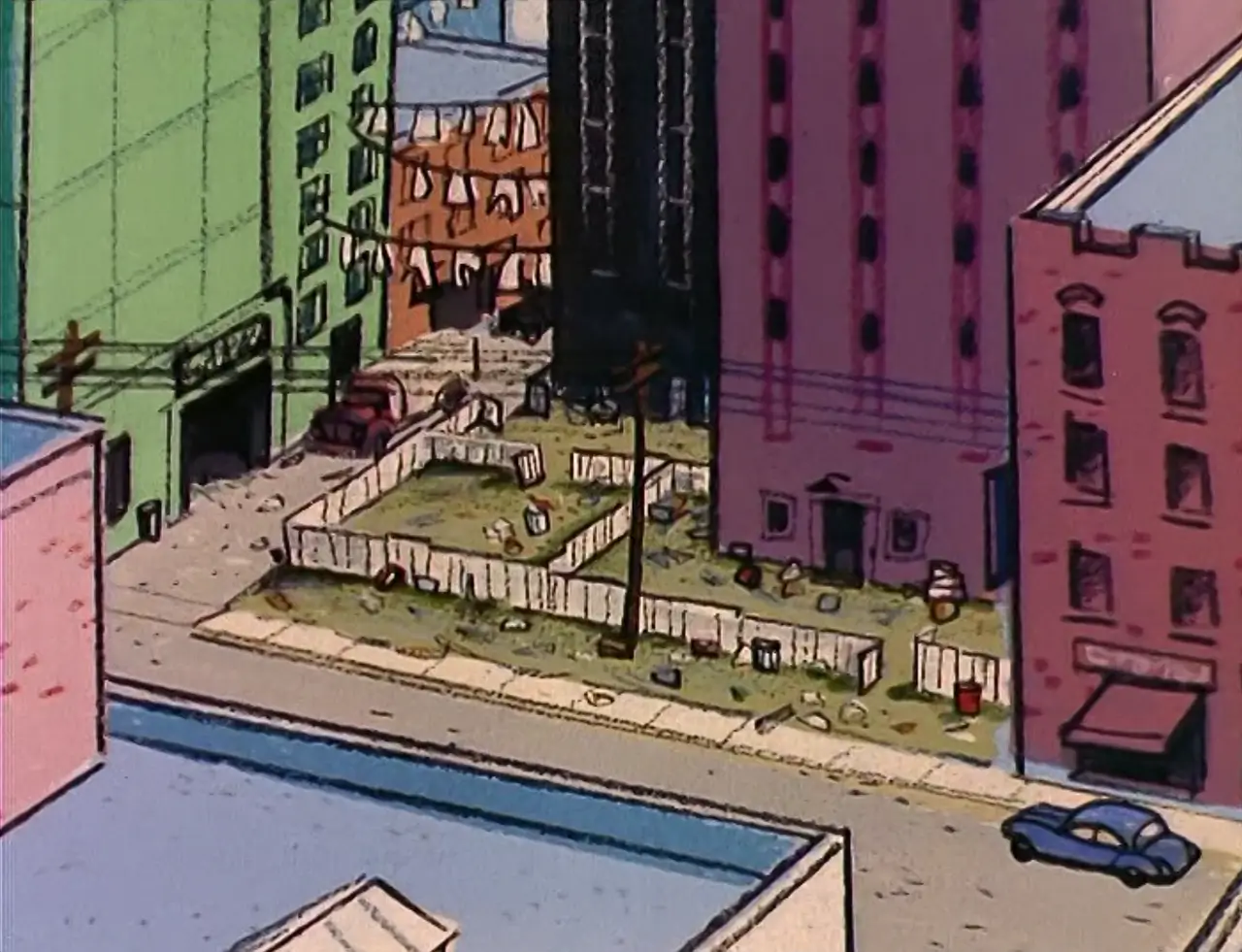
The gang still lived in Manhattan. The signs, buildings, and alley remained American.
But the voices, expressions, jokes, and social relationships sounded unmistakably Mexican.
Rubén Arvizu Reworked the Dialogue
Rubén Arvizu adapted the scripts into Spanish.
His job was not simply to replace English words with Spanish ones. The jokes still had to fit the characters’ mouth movements, match the timing, and make sense to a Latin American audience.
That required rewriting.
American expressions were replaced with local idioms. The characters called one another by affectionate or colloquial terms that changed the feeling of the gang. Don Gato became less like the leader of equal-aged friends and more like a mischievous father figure looking after his alley family.
Even the title changed the balance.
Top Cat places one character at the top of a hierarchy. Don Gato y su pandilla gives Don Gato respect while placing the whole gang beside him.
Jorge Arvizu Reinvented Benito and Cucho
Jorge Arvizu, known as “El Tata,” supplied two of the dub’s most memorable voices.
In English, Benny the Ball sounds like a slow-speaking adult. Arvizu turned him into Benito Bodoque, a squeaky, innocent, childlike member of the family.
That one performance changed the character’s role.
Benito was no longer simply another alley cat. He became the youngest and most lovable member of the group, always hungry and easily confused but completely loyal to Don Gato.
Arvizu also voiced Cucho with a strong regional Mexican accent. It is commonly remembered as Yucatecan, although academic descriptions have also connected it more broadly with Mexico’s southeastern or provincial speech.
El Universal later quoted Arvizu explaining that he disliked Benny’s rougher English voice and deliberately tried something younger and sweeter. That choice helped make Benito one of the most beloved characters in the Mexican version.
How the gang changed in Spanish
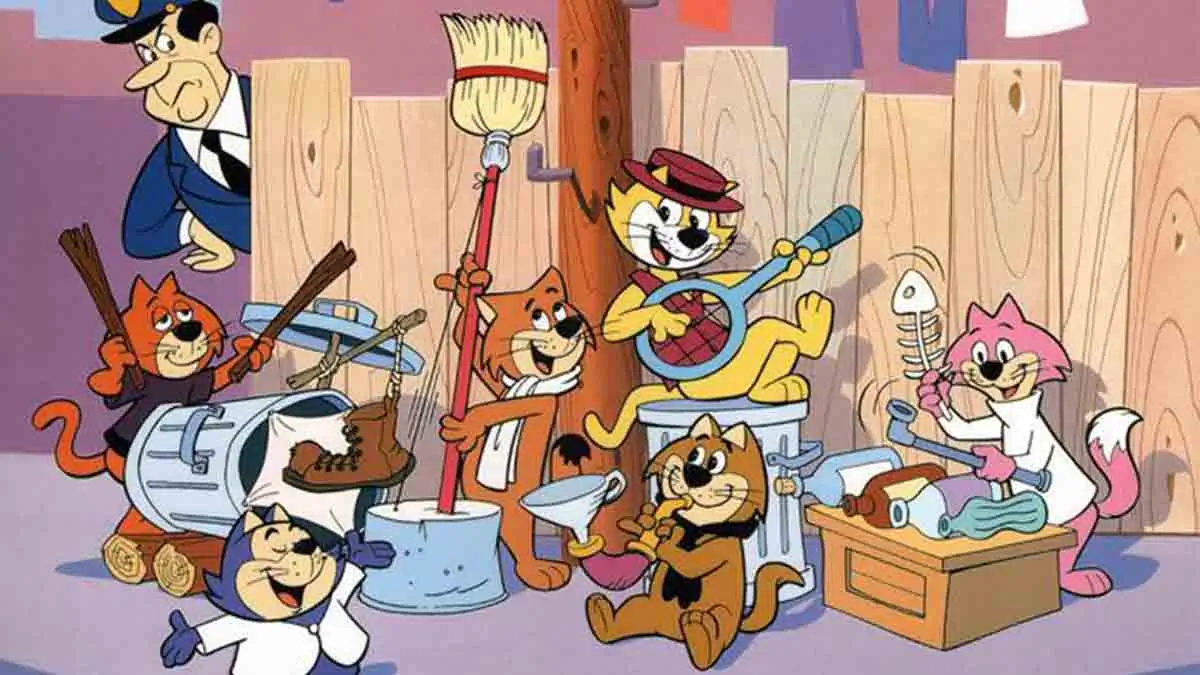
- Top Cat became Don Gato: A respected but dishonest father figure
- Benny became Benito Bodoque: Younger, sweeter, and more childlike
- Choo-Choo became Cucho: Defined by a strong regional voice
- Officer Dibble became Matute: A familiar authority figure rather than a distant New York policeman
- The gang became a pandilla: A close neighbourhood family
The Alley Cats Already Fit Mexican Comedy
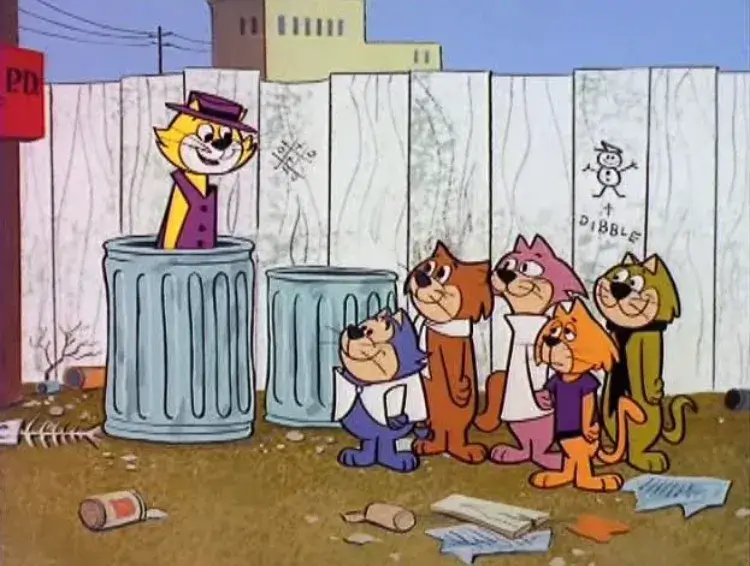
The dub did not create Don Gato’s entire appeal from nothing.
The original premise already gave Mexican audiences something familiar: a group of poor but resourceful city characters trying to survive through small schemes.
The academic study on the dub connects that appeal with Mexican screen figures such as Tin Tan and Cantinflas.
Both comedians often played working-class outsiders navigating a modern city through language, charm, improvisation, and minor deception. Their characters could be dishonest without becoming cruel. They broke rules, but they usually remained loyal and good-hearted.
Don Gato fits that tradition surprisingly well.
He wears a vest and hat, speaks with confidence, leads a group of friends, and constantly searches for the next shortcut to a better life.
The comparison is not evidence that Hanna-Barbera based Top Cat on Tin Tan. The documented American model was Sergeant Bilko.
The point is about reception.
Mexican audiences already knew how to read the charming urban hustler. The dub gave that familiar type a local voice.
The Tin Tan Connection
Germán Valdés, better known as Tin Tan, was one of the great stars of Mexican cinema’s Golden Age.
His pachuco persona combined stylish clothes, neighbourhood slang, musical ability, quick improvisation, and affection for other outsiders. One of his best-known films was El rey del barrio, or The King of the Neighbourhood.
That title sounds like a description of Don Gato.
The connection became even more suggestive in 1970, when Tin Tan supplied the Latin American Spanish voice of another confident alley cat, Thomas O’Malley, in Disney’s The Aristocats.
That does not make Don Gato a direct Tin Tan adaptation.
It shows that the charming streetwise cat fit an established Mexican comic tradition.
Thirty Episodes Became Shared Memory
The dub explains why the show connected.
Reruns explain why it lasted.
Mexican television repeatedly aired Don Gato y su pandilla, including prominent afternoon slots during the 1970s and 1980s. El Universal has described how Canal 5 personalities promoted it to children as one of the channel’s favourite cartoons.
With only 30 episodes, broadcasters could cycle through the entire series quickly.
That might sound like a weakness, but repetition creates a different kind of success.
Children did not watch Don Gato once and move on. They heard the same voices, jokes, and expressions until the dialogue became familiar. Younger siblings and later generations entered the same loop.
Why a short series lasted
- A small episode library was inexpensive and easy to repeat
- The voice performances remained funny even after the plots were familiar
- Parents could introduce the same episodes to their children
- Repeated lines became part of everyday cultural memory
This is where the American and Mexican histories separated.
In the United States, Top Cat became one title inside an enormous Hanna-Barbera catalogue.
In Mexico, Don Gato remained one of the cartoons people kept seeing.
The 2011 Movie Proved the Audience Was Still There
Fifty years after the television series premiered, Mexico produced a new feature film.
Don Gato y su pandilla opened in Mexican cinemas in September 2011. Ánima Estudios produced the film in Mexico with Illusion Studios of Argentina.
Jorge Arvizu returned to voice Benito and Cucho.
The movie’s success was immediate.
Contemporary Mexican reporting placed it among the country’s highest-grossing domestic movies at the time. El Economista reported more than 2.58 million admissions and roughly 112 million pesos in Mexican box-office revenue.
The result mattered more than the reviews.
A series that had produced only 30 episodes in 1961 could still bring millions of Mexican viewers into theatres half a century later.
That is not ordinary nostalgia.
It is evidence of a character who never stopped circulating.
Top Cat Begins
A second Mexican-produced movie followed in 2015.
Don Gato: El inicio de la pandilla, released internationally as Top Cat Begins, told the story of how the alley gang first came together.
The movie was dedicated to Jorge Arvizu, who had died in 2014.
By then, the Mexican dub was no longer simply one version of an American cartoon. It had become the version around which new productions were built.
Why Top Cat Never Reached the Same Level in America
Top Cat was not completely forgotten in the United States.
It remained available through reruns, home video, later Hanna-Barbera crossovers, and nostalgia programming.
But it never occupied the same place in American culture.
Several factors worked against it:
- It lasted only one prime-time season
- The Flintstones became Hanna-Barbera’s dominant family sitcom
- The Jetsons developed a stronger visual identity through its futuristic setting
- Hanna-Barbera produced so many later characters that Top Cat became one name among hundreds
- The English version did not receive a culturally transformative second adaptation
The Mexican audience did not preserve Top Cat in spite of the dub.
It preserved Don Gato because of the dub.
Quick Answers About Top Cat in Mexico
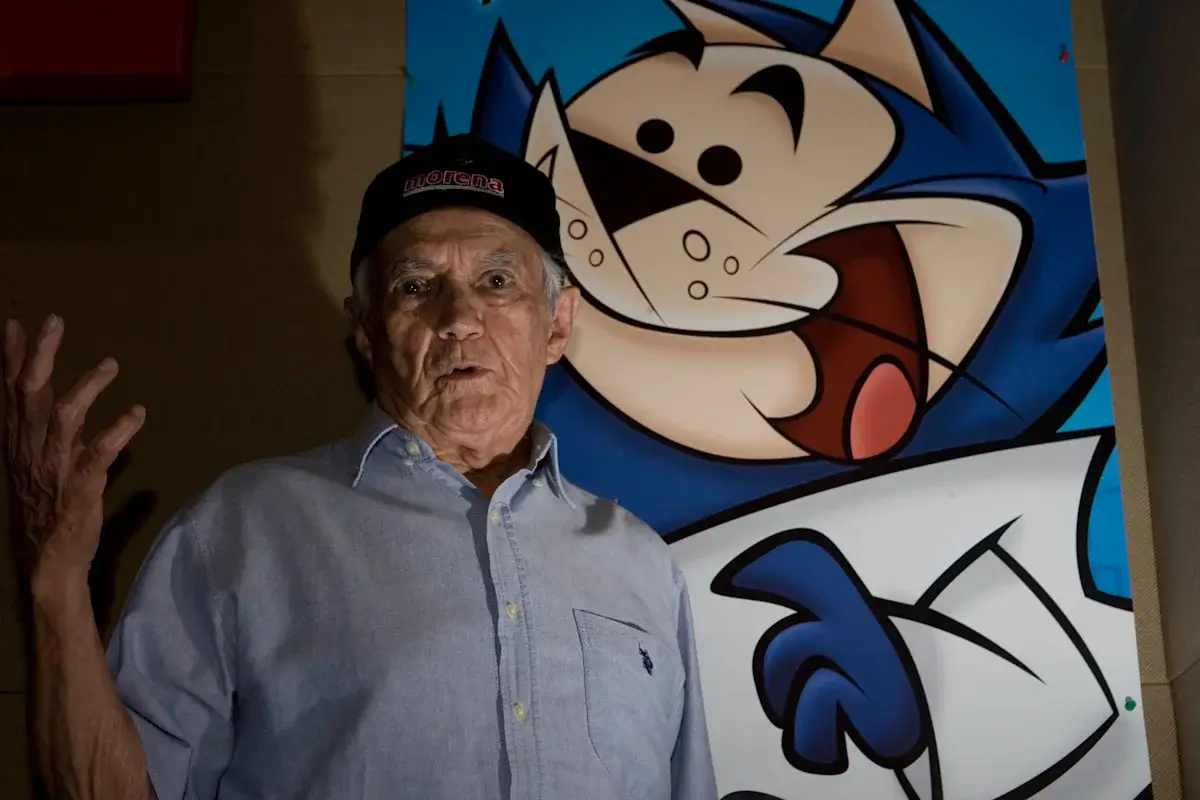
Why is Top Cat popular in Mexico? The Mexican dub rewrote the characters with local humour, regional voices, and stronger family relationships. Decades of television reruns then introduced the same 30 episodes to several generations.
What is Top Cat called in Mexico? The series is called Don Gato y su pandilla. Top Cat became Don Gato, Benny became Benito Bodoque, Choo-Choo became Cucho, and Officer Dibble became Matute.
Who voiced Don Gato in Spanish? Julio Lucena voiced Don Gato. Jorge Arvizu voiced Benito Bodoque and Cucho, while Víctor Alcocer voiced Officer Matute.
Was Benito Bodoque different from Benny the Ball? Yes. Benny sounds like an adult in English. Jorge Arvizu gave Benito a younger, sweeter voice, changing him into the childlike member of the gang.
How many Top Cat episodes were made? The original series produced 30 episodes between September 1961 and April 1962.
Are there Don Gato movies? Yes. Don Gato y su pandilla opened in 2011, followed by the prequel Don Gato: El inicio de la pandilla in 2015.
Was the 2011 Don Gato movie successful? Yes. It attracted more than 2.58 million viewers in Mexico and earned approximately 112 million pesos.
The Cat Mexico Made Its Own
Why is Top Cat popular in Mexico?
Because Mexico did not receive the show passively.
Writers and actors remade it through language. They turned New York alley cats into characters who sounded local, behaved like a family, and fit a long Mexican tradition of affectionate working-class hustlers.
Television then repeated those characters until they became part of childhood for millions of viewers.
The animation remained American.
The cultural memory became Mexican.
That is why Top Cat became a supporting name in Hanna-Barbera history while Don Gato became the king of the neighbourhood.
Which international cartoon success story should this series explore next?
Share your pick in the comments.