
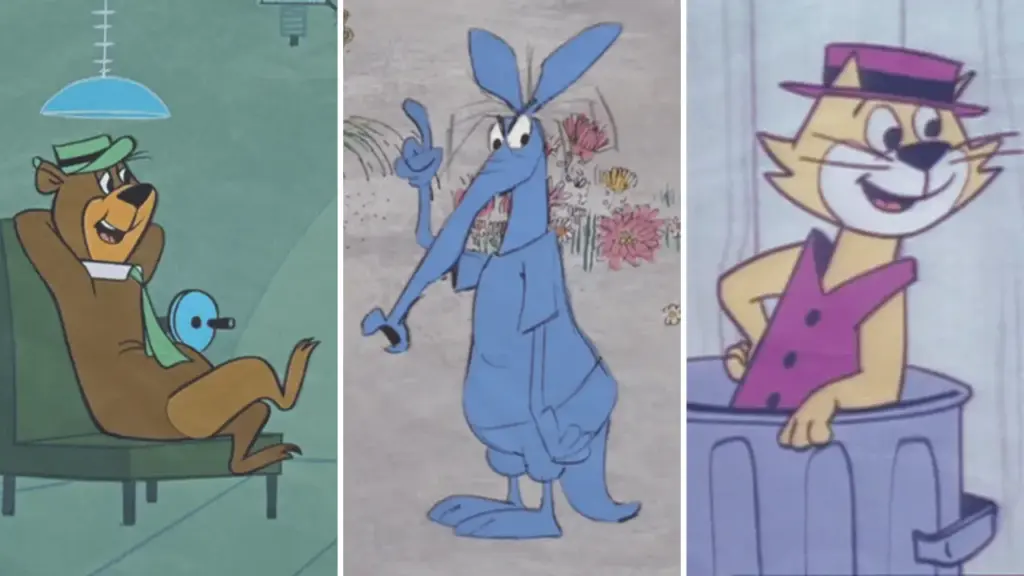
The 1960s changed what a television cartoon could be.
At the beginning of the decade, many viewers still associated animation with theatrical shorts shown before movies. By the end, American television had primetime animated sitcoms, Saturday morning comedy blocks, realistic action shows, superheroes, spy parodies, and the mystery format that would dominate the 1970s.
This guide covers 20 classic 60s cartoons, from The Flintstones and Top Cat to Jonny Quest, Space Ghost, and Scooby-Doo, Where Are You!.
The shows are grouped by the studios and formats that defined cartoons in the 1960s. Every entry includes its original broadcast years, which matters because decades of reruns have blurred the line between a show’s premiere and the era when most people watched it.
How this list works
- Every featured show premiered between 1960 and 1969
- The list includes primetime, syndicated, and Saturday morning cartoons
- Theatrical shorts are included only when they became major television packages
- Scooby-Doo and The Ant and the Aardvark premiered in 1969 and continued into the 1970s
What Made Cartoons in the 1960s Different?
The decade created much of the structure people now associate with classic television animation.
- Limited animation: Reused movement, held poses, and simplified backgrounds made weekly production affordable
- Primetime experiments: Shows such as The Flintstones, Top Cat, and Jonny Quest were initially aimed at evening audiences
- Saturday morning growth: By the end of the decade, networks were scheduling several hours of cartoons for children
- Package shows: Studios grouped several short segments into one half-hour program and used the format to test characters
- Action animation: Funny animals gradually shared the schedule with spies, monsters, superheroes, and science-fiction adventurers
The Library of Congress notes that Saturday morning cartoons became a regular household ritual by the end of the 1960s. Its history of children’s television and Saturday morning animation places that change squarely inside this decade.
The shift is visible across the list.
It begins with alley cats and picnic-basket thieves. It ends with interplanetary heroes and teenagers investigating haunted houses.
My guide to 70s cartoons follows what happened after the mystery format took over.
Classic Hanna-Barbera Animal Cartoons From the 60s
Hanna-Barbera filled the early part of the decade with animal comedies built around one clear personality, one repeatable conflict, and a voice audiences could recognize immediately.
Top Cat (1961-1962)
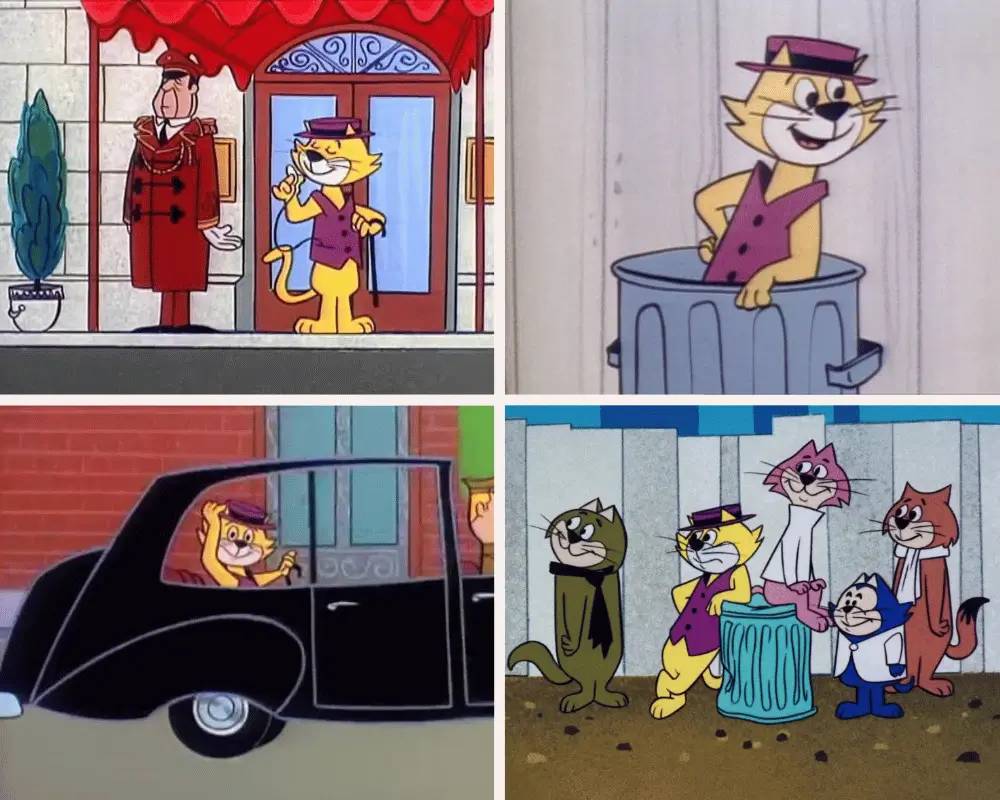
A fast-talking alley cat leads a gang of strays through one scheme after another while Officer Dibble tries to keep order.
- Arnold Stang voiced Top Cat
- The show ran for one primetime season of 30 episodes
- The ensemble was heavily influenced by The Phil Silvers Show
Top Cat feels more like an animated situation comedy than a children’s adventure. Most episodes revolve around money, status, and T.C. trying to talk his way around a suspicious adult.
The series lasted far longer in reruns than it did in first-run television. It also became especially popular in Mexico and Latin America as Don Gato, a history covered in my article on why Top Cat became popular in Mexico.
The Yogi Bear Show (1961-1962)
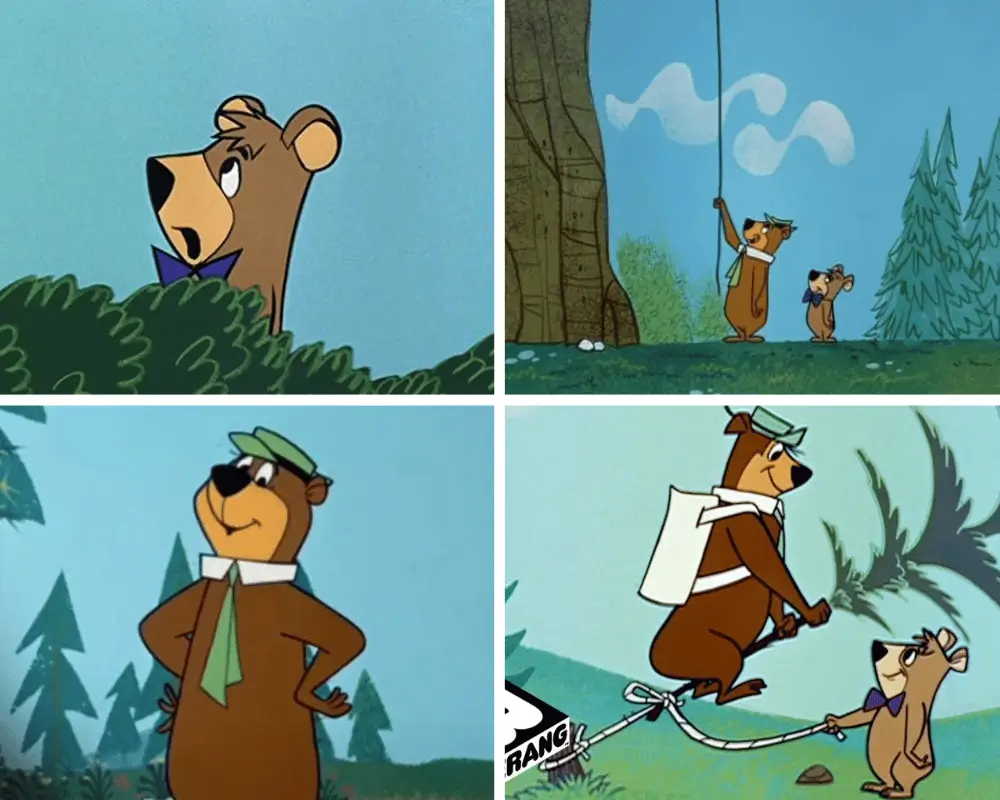
Yogi Bear had already become the breakout segment of The Huckleberry Hound Show before receiving his own half hour.
- Yogi and Boo Boo live in Jellystone Park
- Ranger Smith tries to stop Yogi from stealing food from visitors
- Snagglepuss and Yakky Doodle appeared as supporting segments
The setup is simple enough to repeat forever: Yogi believes he is smarter than the average bear, Boo Boo warns him, and Ranger Smith catches the plan halfway through.
The setting eventually inspired real family campgrounds. The connection between the cartoon, Yellowstone, and the modern franchise is covered in Is Jellystone Park Real?
Lippy the Lion and Hardy Har Har (1962-1963)
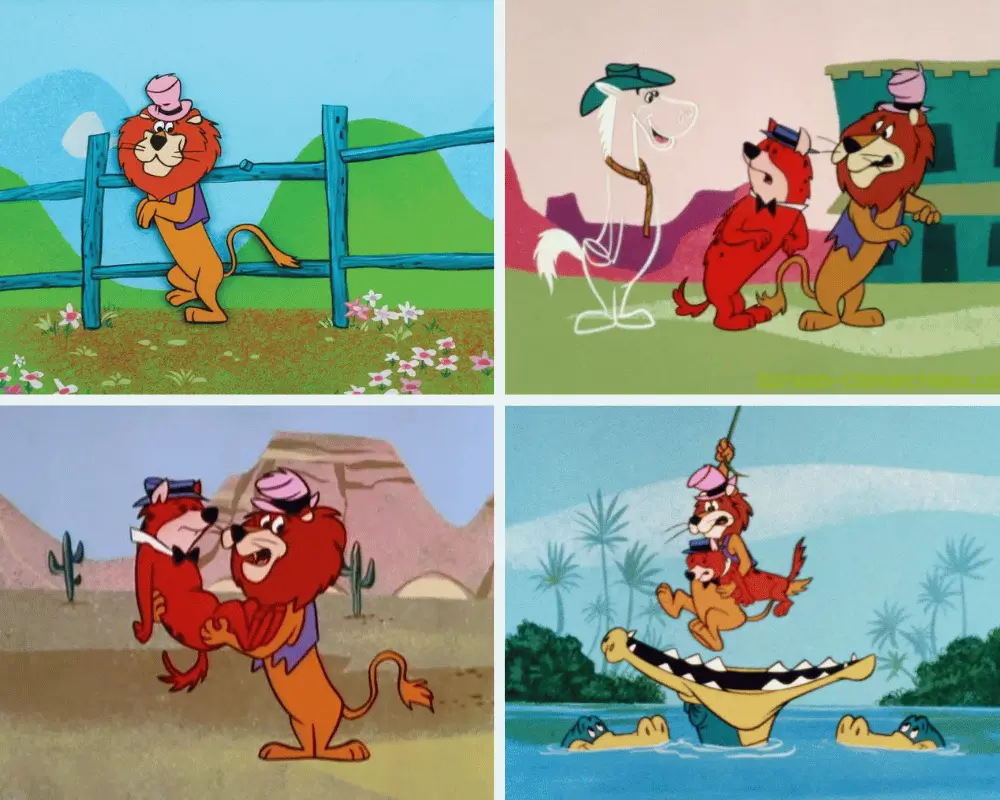
Lippy is certain that his next idea will succeed. Hardy is equally certain that everything will end badly.
- Daws Butler voiced Lippy
- Mel Blanc voiced Hardy Har Har
- The pair appeared in a syndicated package with Wally Gator and Touché Turtle
The entire comedy comes from that mismatch.
Lippy creates the problem through optimism. Hardy predicts the ending correctly and still follows him into it.
Wally Gator (1962-1963)
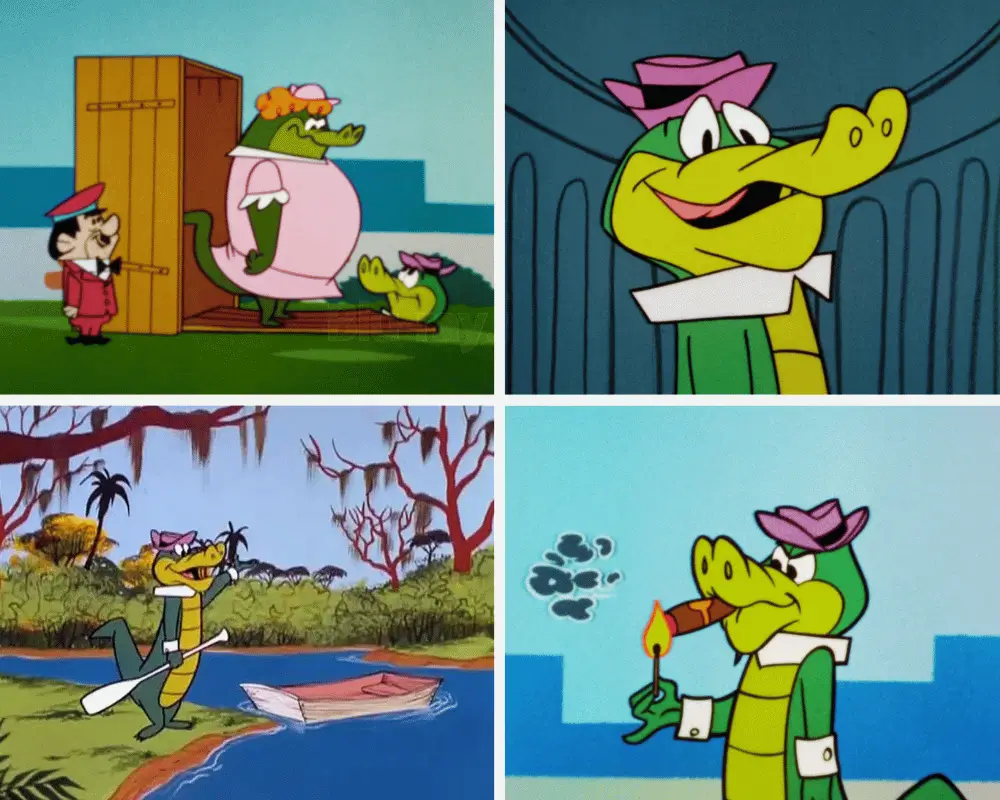
Wally is a polite alligator who keeps escaping the city zoo because he believes life outside must be more exciting.
- Daws Butler voiced Wally
- Mr. Twiddle is the keeper who repeatedly brings him home
- The series was produced as 52 short segments
- Wally shares a basic structure with Yogi Bear.
- Both are intelligent animals who think they have outgrown the protected place where they live.
The difference is that Yogi wants food. Wally wants a different life.
The Peter Potamus Show (1964-1966)
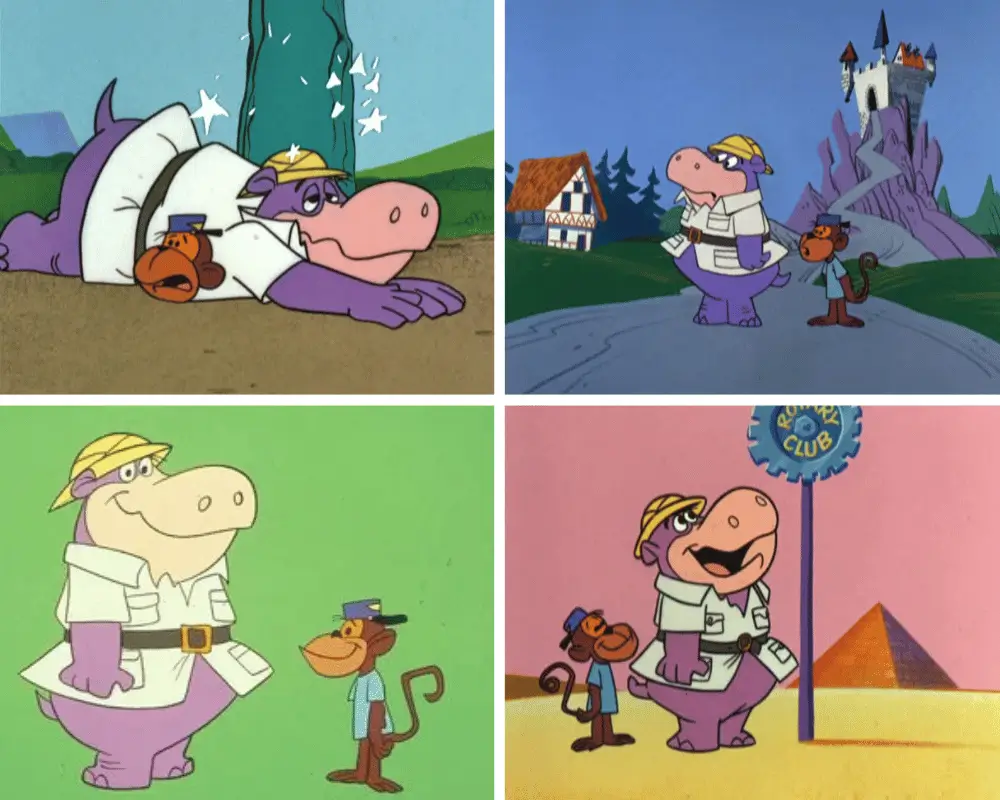
A purple hippopotamus and his monkey companion So-So travel through time in a balloon.
- Peter uses the Hippo Hurricane Holler to escape danger
- Daws Butler based the voice partly on comedian Joe E. Brown
- The original package also included Breezly and Sneezly and Yippee, Yappee and Yahooey
Ricochet Rabbit is sometimes listed as one of the original segments, but he began on The Magilla Gorilla Show. The schedules were rearranged when the programs moved to ABC.
The Hillbilly Bears (1965-1966)
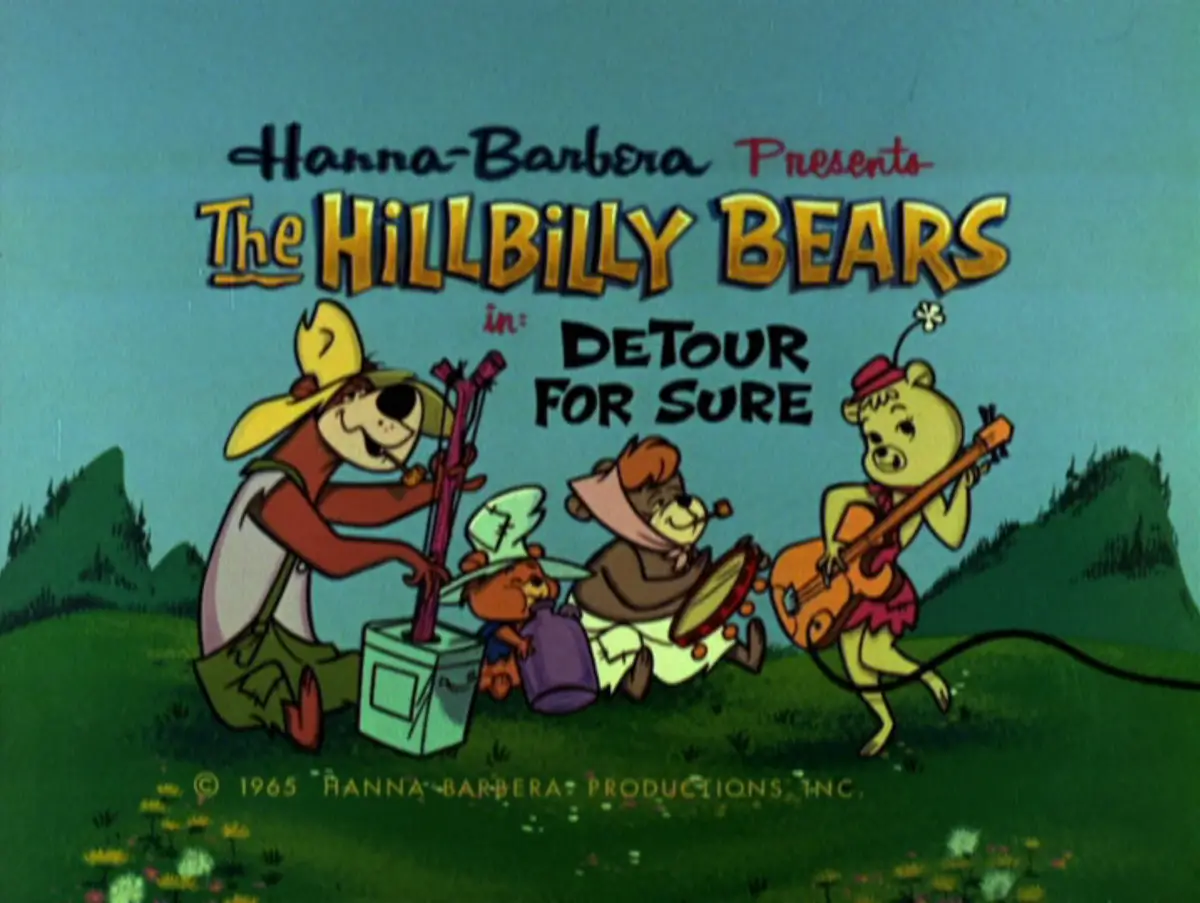
The Rugg family brought the live-action rural-comedy trend into Hanna-Barbera animation.
- Paw Rugg speaks in a low mumble that few characters can understand
- The family also includes Maw, Floral, and Shag
- The shorts appeared within the Atom Ant and Secret Squirrel packages
The premise reflected the popularity of programs such as The Beverly Hillbillies and Green Acres.
Henry Corden, who later became Fred Flintstone’s main voice, performed Paw Rugg.
Squiddly Diddly (1965-1966)
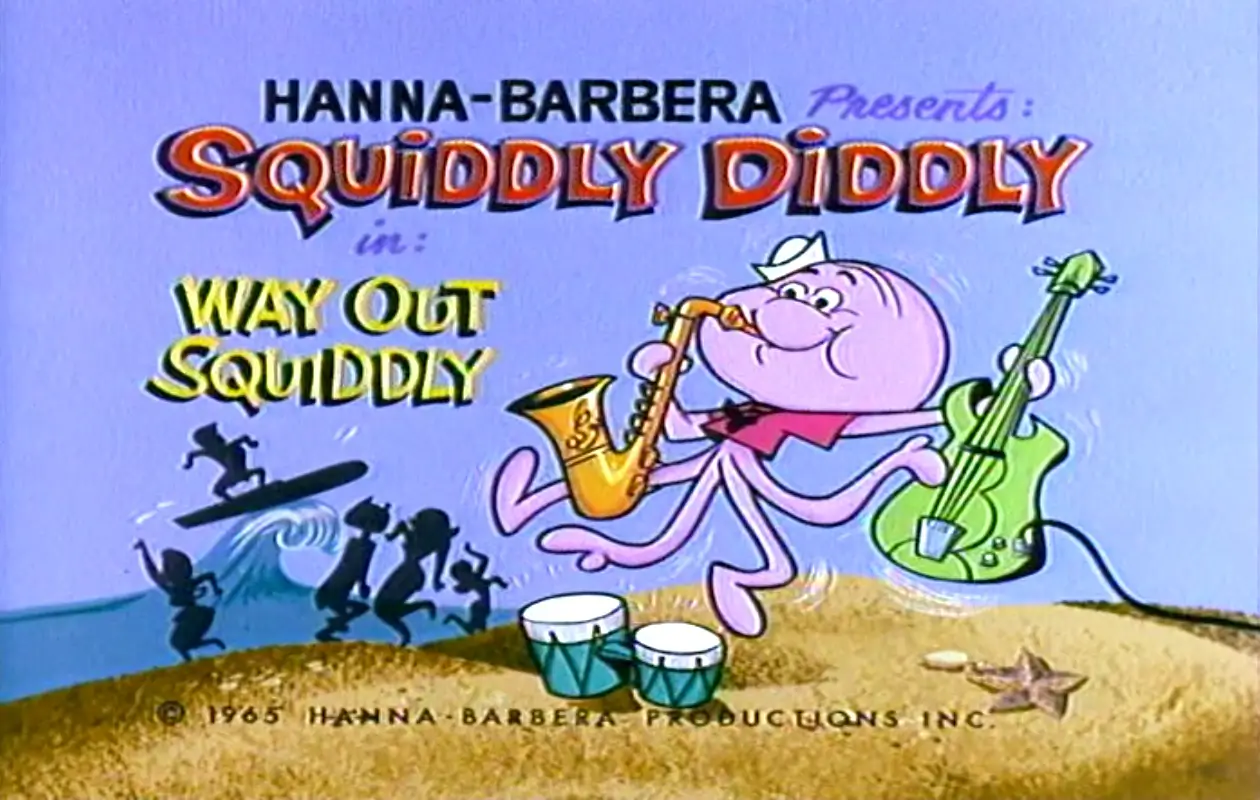
Squiddly is an octopus who wants to leave Bubbleland Marine Park and become a professional entertainer.
- Chief Winchley keeps trying to return him to his tank
- Squiddly uses his tentacles for a different act or disguise
- Paul Frees voiced the character
This is another 1960s cartoon built around an animal escaping a keeper.
Unlike Wally Gator, Squiddly has a specific ambition. He does not merely want freedom. He wants an audience.
The Atom Ant Show (1965-1966)
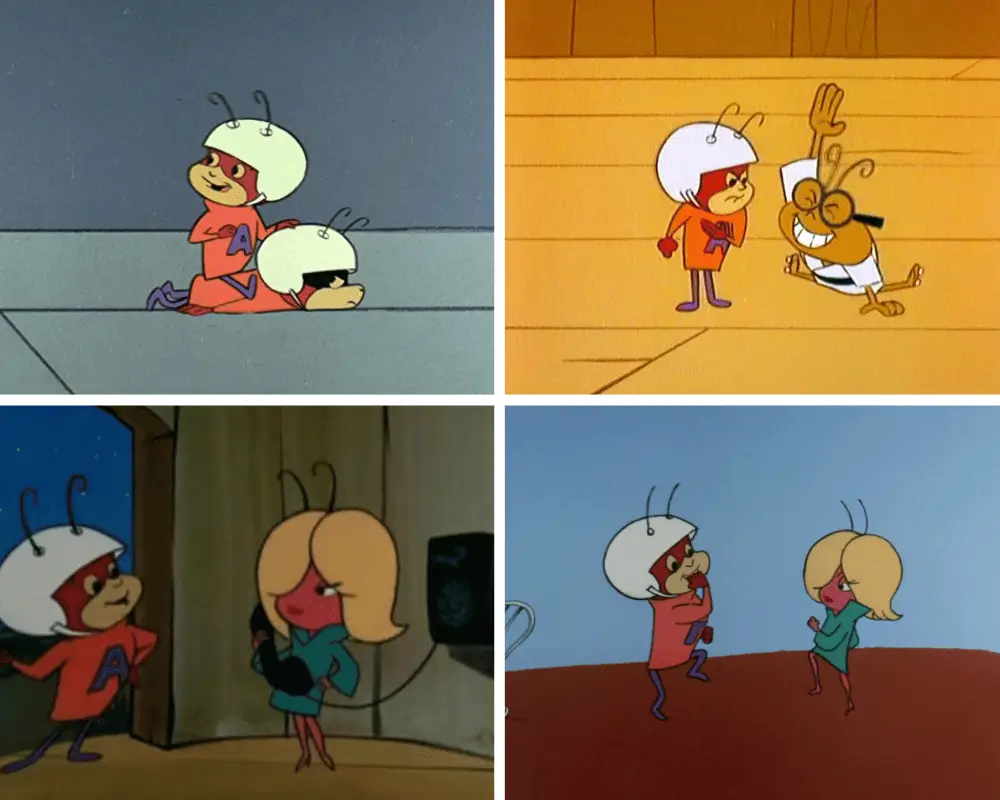
Atom Ant is a tiny superhero who flies out of his atomic anthill whenever the city needs help.
- His catchphrase is “Up and at ’em, Atom Ant”
- Howard Morris voiced him during the original run
- The half hour shared space with Precious Pupp and The Hillbilly Bears
The show arrived as superheroes were spreading across American television.
Atom Ant compresses that entire trend into a character small enough to stand on a telephone.
The Secret Squirrel Show (1965-1966)
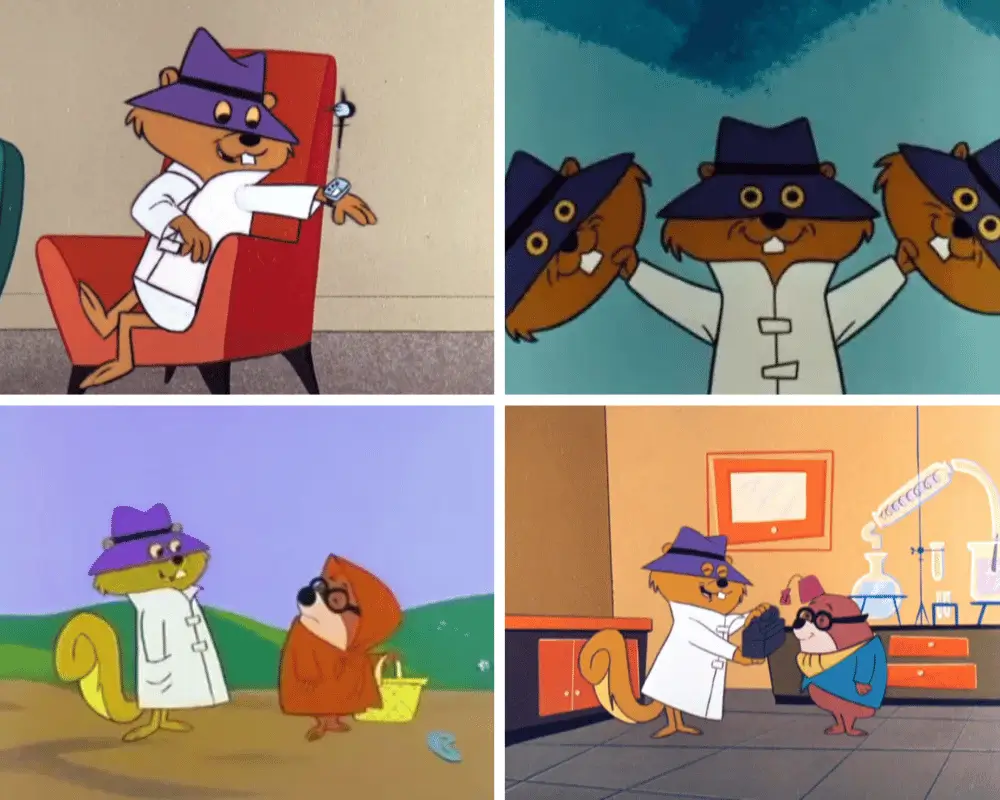
A trench-coated squirrel works as a secret agent with Morocco Mole.
- The series parodies the James Bond and spy craze
- Secret uses gadgets hidden inside his hat
- Morocco Mole speaks with a Peter Lorre-style delivery
Secret Squirrel was one of the decade’s most direct pop-culture parodies.
He returned in the 1990s as part of 2 Stupid Dogs, an unusually long afterlife for a short Hanna-Barbera segment. He also appears in my guide to famous squirrel cartoon characters.
Other Saturday Morning Cartoons From the 1960s
Total Television was one of Hanna-Barbera’s most visible competitors. Its programs used similar limited-animation economics but developed their own voices, characters, and educational formats.
King Leonardo and His Short Subjects (1960-1963)
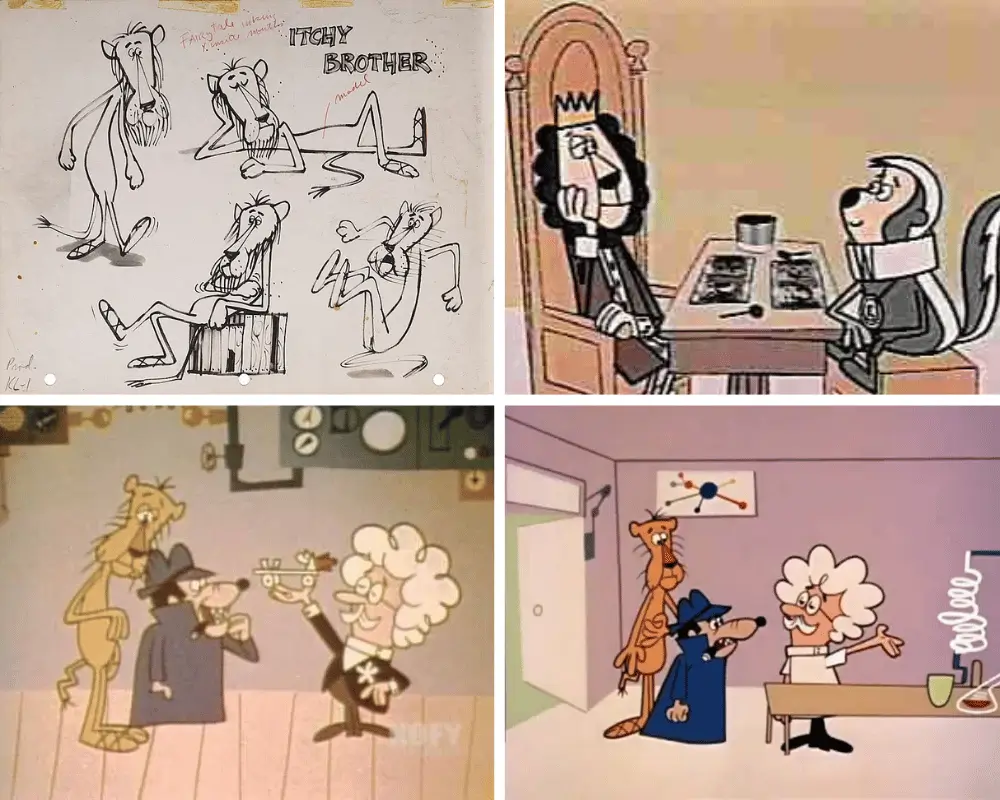
King Leonardo rules Bongo Congo while his loyal skunk adviser, Odie Cologne, protects him from Biggy Rat and the king’s scheming brother.
- It was Total Television’s first major series
- The half hour contained several unrelated short subjects
- Early animation was handled by TV Spots, with later work produced through Gamma Productions
That last detail matters because Total Television and Jay Ward programs often look related. Both companies sent significant animation work to Gamma Productions in Mexico.
Hogan’s Alley provides a detailed account of Total Television and its production history.
Tennessee Tuxedo and His Tales (1963-1966)
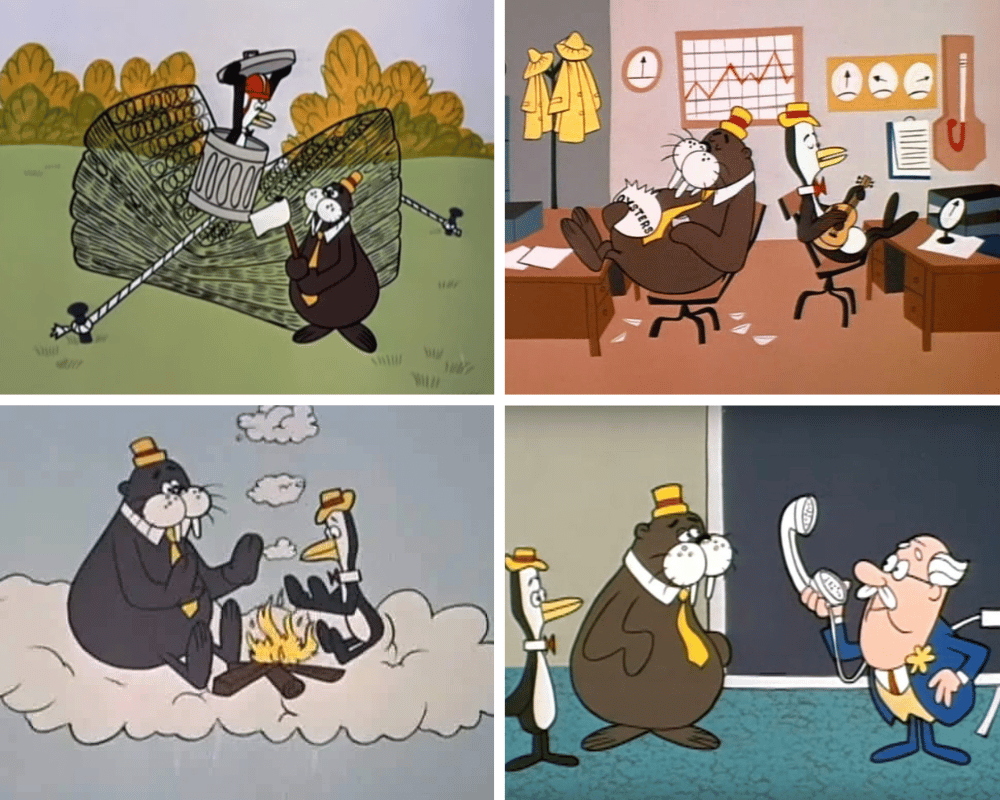
Tennessee Tuxedo and his walrus friend Chumley repeatedly escape from Megapolis Zoo and attempt projects they do not understand.
- Don Adams voiced Tennessee before Get Smart
- Larry Storch voiced Phineas J. Whoopee
- The 3D Blackboard sequences explained real science and technology
The educational material is built into the comedy rather than attached at the end.
Tennessee misunderstands a problem, Mr. Whoopee explains it, and the characters return to the zoo with just enough knowledge to create a new disaster.
Go Go Gophers (1966-1968)
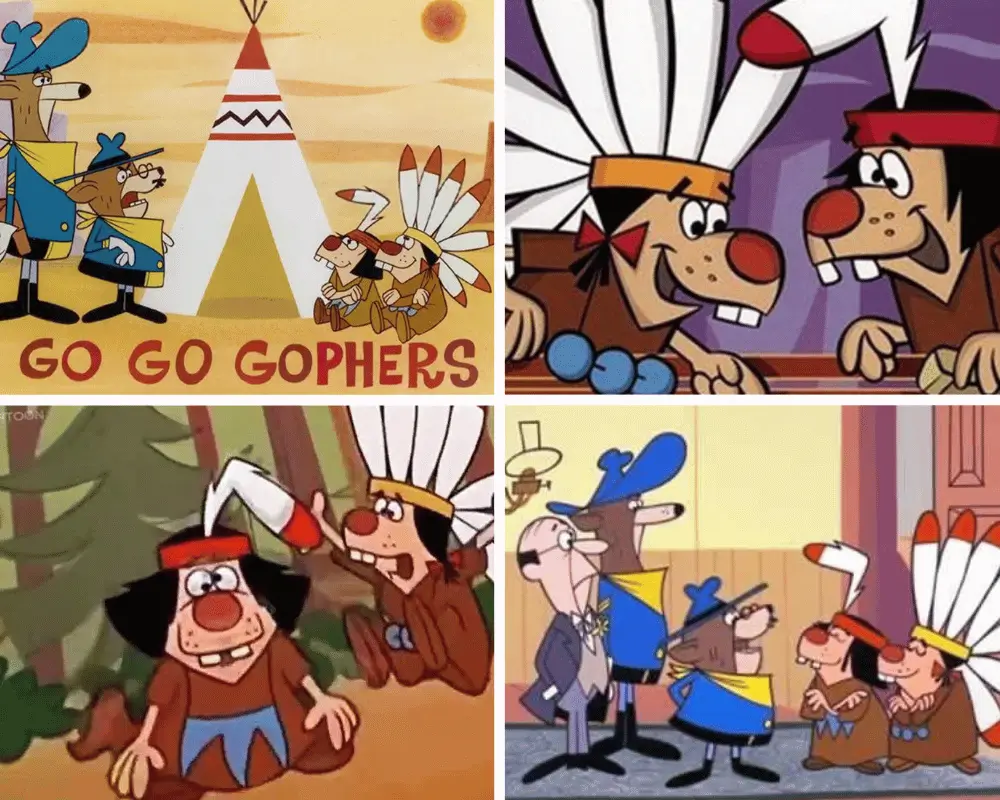
Two gophers defend their land from Colonel Kit Coyote and Sergeant Okey Homa in a parody of television Westerns.
- Ruffled Feathers and Running Board are the gopher leads
- The shorts began within Underdog
- The characters later received their own television package
The series reverses the usual cavalry story by making the soldiers the invaders and the Indigenous-coded characters the clever defenders.
It still relies on broad Native American stereotypes that were common in mid-century movies and television. That material has aged poorly and should be understood as part of the period rather than ignored.
1960s Action and Adventure Cartoons
By the middle of the decade, television animation began making room for realistic people, science fiction, monsters, and serialized-looking adventure.
Jonny Quest (1964-1965)
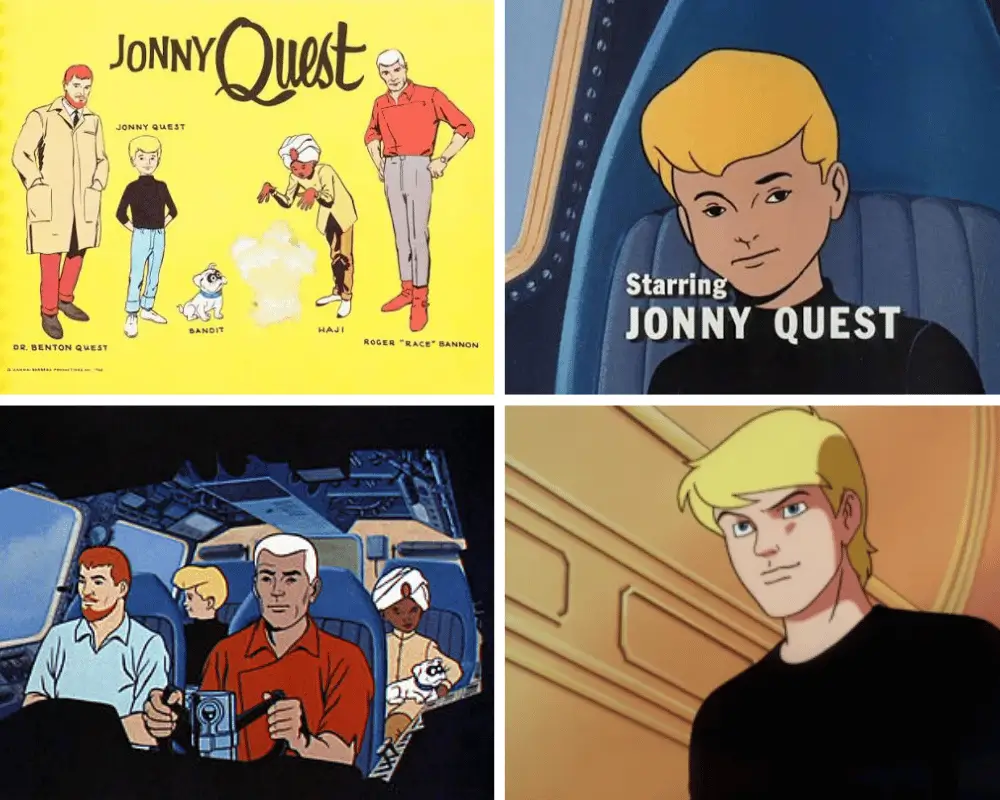
Jonny travels the world with his scientist father, adopted brother Hadji, bodyguard Race Bannon, and dog Bandit.
- The series originally aired in primetime on ABC
- Doug Wildey created its realistic comic-book look
- Only 26 original episodes were produced
- Jonny Quest was one of the first television cartoons to make action feel cinematic rather than simply faster.
The characters moved through laboratories, jungles, deserts, and international spy plots with an orchestral score and heavier shadows than most television animation could afford.
Animation historian Jim Korkis’s account of the production of Jonny Quest includes Wildey’s own explanation of how the series developed.
Space Ghost (1966-1968)
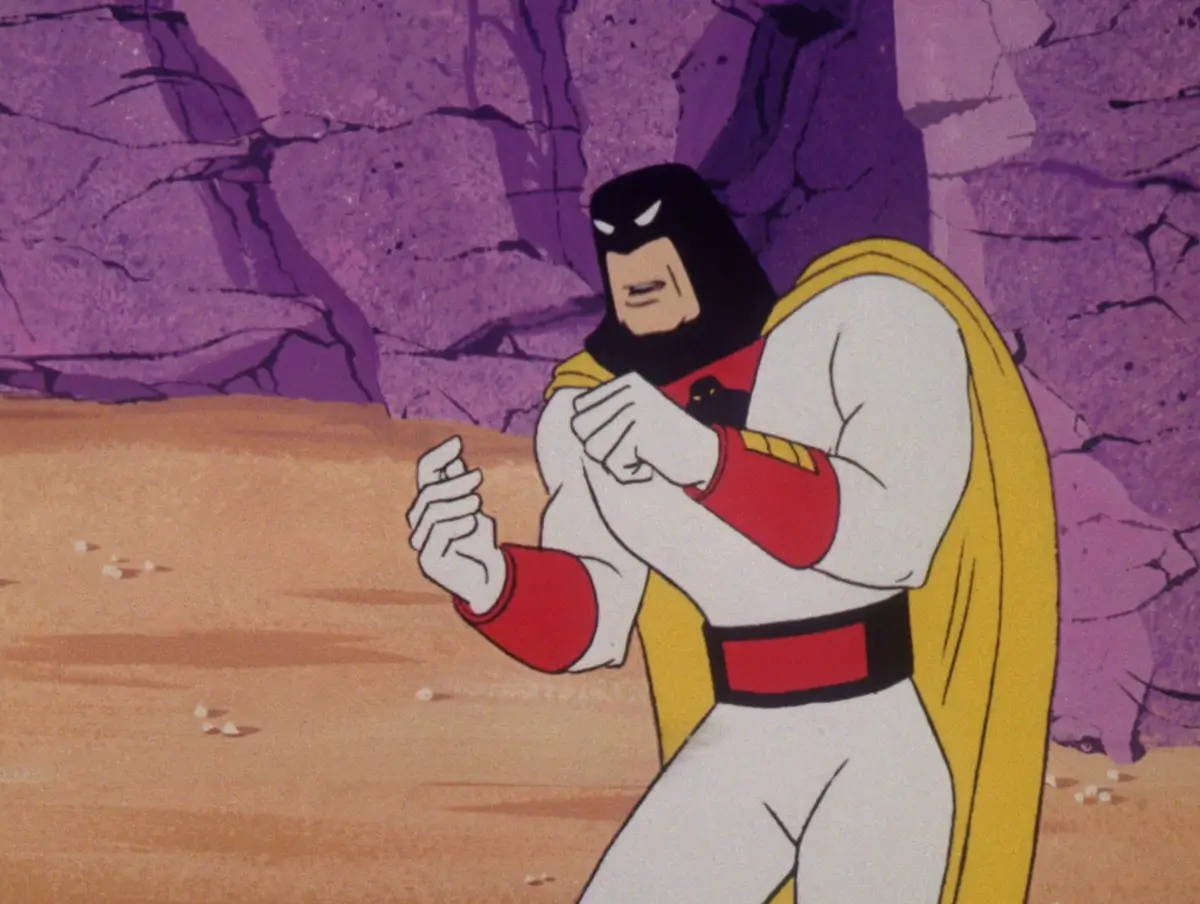
Space Ghost patrols the galaxy with Jan, Jace, and their monkey Blip.
- Gary Owens voiced Space Ghost
- Alex Toth created the character’s visual design
- The power bands could produce energy rays, force fields, and other effects
Toth reduced a superhero to a few strong shapes: white body, black hood, red cape, and glowing wrist weapons.
That simple design helped the character survive far beyond the original action series.
In 1994, Cartoon Network reinvented him as the confused host of Space Ghost Coast to Coast. The parody became an important step toward the adult-animation programming later associated with Adult Swim.
The Herculoids (1967-1968)

A family protects the planet Amzot with five powerful creatures.
- Zandor, Tara, and Dorno are the human defenders
- The team includes Igoo, Zok, Tundro, Gloop, and Gleep
- Alex Toth designed the main cast
The creatures are the reason the show remains memorable.
Each has a different silhouette and power, from Igoo’s rock body to Tundro’s cannon-like horn and the shape-shifting abilities of Gloop and Gleep.
Shazzan (1967-1969)
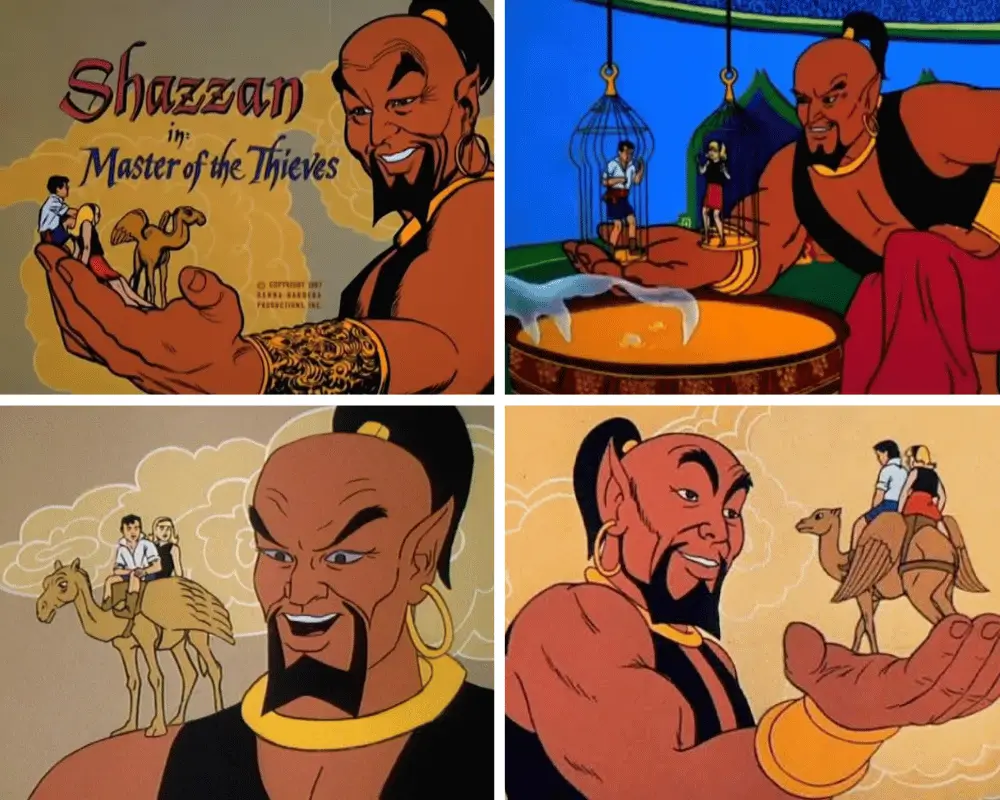
Chuck and Nancy discover two halves of a magic ring and are transported into an Arabian Nights-inspired world.
- Joining the ring summons the giant genie Shazzan
- Kaboobie is their flying camel
- Alex Toth designed the series
Shazzan is so powerful that most stories are about surviving until the children can summon him.
The show is also a clear example of how 1960s American animation borrowed a generalized Middle Eastern fantasy aesthetic without much concern for cultural accuracy.
Toth’s work on Space Ghost, The Herculoids, and other Hanna-Barbera series made him one of the defining designers of late-60s action cartoons. Animation World Network’s career summary of Alex Toth highlights that influence.
Theatrical Cartoons That Became 60s TV Shows
Some of the most familiar cartoons shown during the 1960s had originally been made for cinemas. Television packages gave those older shorts new titles, introductions, and generations of viewers.
The Road Runner Show (1966-1973)
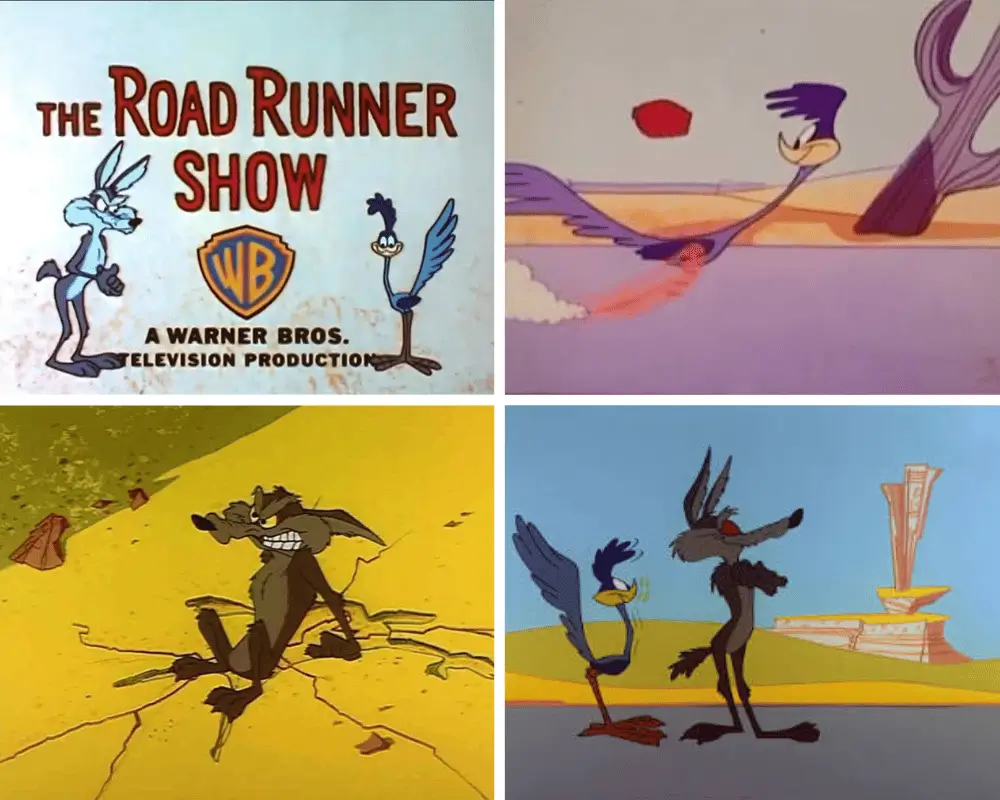
The program packaged Wile E. Coyote and Road Runner theatrical shorts with other Warner Bros. cartoons.
- It began on CBS in 1966
- ABC carried the show from 1971 to 1973
- New animated linking material connected the older shorts
The television show belongs to the 1960s, but most of the cartoons inside it were produced earlier.
That distinction matters when people search for old cartoons from the 60s. They may remember watching Road Runner on Saturday morning even though the most famous Chuck Jones shorts began in 1949.
The Ant and the Aardvark (1969-1972)
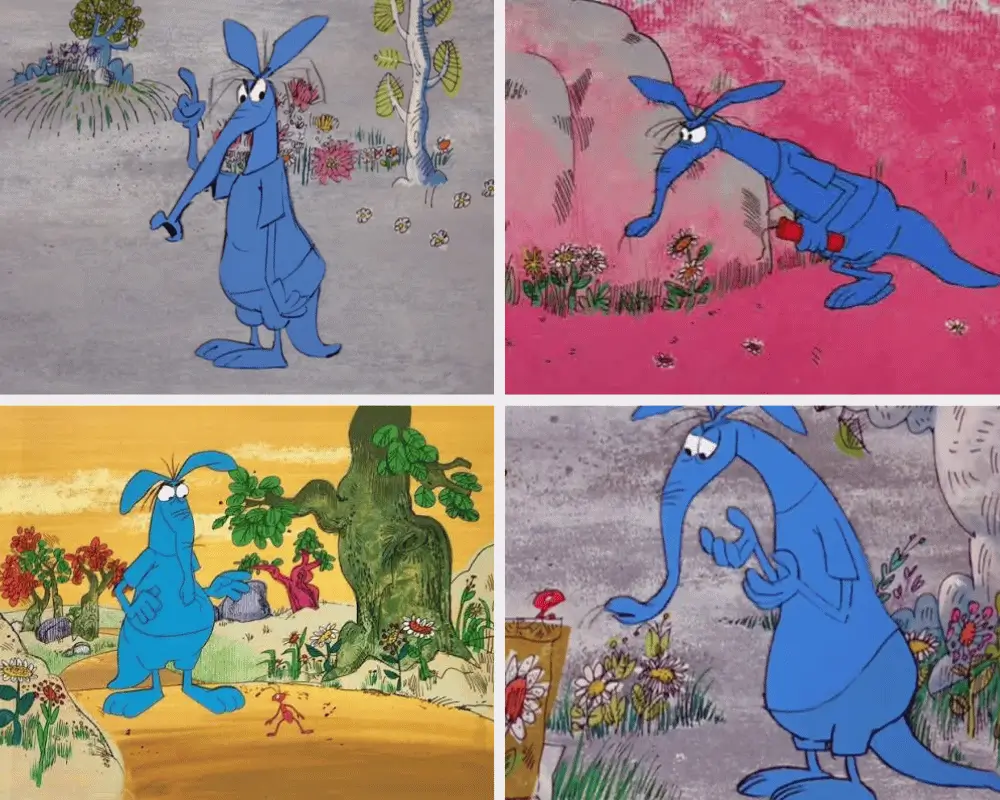
A blue aardvark repeatedly tries to catch a red ant and fails.
- DePatie-Freleng produced 17 theatrical shorts
- John Byner voiced both main characters
- The Aardvark’s delivery evokes Jackie Mason, while the Ant uses a smoother comic style
The series began in 1969 and continued into the early 1970s.
It is often remembered as part of The Pink Panther Show, where the shorts later appeared on television.
The Two Most Important Cartoons of the 1960s
Many shows on this list were influential. Two of them changed the direction of television animation more than the rest.
The Flintstones (1960-1966)
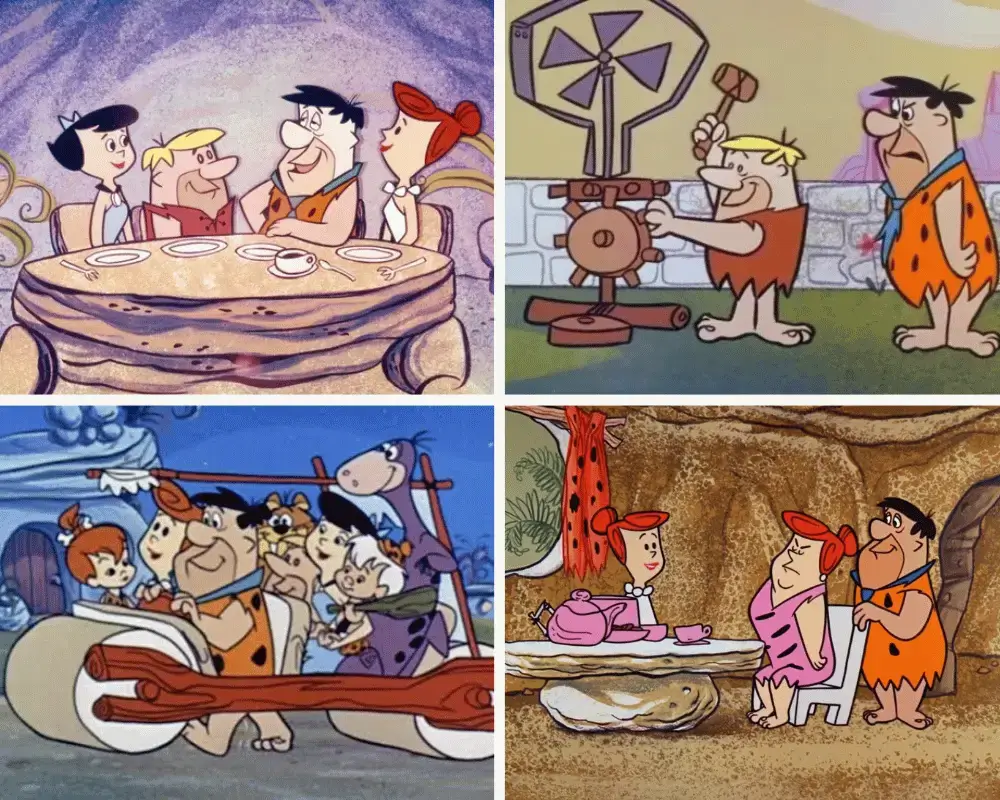
Fred and Wilma Flintstone live in a Stone Age suburb where dinosaurs replace household appliances and modern social problems survive almost unchanged.
- The series premiered on ABC on September 30, 1960
- It ran for six seasons in primetime
- The setup was strongly influenced by The Honeymooners
The Flintstones was the first animated series to hold a regular primetime network slot and become a sustained hit.
The Library of Congress describes the show as Hanna-Barbera’s television breakthrough and notes that its success encouraged networks to take further risks on animation aimed at adults. Its Flintstones history and animation collection provides useful context.
Fred remains one of the central figures in my Hanna-Barbera cartoon character guide.
Scooby-Doo, Where Are You! (1969-1970)
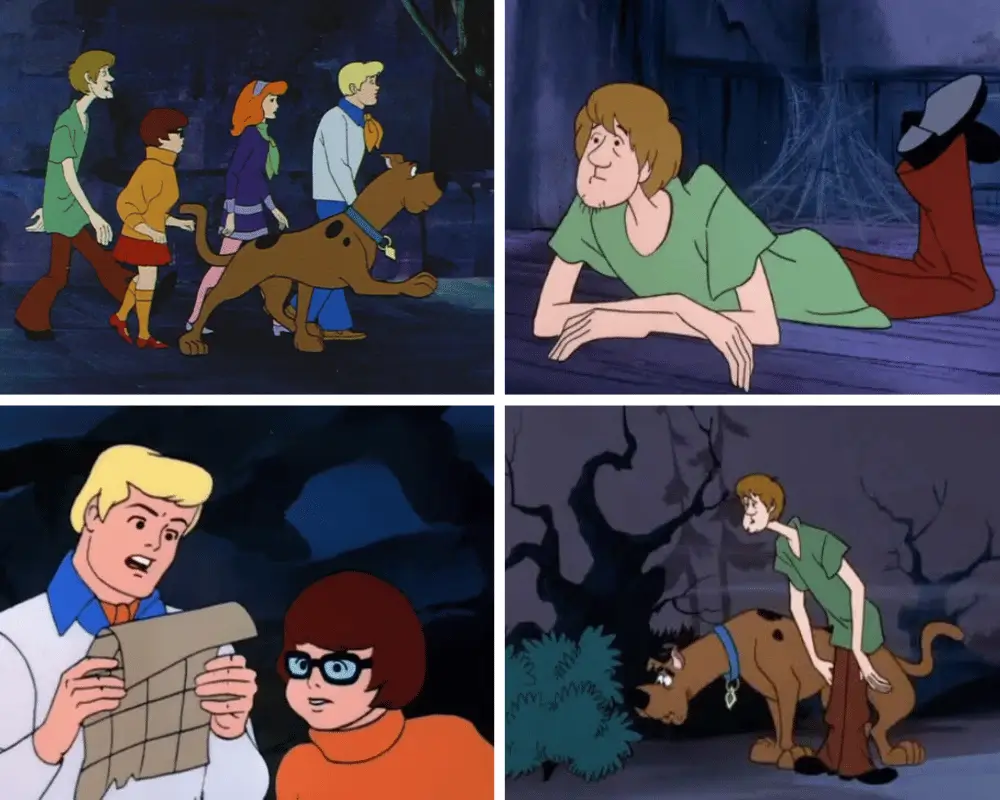
Four teenagers and a talking Great Dane travel in a van and investigate mysteries involving ghosts, monsters, and criminals in disguise.
- The series premiered on CBS on September 13, 1969
- Joe Ruby and Ken Spears developed it for Hanna-Barbera
- The format offered suspense without depending on superhero combat
Parent groups and network executives were increasingly concerned about violence in children’s programming during the late 1960s.
Scooby’s mystery structure gave CBS a way to keep danger, monsters, and chases while revealing that the threat was usually a human fraud rather than a supernatural creature.
Cartoon Research’s history of the creation of Scooby-Doo traces that development through the show’s abandoned titles and early concepts.
Scooby premiered with only a few months left in the decade, but his real influence belongs to the 1970s. Nearly every mystery-solving teen cartoon that followed borrowed some part of his format.
That Hanna-Barbera lineage continued into later projects covered in my article on 2 Stupid Dogs.
Frequently Asked Questions About 60s Cartoons
What are the most famous 60s cartoons? The Flintstones, Yogi Bear, Top Cat, Jonny Quest, Space Ghost, and Scooby-Doo, Where Are You! are among the best-known cartoons that premiered during the decade.
What were the best Saturday morning cartoons from the 1960s? Popular choices include Space Ghost, The Herculoids, Secret Squirrel, Atom Ant, Tennessee Tuxedo, and Scooby-Doo. Some other major shows, including The Flintstones and Jonny Quest, began in primetime before becoming rerun staples.
What was the first successful primetime cartoon? The Flintstones became the first animated series to hold a regular network primetime slot as a sustained hit.
What were the main Hanna-Barbera cartoons from the 60s? The studio’s decade included The Flintstones, Top Cat, Yogi Bear, Wally Gator, Atom Ant, Secret Squirrel, Jonny Quest, Space Ghost, The Herculoids, and Scooby-Doo.
Which 1960s cartoons were action shows? Jonny Quest, Space Ghost, The Herculoids, and Shazzan are four of the decade’s defining action and adventure cartoons.
Was Scooby-Doo a 60s cartoon? Yes. It premiered in September 1969, although most of its imitators and franchise growth arrived during the 1970s.
What was the first cartoon made specifically for television? Crusader Rabbit began in 1950 and is commonly cited among the first animated series produced specifically for television. The 1960s were when made-for-TV cartoons became a major part of network schedules.
Why did old cartoons from the 60s reuse so much animation? Weekly television budgets were far smaller than theatrical-animation budgets. Studios reused walk cycles, backgrounds, poses, and camera movements to deliver episodes on schedule.
Where can you watch cartoons from the 1960s today? Availability changes by country and by month. Some series appear on free services such as Tubi, while others are sold digitally through Apple TV or Amazon. Physical DVD and Blu-ray collections remain important for titles that are not included in a current subscription catalog.
Why These Classic 60s Cartoons Still Matter
The 1960s did not produce one single kind of television cartoon.
It produced the formats that later decades kept rebuilding.
The Flintstones established the primetime animated sitcom. Hanna-Barbera’s animal shorts turned repeatable comic premises into syndicated packages. Jonny Quest and Alex Toth’s heroes gave television animation a new action vocabulary. Scooby-Doo found a mystery structure that could survive almost any new cast or gimmick.
Watching these shows in order is like watching television animation invent itself.
The movement may be limited, but the ideas were not.
One extra detail on Top Cat that fans of classic TV love, not only was T.C. modeled after Phil Silvers’ Sergeant Bilko, but Maurice Gosfield, who played Private Doberman on ‘The Phil Silvers Show, was actually brought in to voice Benny the Ball! It really was a full live-action sitcom crossover in animation form.
Also! Really appreciated the nod to Don Gato! It’s fascinating how a show that lasted only 30 episodes in the US became a multi-generational cultural phenomenon in Mexico and Latin America, largely thanks to Jorge Arvizu’s legendary voice dubbing.
Snuffy Smith and Barney Google from the 1962 days, if anyone rmembers that one! It might not have been the “best” – but I like it, don’t mak cartoons like that anymore.
The New Adventures of Pinocchio! most people forget about this show, but it had over 130 epsiodes between 1960 – 1961. It was a stop motion. more ppl should check it out, it always get forgotten. The Courageous Cat and Minute Mouse is another animated show from the 60s.